




Hand Carved Oak Figures
Hand carved oak figures bring centuries of timber craftsmanship into a room, offering the tangible weight and grain of historic wood.
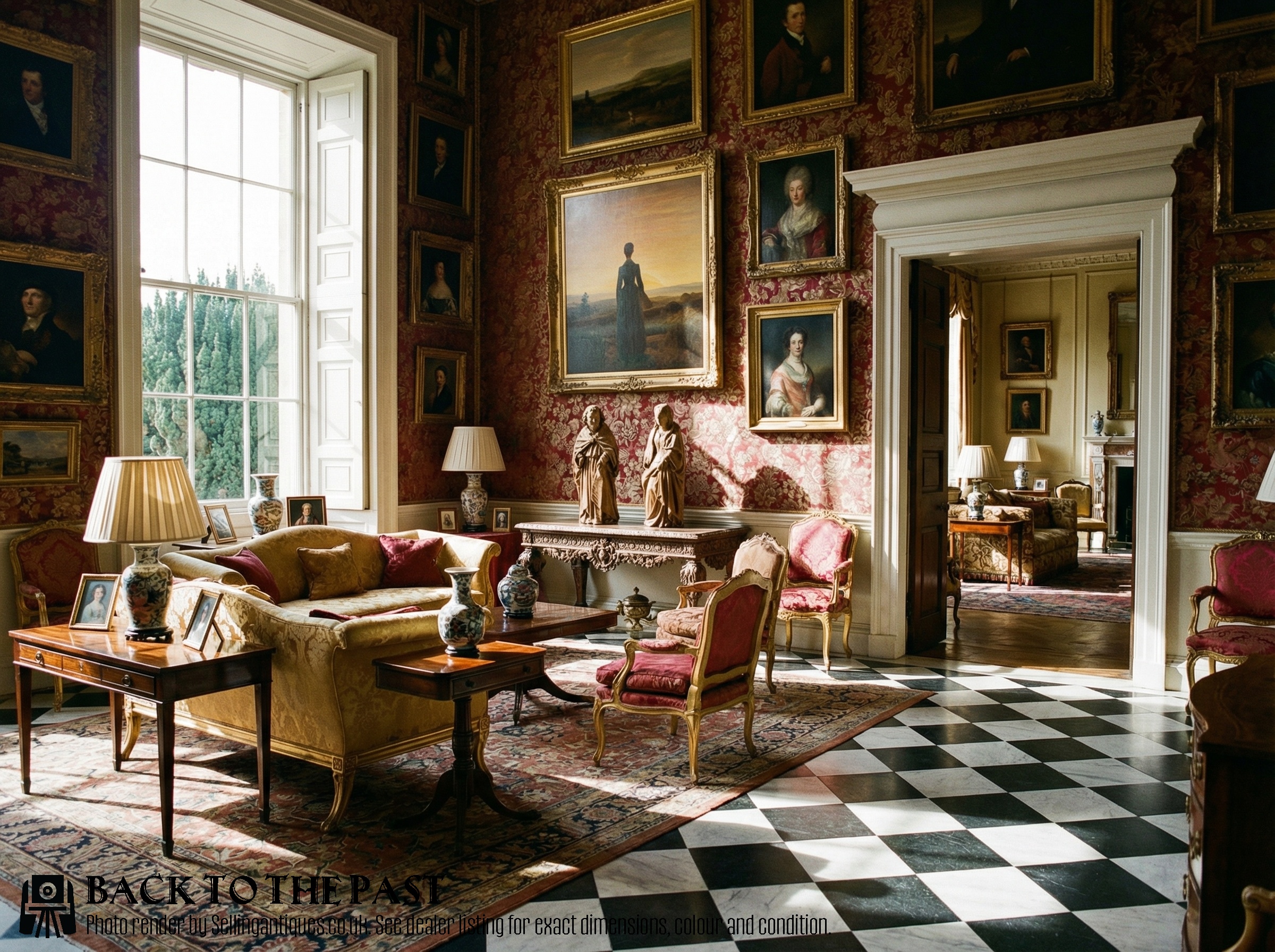
Hand Carved Oak Figures
When you search for hand carved oak figures, you encounter a diverse range of wooden sculpture spanning from pre-sixteenth century church carvings to nineteenth century folk art and gothic revival pieces. The selection includes religious statues, secular historical portraits, decorative terminals, and utilitarian objects shaped from solid timber.
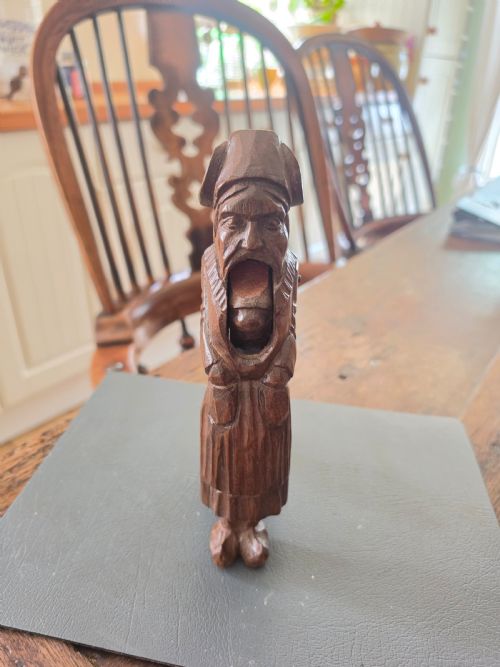
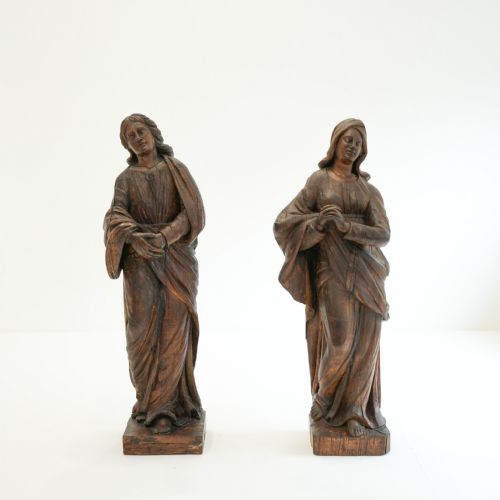
You are most likely to meet nineteenth century interpretations and eighteenth century religious figures alongside earlier medieval fragments. These pieces take various forms, from pairs of saints and apostles to whimsical nutcrackers, inkstands, and figural candle sticks.
The origins stretch across Britain, Europe, and America, reflecting regional carving traditions and domestic workshops. Each piece records the hand of the maker through distinct chisel marks and sculptural details rendered in hardwood.
How they were made
Makers shaped these sculptures primarily from solid oak and related hardwoods using hand chisels, gouges, and mallets. The inherent grain and density of the timber dictated the depth of the relief and the scale of the finished work.
The inventory spans the pre-sixteenth century era through the seventeenth, eighteenth, and nineteenth centuries into the Edwardian period.
What varies in quality
Condition and completeness define the standing of older pieces, particularly when dealing with pre-sixteenth century fragments or seventeenth century panels. Original surfaces untouched by later interventions hold greater integrity for collectors of historic wood.
Franz Keller
The Hand Carved Oak Figures Glossary
- Oak
- A durable, open-grained hardwood traditionally utilised for furniture and architectural carving across centuries. Its strength allows for sharp detail in sculptural work.
- Parcel Gilt
- A surface finish where specific areas of a wooden carving are partially gilded with gold leaf while leaving the underlying oak exposed. This technique emphasises robes and decorative trims.
- Corpus Christi
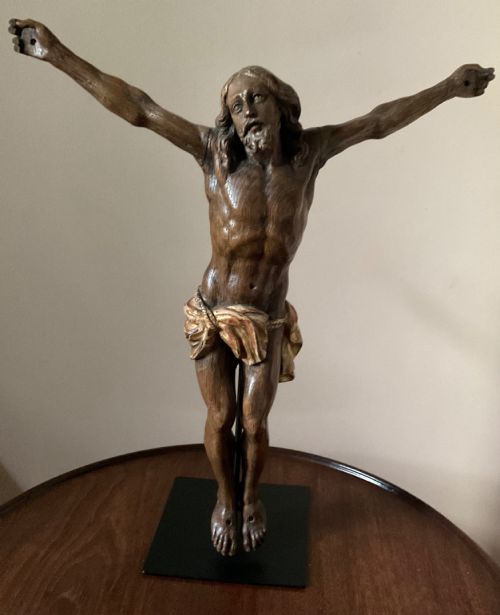
- A representation of the body of Jesus Christ on the cross, frequently carved in wood during the seventeenth century. These devotional figures emphasise anatomical detail and suffering.
- Terminal
- A decorative figure or bust that terminates in a tapering pillar or scrollwork, often appearing in pairs as architectural supports. They bridge the gap between joinery and sculpture.
- Folk Art
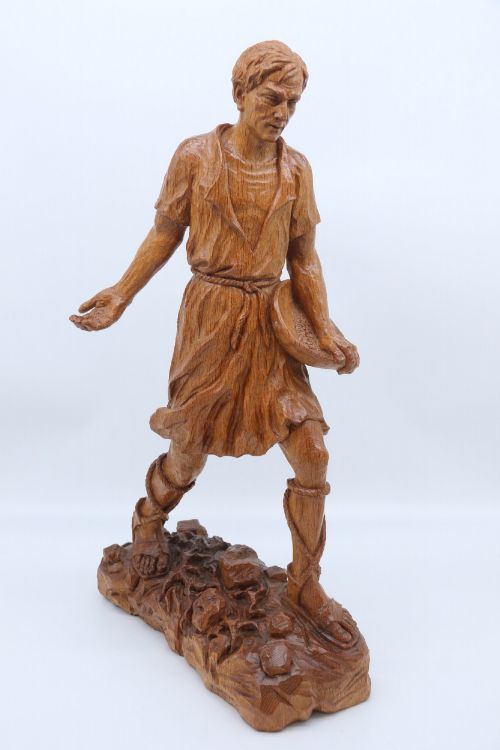
- Objects created by self-taught or provincial makers outside academic traditions, encompassing nineteenth century pieces like carved poachers or farm workers. These items prioritize narrative charm over strict classical proportion.
Hand Carved Oak Figures: Frequently Asked Questions
How old are these oak figures?
The pieces span a wide chronological range, starting from pre-sixteenth century church carvings and fifteenth century fragments. You will also find many examples from the seventeenth, eighteenth, and nineteenth centuries.
Date attribution relies on stylistic traits, tool marks, and the condition of the timber. Earlier works often reflect gothic or religious conventions, while later Victorian pieces show revivalist tendencies.
Where were these carvings made?
Origin points vary widely, encompassing British, German, Low Country, Croatian, and American workshops. Regional styles often dictate the subject matter, from Anglo-Saxon farm workers to continental saints.
Local timber availability and distinct carving guilds influenced the regional character of each piece. Makers utilised native hardwoods common to their specific geographic area.
How do I care for antique oak?
Historic timber requires stable indoor humidity and protection from direct sunlight to prevent splitting or fading. Regular dusting with a dry, soft cloth preserves the historic wax or polished surface without stripping the patina.
Avoid placing wooden carvings near direct heat sources like radiators. Gentle maintenance ensures the grain and chisel marks remain clear for generations.
What subjects are most common?
Religious subjects dominate the earlier periods, including saints, apostles, and crucifixion figures like the Corpus Christi. These reflect the primary patronage of churches and domestic devotional spaces.
Later nineteenth century pieces introduce secular figures, historical portraits such as Oliver Cromwell, and folk art representations of poachers or agricultural workers. Utilitarian forms like nutcrackers and inkstands also feature figural carving.