

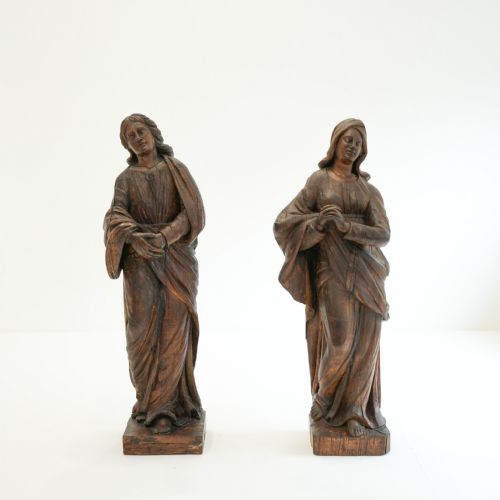


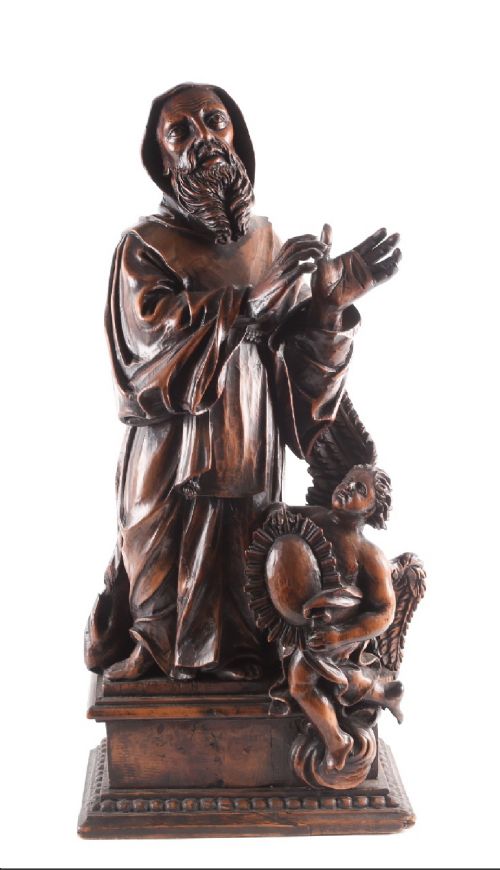


Continental Carved Oak Saints
Continental carved oak saints bring profound religious presence into a room, fashioned from sturdy timber by centuries-old hands.

Continental Carved Oak Saints
Continental carved oak saints are figurative sculptures depicting holy figures, created across Europe in various historical periods. When you search for continental carved oak saints, you encounter statues originating from regions like Croatia as well as broader continental workshops. The selection ranges from singular figures to pairs and framed groupings.
The objects span multiple centuries, appearing in Pre sixteenth century, sixteenth century, seventeenth century, eighteenth century, and nineteenth century formats. You are most likely to meet eighteenth century pieces or nineteenth century interpretations on this page, alongside earlier late medieval and renaissance examples. Forms include standalone statues, wall art, and figures accompanied by attributes such as cherubs or specific iconography.
Makers drew upon diverse artistic movements, incorporating gothic, late medieval, renaissance, baroque, and gothic revival styles. Subjects include named figures such as saint Jerome, saint Catherine, and Anna selbdritt, alongside anonymous religious figures. Each piece reflects the devotional sculpture traditions of its specific origin and era.
Materials and construction
Surface decoration frequently involved paint and polychrome paint applied directly to the carved wood. Pigments added colour and realism to vestments and flesh tones, though centuries of wear often leave these finishes partially weathered. Artisans utilised chisels and gouges to achieve the deep folds and expressive postures characteristic of religious statuary.
Materials recorded across these sculptures include oak, hardwood, polychrome paint, and supplemental metal elements.
Evaluating the carving
Quality rests in the depth and vitality of the chisel work, distinguishing master carvers from routine workshop production. Superior examples display naturalistic drapery folds, expressive facial anatomy, and careful attention to hands and hair. Lesser pieces tend towards stiffness and shallow surface detailing.
The preservation of original polychrome paint and surface finishes alters the character and integrity of a figure. Pieces retaining early pigment layers command greater interest than those stripped down to bare timber in later eras. Structural harmony and the absence of clumsy restoration determine the overall success of the sculpture.
The Continental Carved Oak Saints Glossary
- Polychrome paint
- The historical practice of decorating sculpture with multiple colours. Pigments were applied over a prepared ground to bring realism to devotional figures.
- Anna selbdritt
- An iconographic representation showing saint Anne with the virgin Mary and the Christ child. This subject appears in late medieval and early sixteenth century carving.
- Baroque
- An artistic style characterised by dramatic movement and exuberant detail. In religious figures, this manifests in swirling garments and emotive poses.
- Gothic revival
- A nineteenth century movement that imitated medieval architecture and sculpture. Makers adopted earlier gothic conventions to create devotional pieces for contemporary interiors.
- Attribute
- An object or animal associated with a particular saint for identification purposes. Saint Jerome is often accompanied by a lion, while other figures feature cherubs at their feet.
Continental Carved Oak Saints: Frequently Asked Questions
How were continental carved oak saints originally used?
These figures stood in churches, private chapels, and domestic shrines to aid personal and communal devotion. They served as focal points for prayer and reflection.
Over time, many transitioned from sacred contexts into secular collections and interior displays, appreciated for their sculptural qualities.
How do I distinguish sixteenth century carvings from nineteenth century ones?
Sixteenth century pieces typically exhibit the heavier drapery folds and distinct tool marks characteristic of late gothic and renaissance workshops. The wear patterns on the oak are deeper and more thoroughly integrated into the timber.
Nineteenth century gothic revival works often display a more regular symmetry and cleaner technical execution, reflecting the revivalist tastes of that era.
Where should I place a heavy oak statue at home?
Position statues on sturdy surfaces like console tables, sturdy pedestals, or mount them securely to walls if they are framed panels. Ensure they sit away from direct heat sources and strong sunlight to protect the wood and any surviving paint.
Allow enough surrounding space for the silhouette of the carving to be viewed clearly without visual clutter.
What does polychrome paint mean on these figures?
Polychrome refers to the historical application of various coloured pigments directly onto the wooden surface of the sculpture. This finish was designed to make the holy figures appear more lifelike to worshippers.
Surviving traces of this paint add historical depth, showing how the object looked centuries ago.