


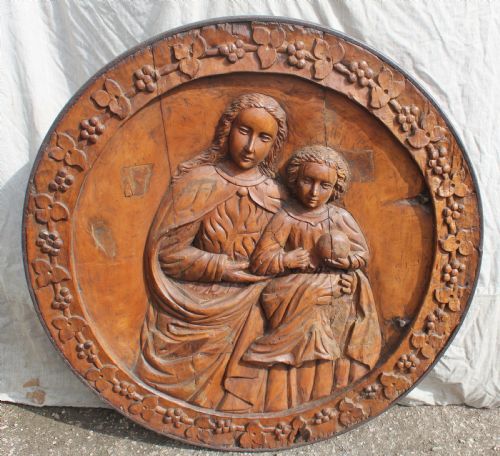

Religious Oak Carving
A genuine religious oak carving brings centuries of devotion, architectural weight and deep timber grain directly into a room.
Religious Oak Carving
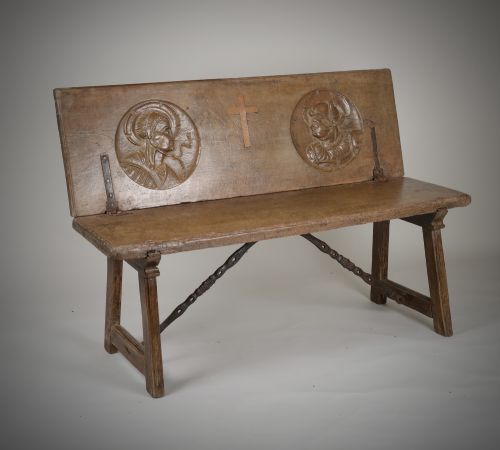
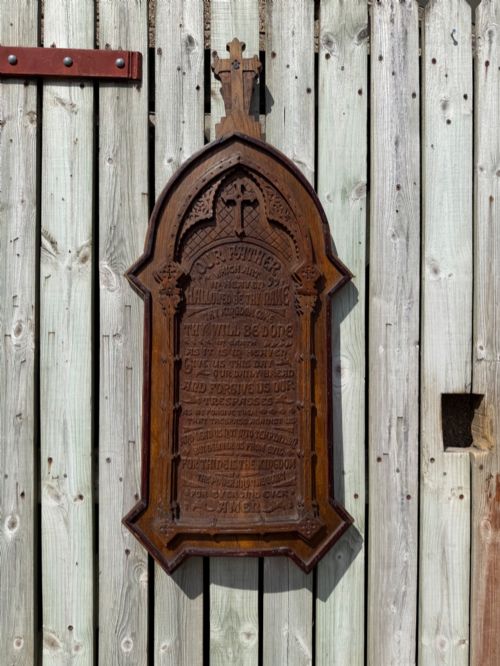
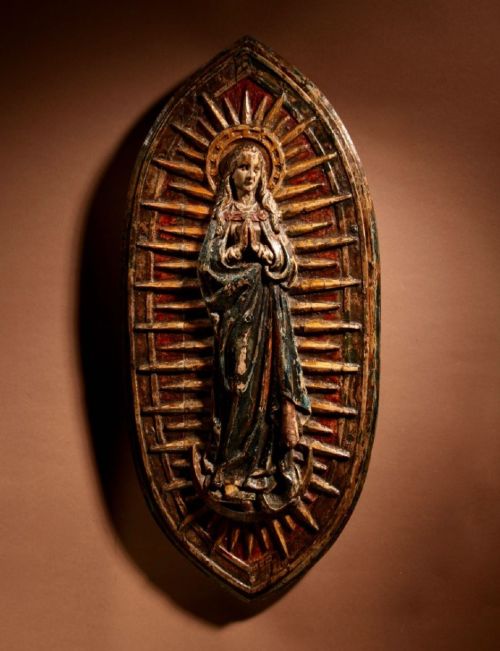
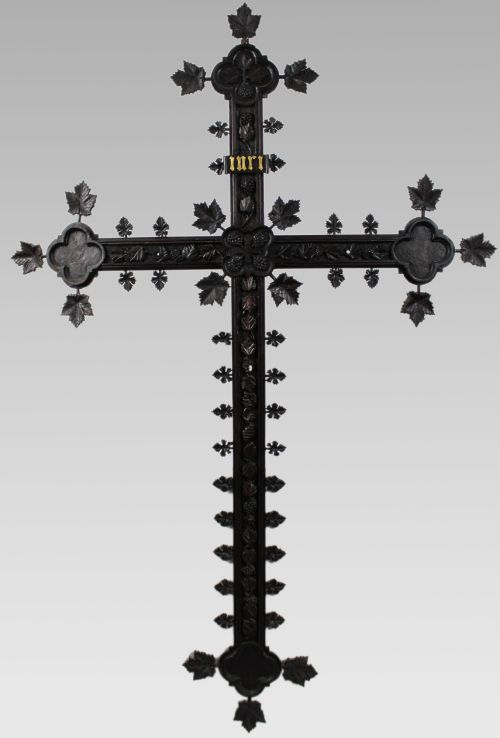
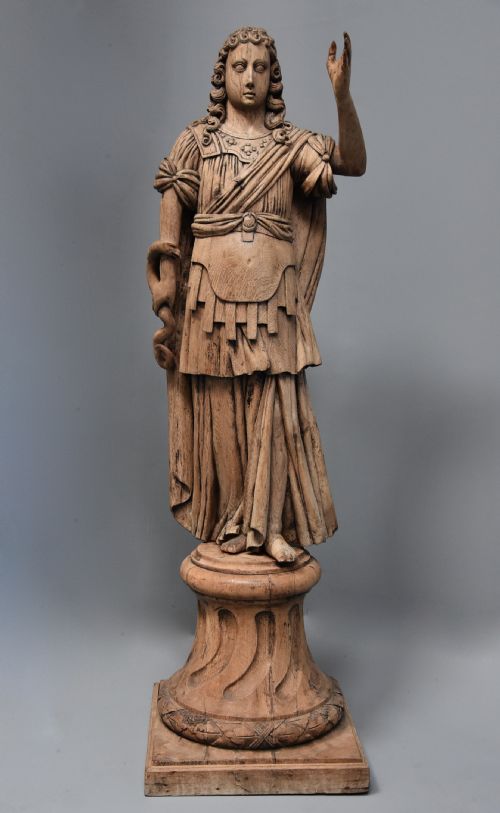
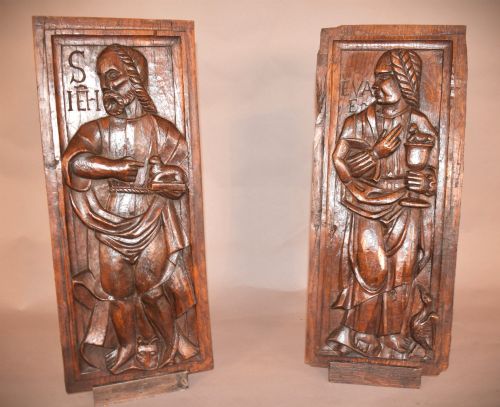
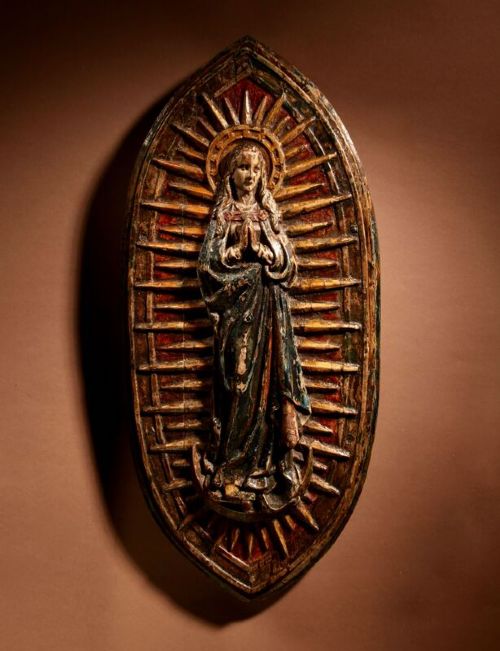
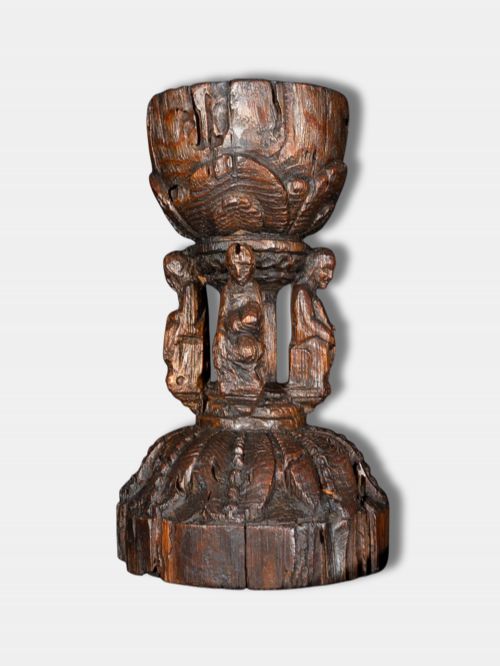
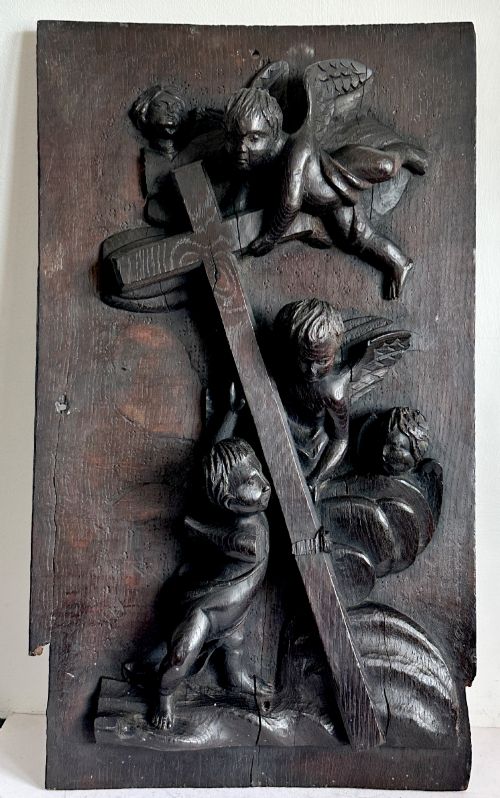
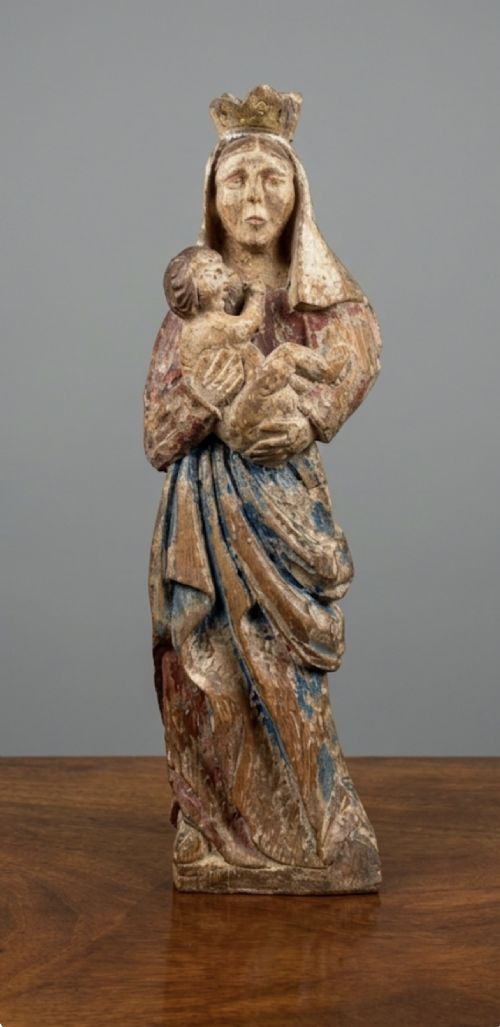
A religious oak carving encompasses figures of saints, Madonna and child groups, altar panels and ecclesiastical furniture originating from workshops across Britain and continental Europe. These pieces range from pre-sixteenth century Gothic fragments to nineteenth-century Gothic Revival interpretations designed for private devotion or church interiors.
Buyers encounter standalone sculptures, wall reliefs, prayer desks and architectural panels shaped from dense heartwood. The selections span major European styles including Northern Renaissance, High Baroque and Late Gothic.
How they were made
Carvers shaped seasoned oak using gouges and chisels to achieve high relief and freestanding figures from solid blocks of timber. Many early European pieces retain traces of polychrome paint, gesso and gold leaf applied over the wood.
Joinery techniques such as mortise and tenon secure structural elements like benches, settle panels and prayer desks. Wrought iron fittings occasionally appear on functional ecclesiastical furniture.
Listings span eight distinct centuries, running from pre-sixteenth century medieval figures up to nineteen-hundreds revival pieces.
What varies in quality
Surface preservation matters greatly, particularly where original gesso, pigment or gold leaf survives beneath centuries of oxidation and wax finishes.
Franz Keller
The Religious Oak Carving Glossary
- Polychrome paint
- Pigments applied to wood sculptures to create lifelike coloration on garments and flesh. This layered finish often survives in protected recesses.
- Gesso
- A plaster-like preparation mixture used as a smooth base for gilding and painting on wooden carvings. It adheres directly to the timber substrate.
- Prie-dieu
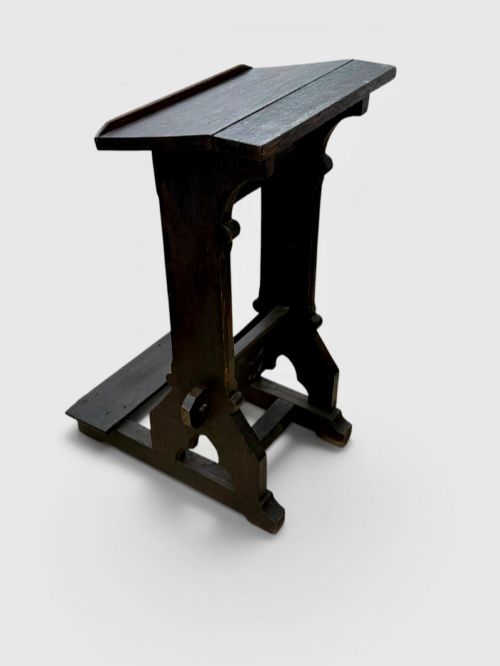
- A small wooden desk or bench built specifically for private prayer, featuring a slanted shelf for books and a padded kneeling rail. These frequently incorporate carved panels.
- Corpus Christi
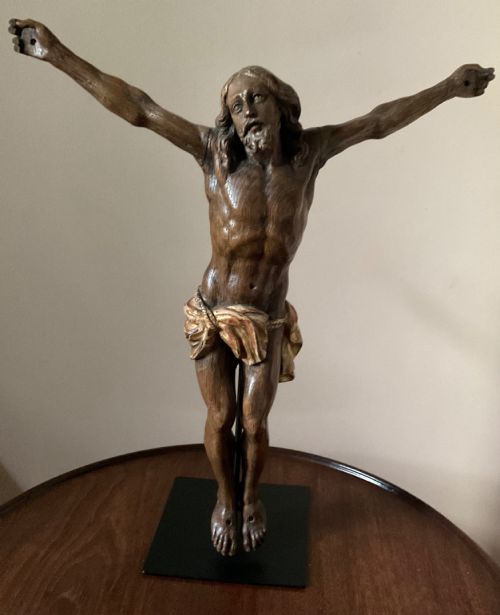
- The sculpted figure of Christ attached to a cross. These range in scale from small devotional objects to substantial architectural elements.
- Altarpiece
- A large decorative structure placed behind an altar, often featuring multiple carved panels depicting biblical narratives or saints.
Religious Oak Carving: Frequently Asked Questions
Where did these carvings originate?
These sculptures and panels originate from churches, chapels and monastic foundations across Britain and continental Europe. Workshops in Flanders, Germany, France and Italy produced the majority of the surviving examples.
Over the centuries, many pieces passed from ecclesiastical settings into private collections during periods of church reform and secularisation.
How do I care for an oak carving?
Maintain stable indoor humidity levels and keep antique wood away from direct heat sources and strong sunlight. This prevents the timber from splitting or warping.
Apply a light microcrystalline wax occasionally to nourish the surface without attracting dust or clouding the aged patina.
How can I tell the period?
Tool marks, timber shrinkage patterns and stylistic conventions provide clear indicators of age. Late Gothic and Renaissance pieces display characteristic drapery folds and facial carving styles distinct from nineteenth-century revival work.
Examining the back of a panel or sculpture often reveals primitive adze marks and pegged joinery consistent with early workshop practices.
How were prayer desks used?
Prie-dieus served as personal devotional furniture within domestic chambers or private chapels. Owners knelt on the lower platform while resting prayer books upon the upper sloping shelf.
Carved panels and figures integrated into these desks often reflected the personal patron saints or theological leanings of the original owner.