
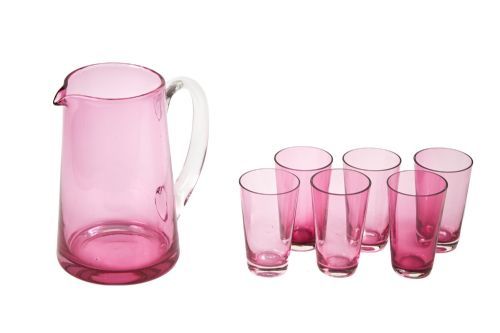
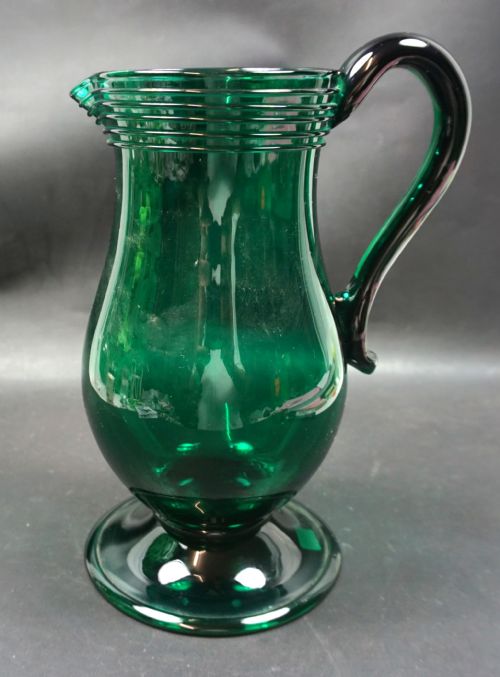


Hand Blown Jug
A hand blown jug brings tactile depth to a table, combining ancient glassforming methods with the unmistakable weight and movement of liquid metal shaped by breath.
Hand Blown Jug
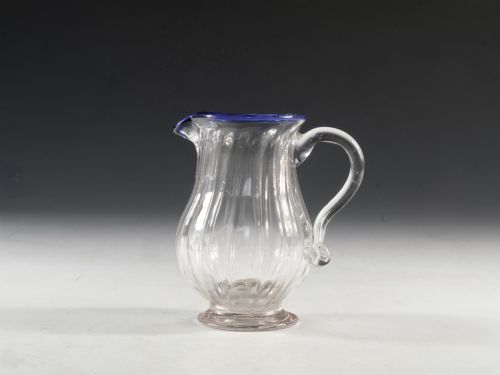
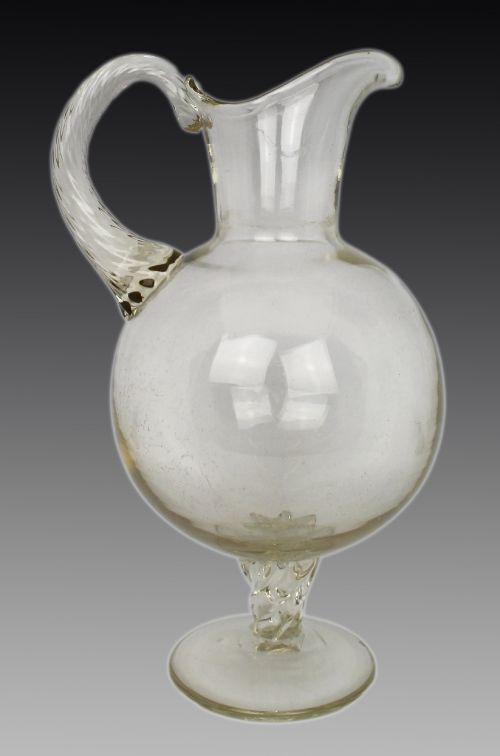
A hand blown jug is a functional or decorative vessel created through traditional glassblowing techniques, spanning eras from the Georgian period through the Victorian and Edwardian decades. Buyers searching for a hand blown jug encounter forms ranging from small cream jugs and pitchers to larger wine ewers and decanters.
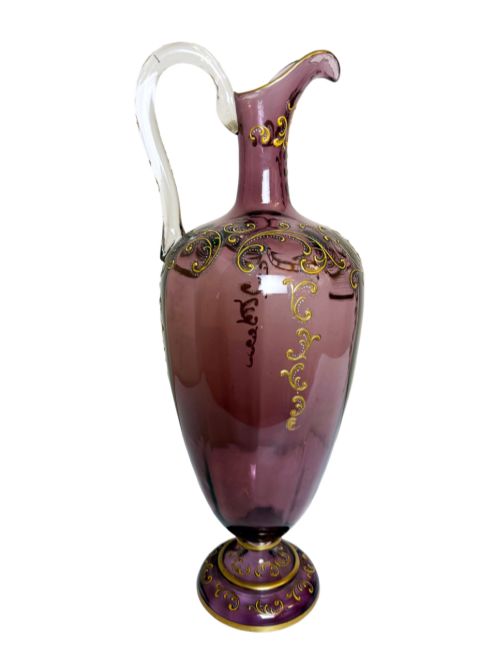
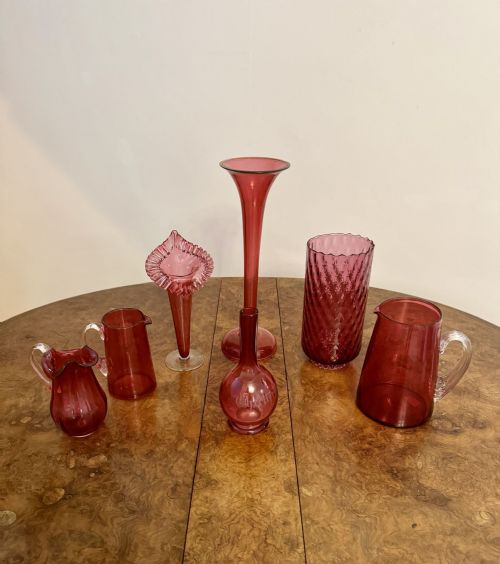
The most common examples on this page date to the nineteenth century, particularly the Victorian era, alongside Georgian and Edwardian specimens. These pieces frequently appear in rich cranberry glass, clear lead glass, or vibrant green and blue hues, often accompanied by enamel painting, gilt applique, or folded feet.
How they were made
Craftsmen shaped molten glass using an iron blowpipe, manipulating the material while hot to form the body and handle of the vessel. Techniques recorded in these pieces include trailing rims, wrythen ribbing, and gadrooned texturing.
Makers embellished the glass surfaces using diverse methods, applying gold leaf, hand-painted enamel scenes such as Mary Gregory figures, or contrasting coloured glass rims to achieve distinct decorative effects.
The listings span the eighteenth, nineteenth, and early twentieth centuries, featuring materials such as cranberry glass, enamel, gold leaf, and lead glass.
What varies in quality
Quality in these vessels rests upon the balance and weight of the glass, the symmetry of the hand-formed body, and the crispness of applied details such as handles and folded feet. Superior pieces display harmonious proportions and careful control over the thickness of the metal.
The sophistication of the decoration further separates standard items from exceptional ones. Finely executed hand-painted enamel, intact gold leaf gilding, and the depth of colour in cranberry or amethyst glass elevate the visual impact of the piece.
The Hand Blown Jug Glossary
- Cranberry glass
- A red-pink transparent glass coloured with gold chloride. It gained immense popularity during the Victorian period for tableware and decorative sets.
- Ewer
- A large jug with a wide spout and a looped handle, traditionally used for holding water or wine. Many examples from the late nineteenth century feature footed bases.
- Wrythen
- Twisted or spiral moulded glass decoration. This pattern creates a subtle diagonal optical effect across the body of the vessel.
- Gadrooned
- Ornamented with a carved or moulded series of convex curves. This decorative border frequently appears on Georgian silver and glassware.
- Mary Gregory
- A style of white enamel painting depicting silhouetted children in pastoral settings. It is commonly found on Victorian green and cranberry glass.
Hand Blown Jug: Frequently Asked Questions
How do I clean an antique glass jug?
Wash the vessel gently by hand using lukewarm water and mild soap. Avoid abrasive sponges or sudden temperature shifts that might stress antique material.
Dry the glass immediately with a lint-free cloth to prevent water spots, taking extra care around applied gilt or enamel decoration.
Can I use these jugs for serving drinks?
Many of these pieces were originally made for functional use on the dining table, serving water, wine, or cream. However, older lead glass and fragile enamel work require careful handling during use.
Inspect the interior and rim for any historical wear before deciding to serve liquids from the vessel.
What is an Anglo-Irish glass jug?
Anglo-Irish glass refers to pieces produced during a period of prolific glass manufacturing in Ireland under British tax laws. These items are noted for heavy lead metal and distinct cutting.
Such vessels often display exceptional clarity and substantial weight compared to continental contemporaries.