


Antique Glass Ewer
An antique glass ewer is a pouring vessel for wine, water or liqueurs, shaped with a handle and a spout for formal table service.
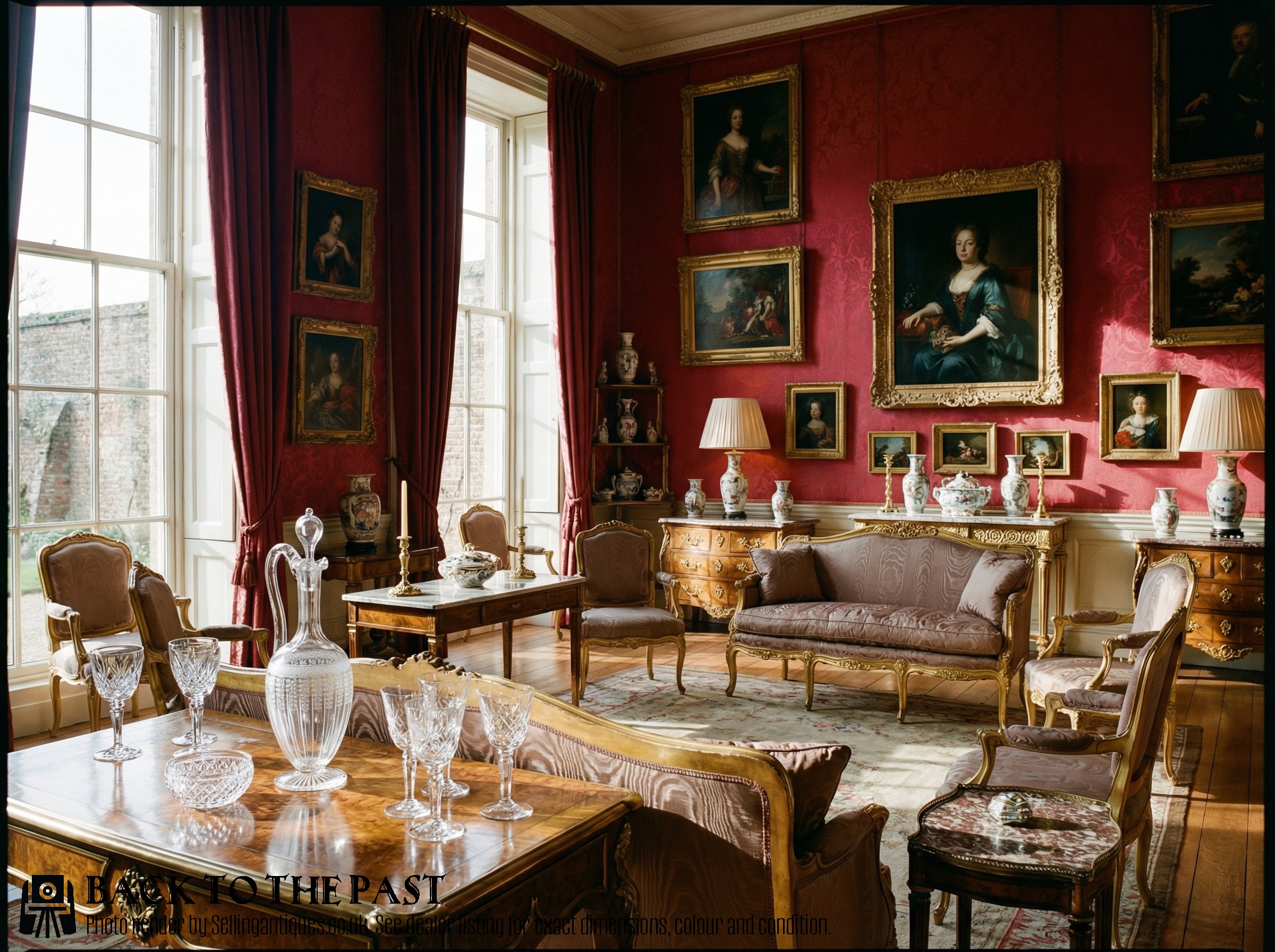
Antique Glass Ewer
When you search for an antique glass ewer, you find pouring vessels spanning the Victorian and Edwardian eras, alongside late nineteenth century continental examples. These pieces serve as water jugs, wine claret jugs, oil and vinegar bottles, or ornamental lamp bodies.
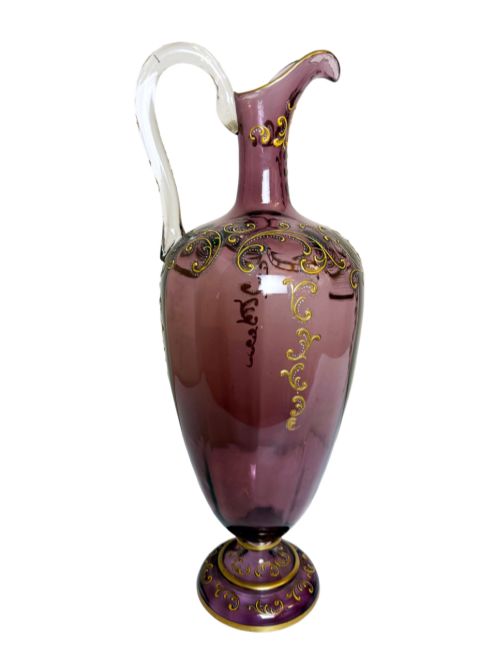
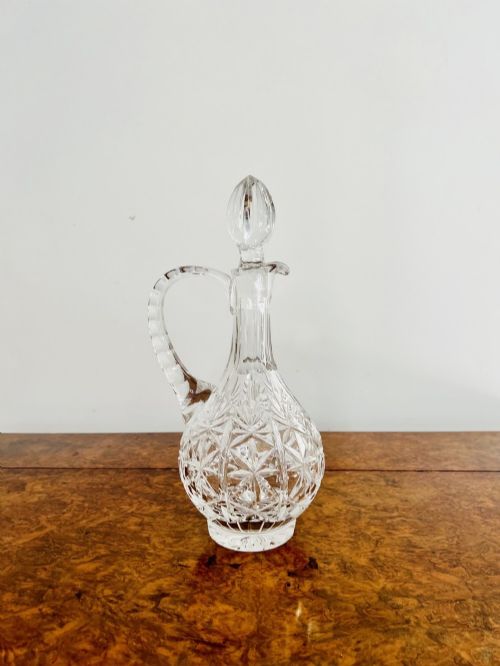
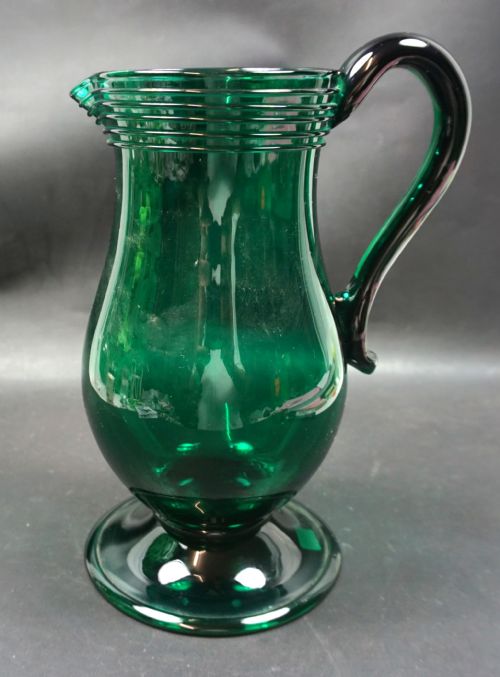
The versions you meet most often on this page are Edwardian cut glass ewers and Victorian blown or moulded vessels, frequently paired with silver plate mounts or handles. They appear in clear crystal, vibrant green, deep blue, violet, and opaque glass decorated with hand painted gilt applique.
Makers and workshops across England, France, Italy, Germany and Bohemia produced these forms, ranging from simple tavern jugs to elaborate ornamental centrepieces with matching stands and goblets.
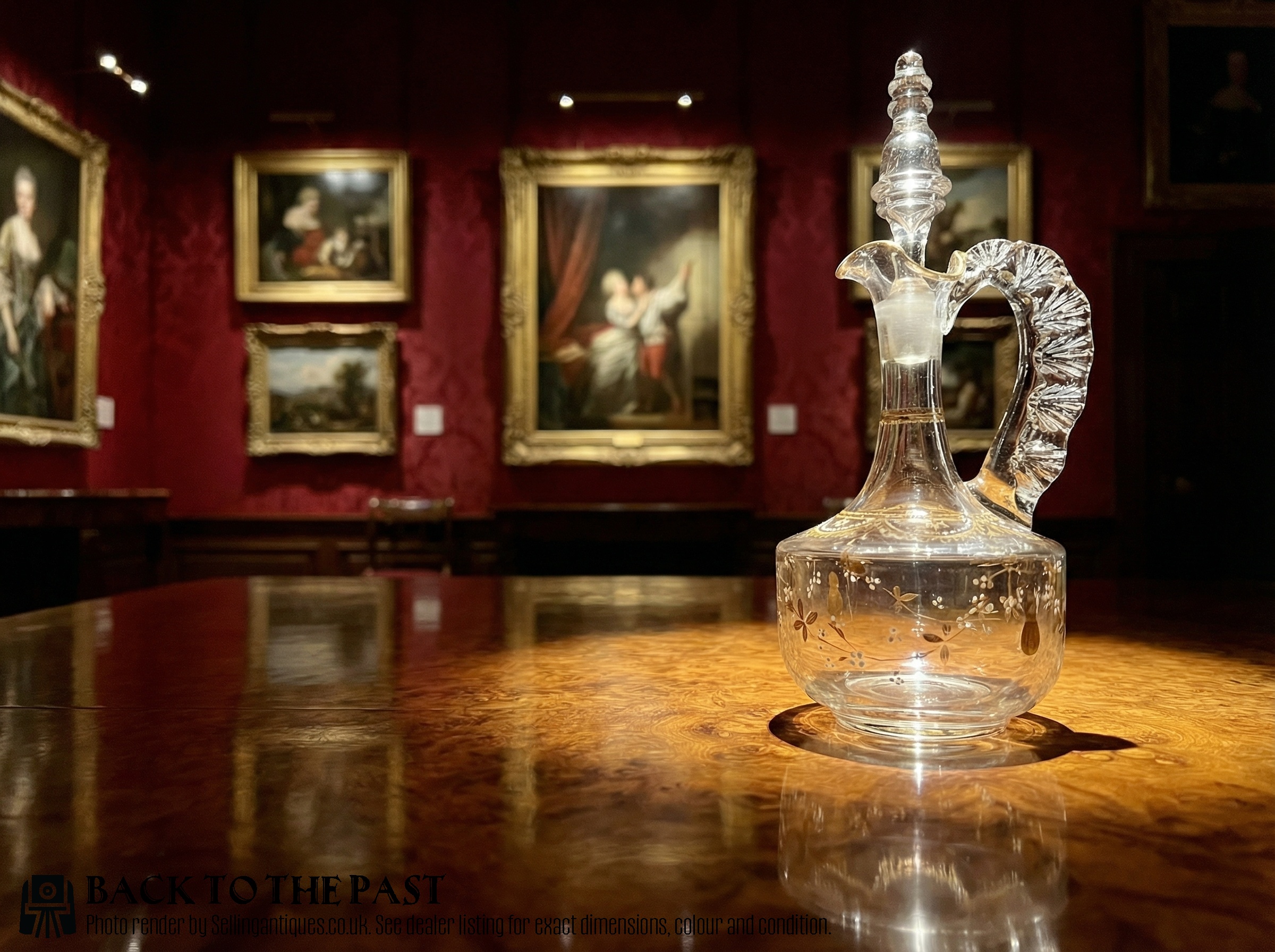
How they were made
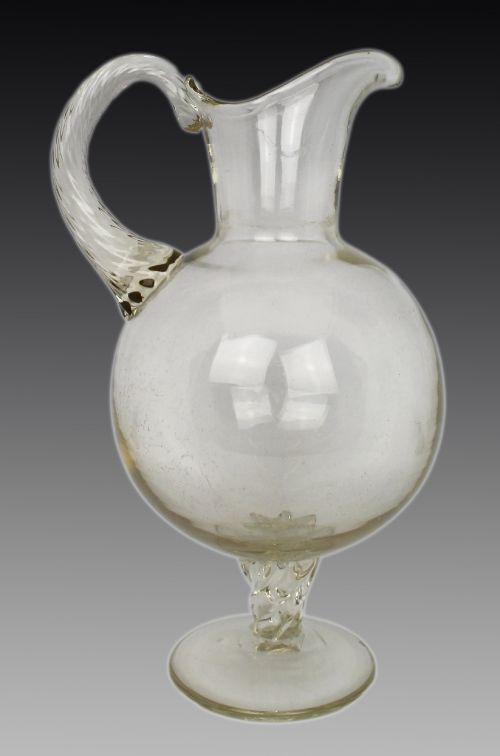
Makers shaped these vessels through hot glass techniques, including hand blowing into moulds, free blowing, and pulling trails or folding feet while the metal was pliable. Craftsmen also utilised lead crystal and clear glass blanks, which cutters carved with geometric or floral facets.
Many examples incorporate applied details such as gold leaf, white glass latticinio threads, and hand painted enamel figures like those associated with Mary Gregory styles. Metalwork elements, including silver plate mounts, ormolu frames, and cast handles, were secured to the glass bodies to complete the utility of the pourer.
Antique Glass Ewer Retail Price Guide 2026
Typical asking prices for glass ewer among the pieces listed under this phrase on Sellingantiques today, from the lower quarter to the upper quarter. They describe what is for sale here now, not the wider market.
Materials recorded across the archive include cut glass, lead crystal, blown glass, silver plate, ormolu, and gold leaf.
What varies in quality
The distinction between standard utility vessels and superior salon pieces lies in the crispness of the cutting, the weight and clarity of the lead crystal, and the purity of the coloured metal. Heavier glass bodies with deeply carved facets demonstrate higher technical skill from the cutter.
The refinement of the mounts elevates a piece, particularly when solid silver or detailed French ormolu replaces basic silver plate. The integration of matching stands, stoppers, or complete goblet sets indicates a higher original commission rather than a single production run.
Baccarat·WEBB and Son·Lancon Paris
The Antique Glass Ewer Glossary
- Ewer
- A large pouring vessel with a wide spout and a curved handle, traditionally used for water or wine at the dining table. They frequently appear alongside decanters and pitchers in domestic settings.
- Latticinio
- A glassblowing technique featuring fine opaque white glass threads twisted or combed within a clear glass matrix. This method originated in Murano and was adopted by nineteenth century European makers.
- Ormolu
- Gilt bronze mounts cast and chased to adorn decorative objects and glass vessels. French makers utilised this material extensively during the nineteenth century.
- Gilt Applique
- Applied metallic gold decoration fixed to the exterior surface of the glass body. It often forms pictorial scenes, floral motifs, or geometric borders.
- Folded Foot
- A base edge formed by doubling the hot glass back onto itself to create a thickened, stable rim. This feature strengthens the resting point of blown vessels.
Antique Glass Ewer: Frequently Asked Questions
How were these glass ewers used originally?
These vessels served water, claret, dessert wine, cordials, and oil and vinegar during formal Victorian and Edwardian meals. They sat on sideboards or dining tables ready for servants to pour drinks into matching goblets.
Others functioned purely as ornamental display items, garnishing mantels or serving as the bases for nineteenth century oil lamps.
How do I care for an antique glass ewer?
Wash these pieces by hand using lukewarm water and mild soap, avoiding harsh scrubbing on gilt applique or enamel painted surfaces. Metal mounts in silver plate or ormolu require gentle dusting rather than abrasive chemical polishes.
Keep them away from rapid temperature changes to protect nineteenth century blown glass from thermal shock.
How can I tell a Victorian ewer from an Edwardian one?
Victorian examples often embrace exuberant styles like Rococo Revival, deep jewel tones such as green and blue, or hand painted enamel scenes. They frequently showcase heavy silver plate mounts and ornate blown forms.
Edwardian pieces lean towards crisp, brilliant cut lead crystal with lighter proportions, reflecting changing domestic tastes at the turn of the twentieth century.