


Clear Glass Ewer
A clear glass ewer brings fluid line and brilliant refraction to the table, uniting practical pouring with decorative form across Victorian and Edwardian dining rooms.
Clear Glass Ewer
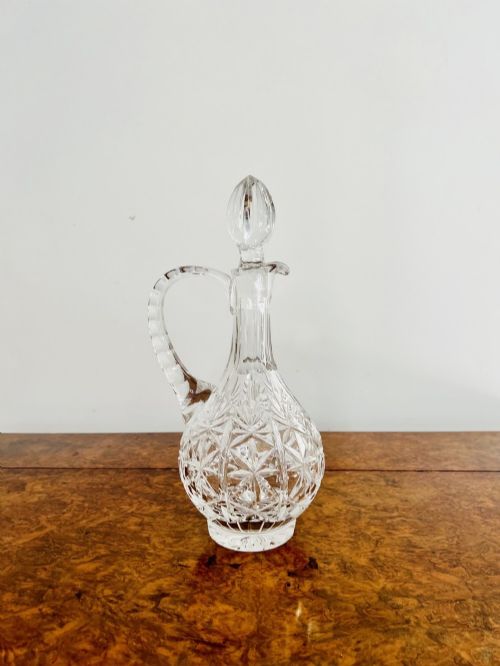
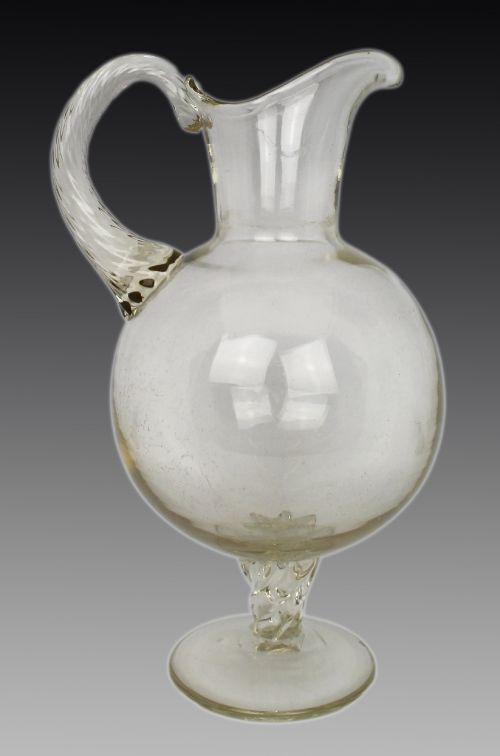
A clear glass ewer functions as a decorative vessel for serving wine, cordials, or water, taking forms that range from slender decanters to footed pitchers and oil bottles. When buyers search for a clear glass ewer, they encounter historic vessels shaped primarily during the Victorian and Edwardian eras, alongside late 19th-century continental examples.
The objects on this page appear in various stylistic guises, including French Rococo Revival, French Second Empire, and sinuous Art Nouveau profiles. English, Italian, French, and German workshops all contributed to these forms, utilising clear glass bodies that often incorporate additional decorative flourishes.
Domestic service dictated the design of many pieces, leading to serving jugs fitted with handles and slender necks for controlled pouring. Alongside dedicated ewers, the selection includes related forms such as decanters, cruet bottles, and dessert wine jugs.
How they were made
Makers shaped these vessels through hot-glass techniques such as hand-blowing, producing fluid walls that could be drawn into graceful spouts and applied handles. Italian hand-blown glass footed ewers demonstrate this plastic manipulation while the metal is hot.
Cut glass and lead crystal vessels received their intricate surface patterns through cold-working, where wheels ground deep facets into the thick walls to maximise the refraction of light. Edwardian and Victorian cut glass ewers rely heavily on this laborious cutting to define their profiles.
Metal mounts provided structural reinforcement and decorative contrast, integrating sterling silver or silver plate into the rims, handles, and hinged lids. Some pieces also incorporate delicate details such as gold leaf or white glass latticinio decoration embedded within the crystal.
Some Victorian dining tables required dedicated oil and vinegar bottles mounted in silver just to keep salad dressings properly managed.
What varies in quality
The clarity and weight of the material set the baseline for quality, distinguishing dense lead crystal and heavy hand-blown glass from thinner, simpler utility vessels. Superior pieces show crisp, deep facet cutting that remains sharp to the touch without soft edges.
The integration of metal elements defines the upper tiers of craftsmanship, where heavy sterling silver mounts or elaborate silver plate fit the glass body without gaps. Finer examples also display sophisticated decorative techniques, such as integrated latticinio threads or distinct regional styling from French and German workshops.
Baccarat
The Clear Glass Ewer Glossary
- Ewer
- A large decanting pitcher featuring a wide-lipped spout and a looped handle, traditionally used for serving liquids at table. These vessels combine functional pouring utility with sculptural presence.
- Cut Glass
- Glassware decorated by grinding facets and patterns into the surface using rotating wheels. This technique enhances the brilliance and light refraction of the material.
- Latticinio
- A decorative glass technique incorporating opaque white glass threads within clear crystal to create delicate lace-like patterns. This method appears in continental production.
- Silver Plate
- A base metal substrate coated with a thin layer of silver, frequently used for the mounts, hinged lids, and handles of serving ewers. It offered the appearance of solid silver at a lower cost.
- Decanter
- A stoppered glass vessel designed for holding and serving wine or spirits. In many historical contexts, the terms decanter and ewer overlap for serving pieces.
Clear Glass Ewer: Frequently Asked Questions
What is a clear glass ewer used for?
These vessels served historic dining tables as elegant pitchers for wine, water, cordials, or oil and vinegar. They allowed hosts to decant and present beverages with refined style.
Today, they function as decorative display pieces or practical serving jugs for formal dinners and gatherings.
How do I clean an antique glass ewer?
Historic glass requires gentle hand washing in warm water with mild detergent to preserve the material and any metal mounts. A soft bottle brush helps reach interior residue without scratching.
Avoid harsh chemicals or submersing pieces with delicate silver plate or gold leaf for extended periods.
How can I tell Victorian from Edwardian ewers?
Victorian examples often display heavier ornamentation, including ornate silver mounts, Rococo Revival curves, or deep cut glass patterns from the mid to late 19th century. They reflect the eclectic decorative tastes of the era.
Edwardian pieces tend toward brighter, crisper cut glass styling characteristic of the early 1900s, often prioritising clean geometric refraction over heavy applied metalwork.
Are these ewers safe for daily use?
Many of these pieces remain structurally sound and capable of holding liquids for serving at modern tables. Care should be taken with antique glass and delicate silver-plated mounts.
Owners often choose to use them selectively for special occasions to preserve their historic condition.