



Etched Glass Pitcher
An etched glass pitcher brings remarkable texture to table service, uniting crisp decorative motifs with the weight of silver plate or clear glass.
Etched Glass Pitcher
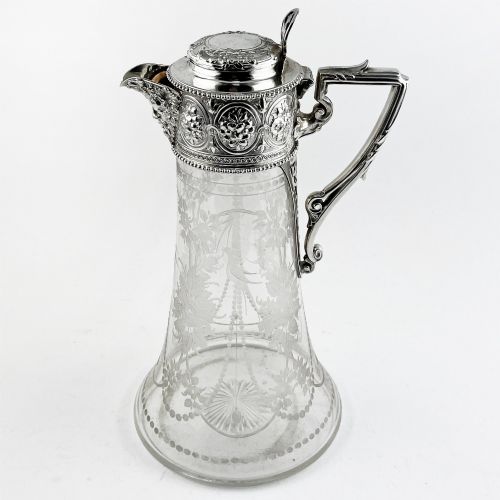
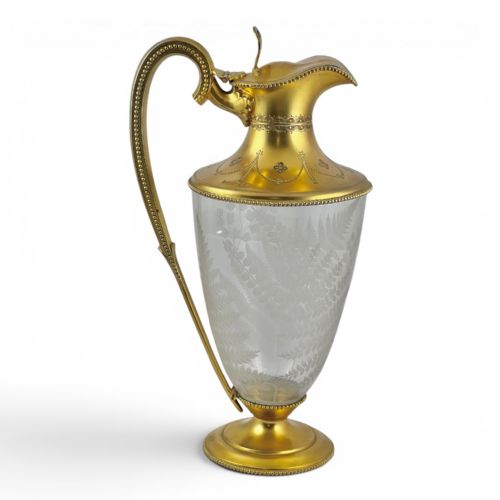
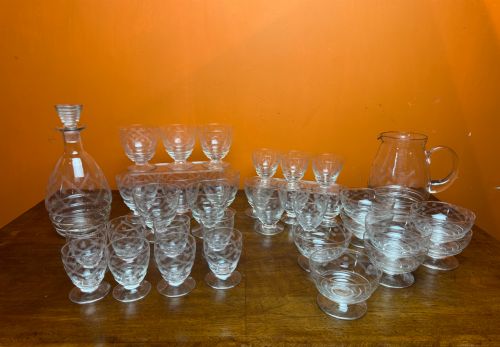
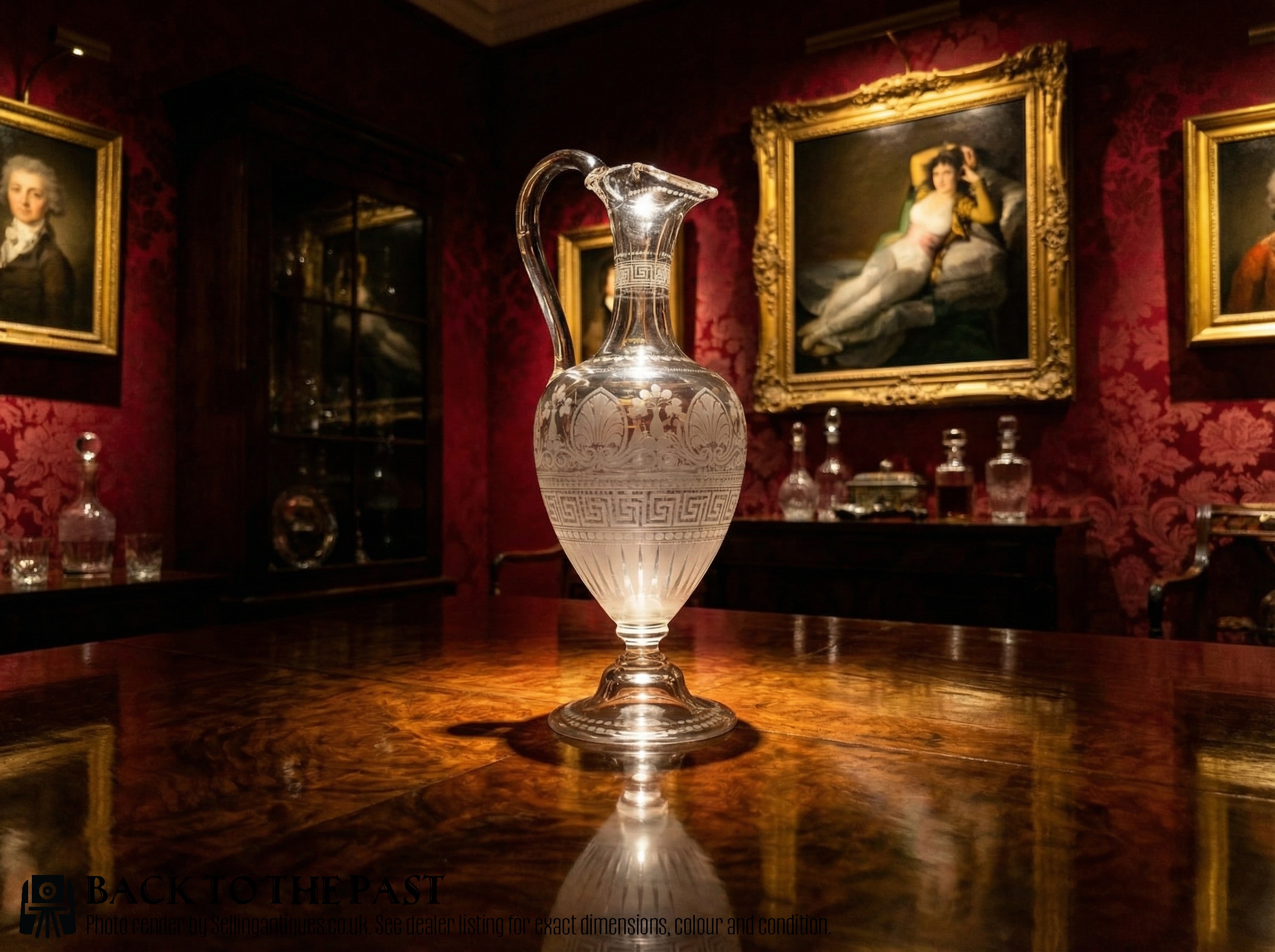
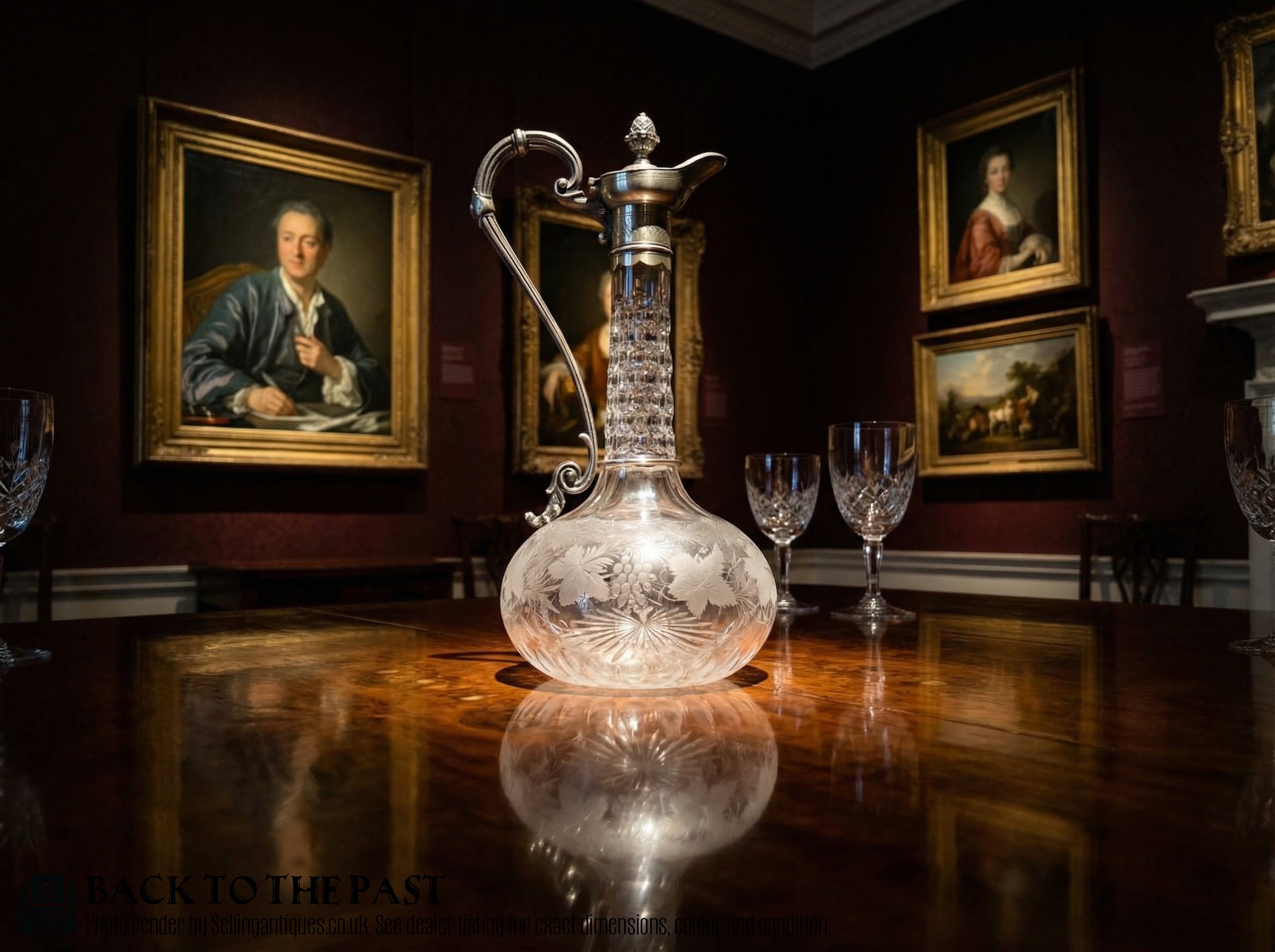
When searching for an etched glass pitcher, collectors encounter a diverse selection of vessels spanning the nineteenth century through the Art Deco era. The forms range from classical wine ewers and claret jugs mounted in sterling silver or silver plate to lemonade pitchers decorated with birds or botanical motifs.
Victorian examples dominate the selection, often featuring elaborate floral or grapevine engravings paired with ornate handles and mounts. Later twentieth-century pieces shift towards geometric Art Deco designs or acid-etched European glassware, providing versatile options for everyday use and display.
How they were made
Makers utilised clear glass, lead crystal, or cased glass, sometimes overlaying coloured layers onto a transparent base. Metal components such as silver plate and sterling silver were cast and chased to form mounts, handles, and hinged lids.
Decoration relied on skilled hand wheel engraving, wheel-cutting, or acid-etching to carve botanical and figurative scenes into the surface of the vessel. Silver mounts were frequently hallmarked to indicate the year of manufacture and the silversmith's workshop.
Etched Glass Pitcher Retail Price Guide 2026
Typical asking prices for etched glass pitcher among the pieces listed under this phrase on Sellingantiques today, from the lower quarter to the upper quarter. They describe what is for sale here now, not the wider market.
Some nineteenth-century makers decorated their glassware with plump grapes and twisting vines, ensuring every drink poured came with a rustic harvest scene.
What varies in quality
The standard of an etched glass pitcher rests upon the depth and clarity of the engraved decoration. Crisp, detailed hand wheel engraving demonstrates superior craftsmanship compared to shallow or mechanical surface marking.
The quality of the metal mounts also defines the piece. Heavy silver plating or solid sterling silver mounts with secure hinges and balanced handles separate fine tablewares from simpler utilitarian vessels.
Asprey and Co. Ltd·Elkington·Daum·WEBB and Son
The Etched Glass Pitcher Glossary
- Claret jug
- A vessel specifically designed for serving red wine at the dining table. These typically combine a glass body with a metal handle, collar, and hinged lid.
- Ewer
- A large pitcher with a wide spout and a curved handle, originating from classical forms used for water or wine. Antique examples often feature decorative silver mounts.
- Silver plate
- A base metal, usually copper or nickel brass, coated with a thin layer of silver. This technique allowed manufacturers to produce ornate vessels at a lower cost than solid silver.
- Acid-etching
- A decoration technique where acid is applied to exposed areas of glass to eat away the surface and create frosted designs. This method produced intricate patterns on nineteenth and twentieth-century decanters.
Etched Glass Pitcher: Frequently Asked Questions
How do I clean an antique glass pitcher?
Wash the vessel gently by hand using warm water and mild detergent, avoiding abrasive sponges that might scratch the surface.
Dry the metal mounts thoroughly afterwards to prevent tarnishing or moisture damage to silver-plated components.
Were these pitchers only used for wine?
While many examples served as claret jugs or wine decanters, others were created specifically for lemonade, water, or general beverage service.
The inclusion of a wide spout or an integrated ice chamber often indicates whether a vessel was intended for table water or spirits.
How do I date a silver-mounted pitcher?
Examine the metal mounts for hallmarks, which indicate the assay office, standard of silver, and the precise year of manufacture.
Stylistic indicators such as Victorian vine motifs or geometric Art Deco lines also help narrow down the period of production.
Can I use an antique pitcher today?
These vessels remain entirely functional for serving drinks at the dining table provided they are handled with proper care.
Careful attention should be given to protecting delicate handles and older silver-plated hinges during pouring.