


Acid Etched Glassware
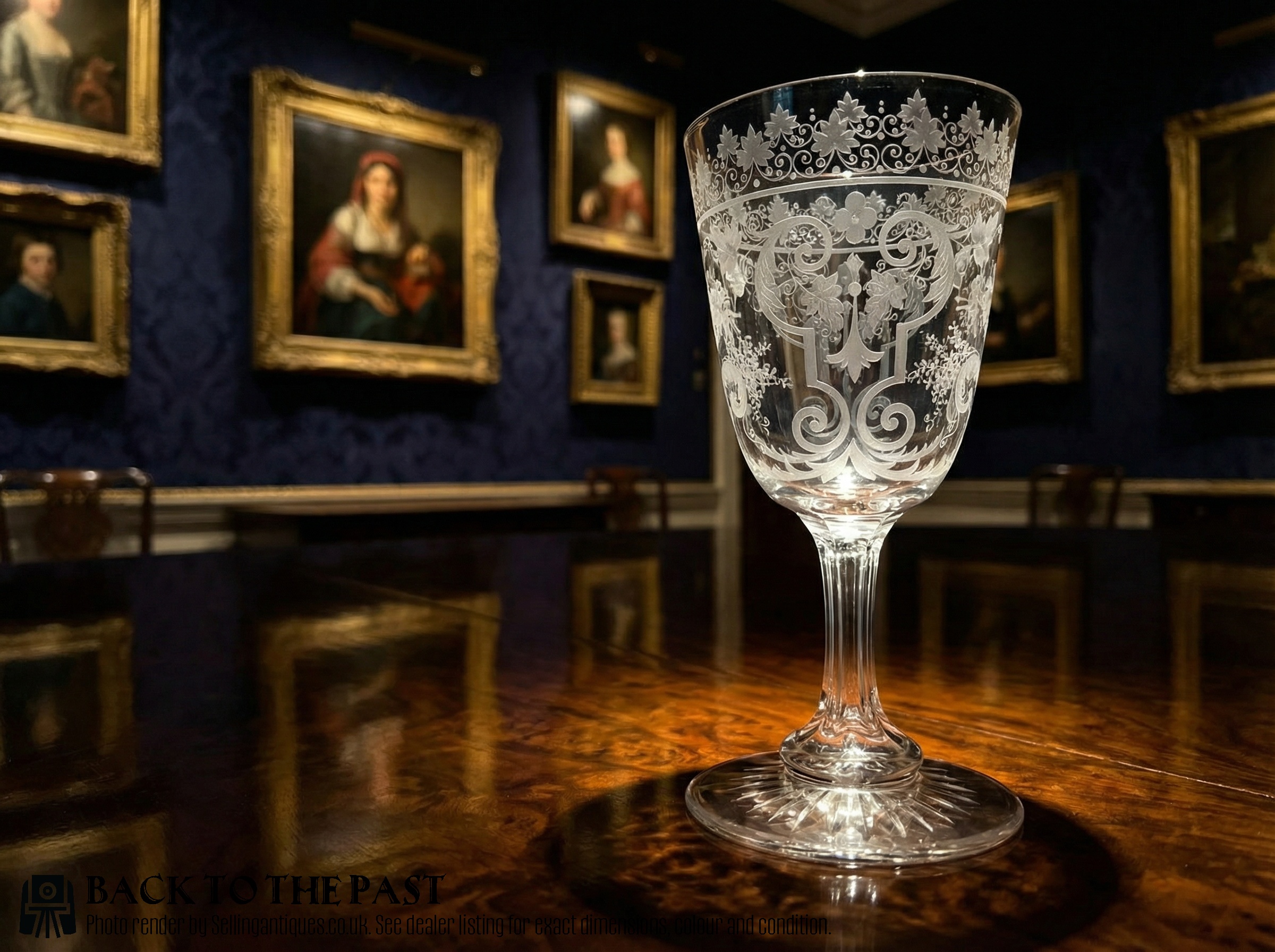
Acid etched glassware brings pattern and texture to the table through chemical mastery, offering collectors striking decorative vessels from the Victorian era to the mid-century.
Acid Etched Glassware
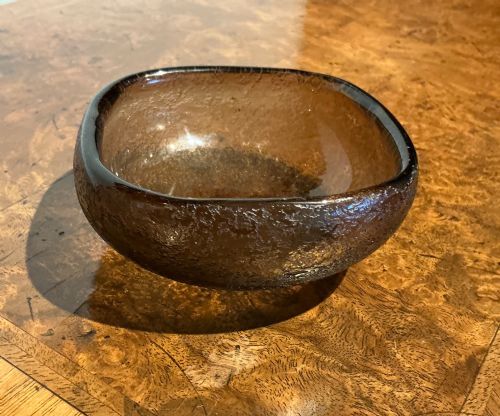
Acid etched glassware encompasses functional and decorative vessels transformed by chemical resist techniques across multiple periods. Collectors searching for acid etched glassware encounter everything from early Victorian celery vases and lead crystal tazzas to Art Nouveau cameo pieces and Art Deco designs.
The selection ranges from nineteenth-century English cut and etched crystal wine glasses to twentieth-century French cameo glass vases. Pieces span Victorian, Edwardian, and modernist eras, with notable representation from 1900, 1920, and 1930.
What varies in quality
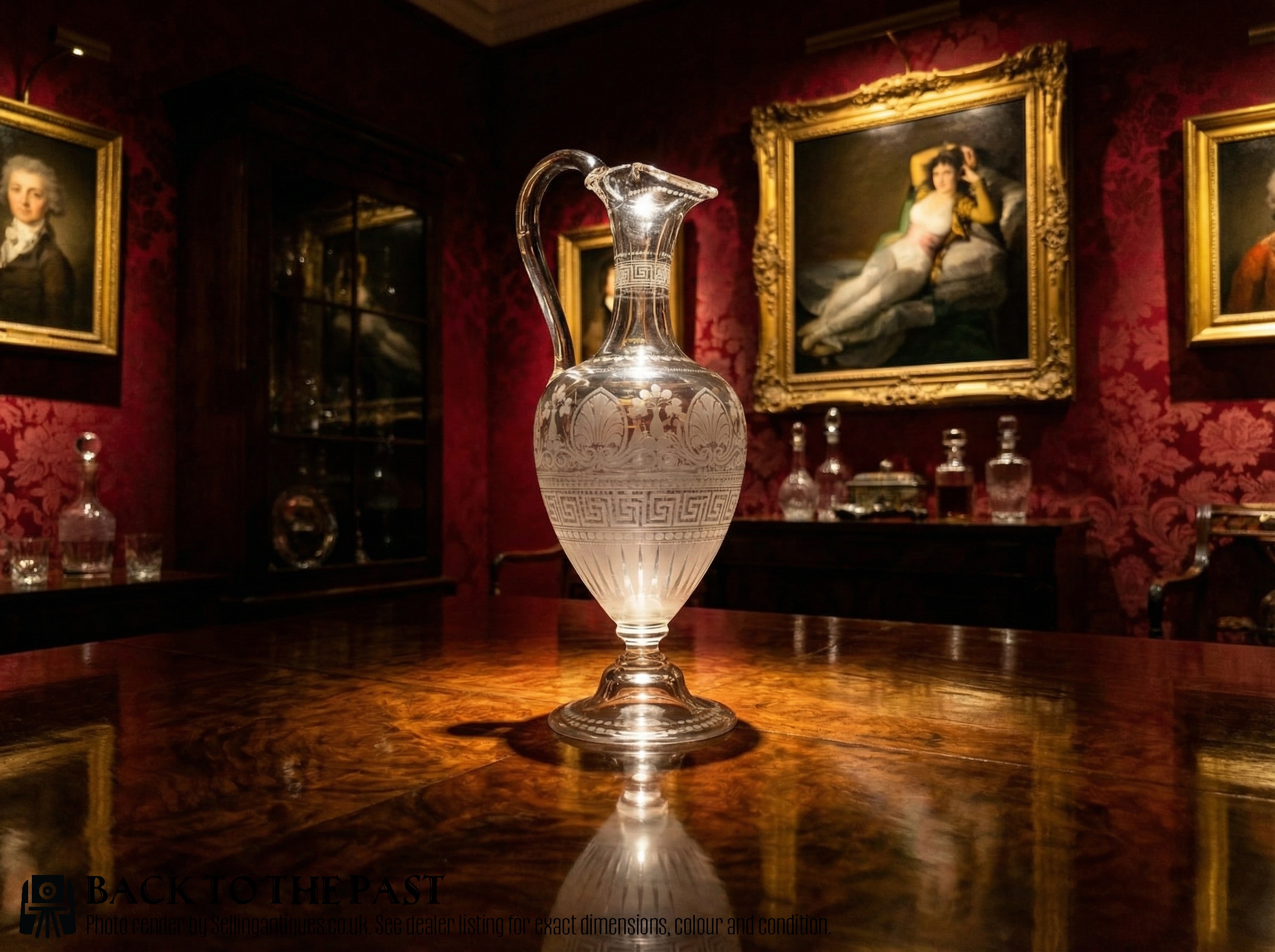
Quality rests upon the crispness of the chemical bite and the skill of the underlying glassblowing and cutting. Superior examples display sharp delineation in the etched patterns without ragged edges or uneven depth in the frosted fields.
The distinction between standard production items and masterworks also lies in the complexity of the design and the quality of the raw material, such as heavy lead crystal or multi-layered cameo glass. Finer pieces demonstrate artistic ambition in subject matter, from detailed botanical studies to sweeping landscapes.
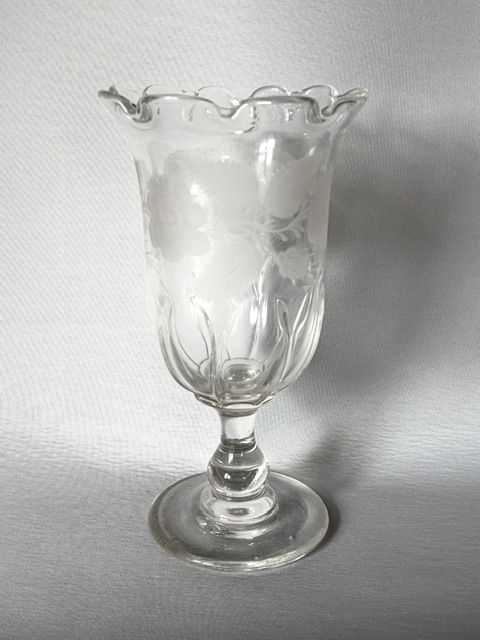
Celery once commanded such Victorian table prestige that dedicated tall vases were etched specifically to hold the upright stalks.
Gallé·Stevens & Williams·Schneider·D'Argental·Riihimaki
The Acid Etched Glassware Glossary
- Acid-Etched Glass
- Glass decorated by applying hydrofluoric acid to eat away unmasked surfaces and create design motifs. This technique produces tactile, frosted patterns that contrast with polished areas.
- Cameo Glass
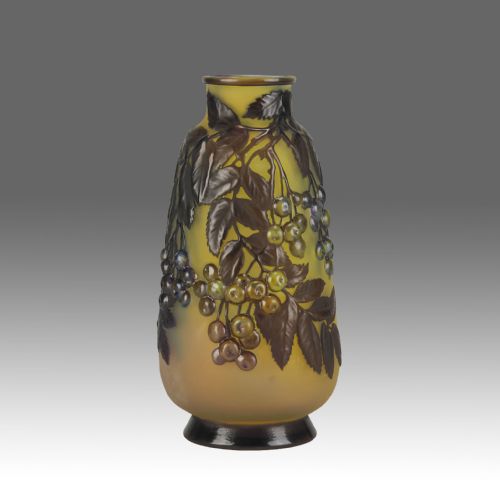
- Glass formed with multiple layers of contrasting colours, then carved or acid-etched to reveal the design in relief. This demanding method creates striking pictorial vessels.
- Lead Crystal
- Heavy, high-clarity glass containing lead oxide, which increases the weight and refractive index. It provides a superior ground for both cutting and acid etching.
- Tazza
- An ornate shallow bowl or cup mounted on a stem and foot, used for serving or display. Victorian examples often combine acid etching with cut lead crystal.
- Celery Vase
- A tall vessel specifically designed in the Victorian period to display stalks of celery on the dining table. These tall forms frequently showcase detailed etching and facet cutting.
Acid Etched Glassware: Frequently Asked Questions
How do I clean acid etched glassware?
Wash delicate pieces gently by hand in warm soapy water using a soft cloth. Avoid harsh scrubbing brushes and sudden temperature changes to protect the vulnerable etched surfaces.
Dry immediately with a lint-free towel to prevent water spots from forming within the frosted recesses of the pattern.
How can I date my piece?
Examine the stylistic markers, such as the flowing organic curves typical of Art Nouveau or the geometric precision of Art Deco and mid-century designs. Victorian and Edwardian examples often rely on heavier lead crystal forms like tazzas and celery vases.
Compare the signature style, colour palette, and manufacturing technique with documented examples from known period makers and glasshouses.
What is cameo glass?
Cameo glass is a vessel formed with two or more distinct layers of coloured glass fused together while hot. Artisans then carve or acid-etch through the outer layer to expose the contrasting background.
This creates a raised design in relief, allowing for intricate pictorial effects favoured by major turn-of-the-century workshops.
Are these pieces suitable for daily use?
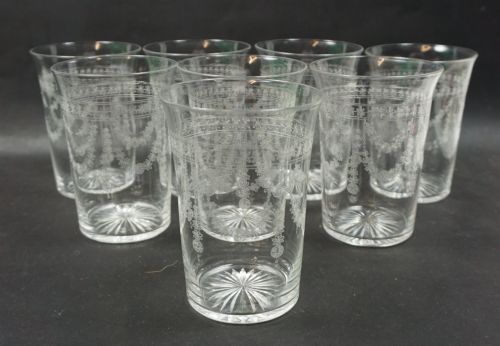
Many robust tumblers and decanters were made for practical dining and can handle gentle everyday use. Fine cameo vases and delicate antique wine glasses require much more careful handling.
Consider the fragility and historical value of each individual vessel before incorporating it into daily dining routines.