
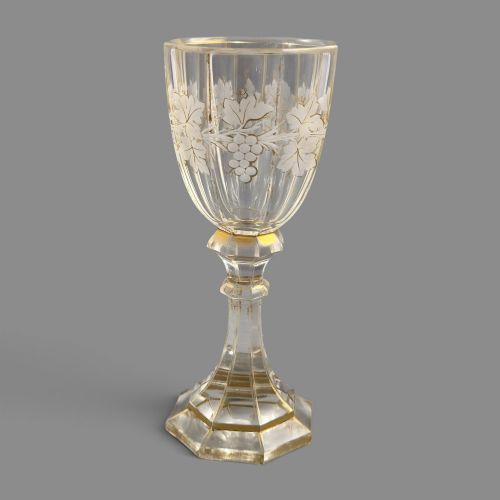
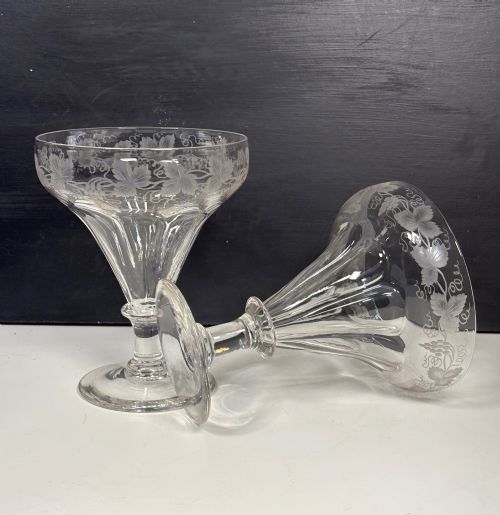


Victorian Engraved Wine Goblet
These Victorian engraved wine goblet examples combine heavy lead crystal and sterling silver with delicate wheel-cut botanical decoration, offering a substantial and tactile drinking vessel for your table.
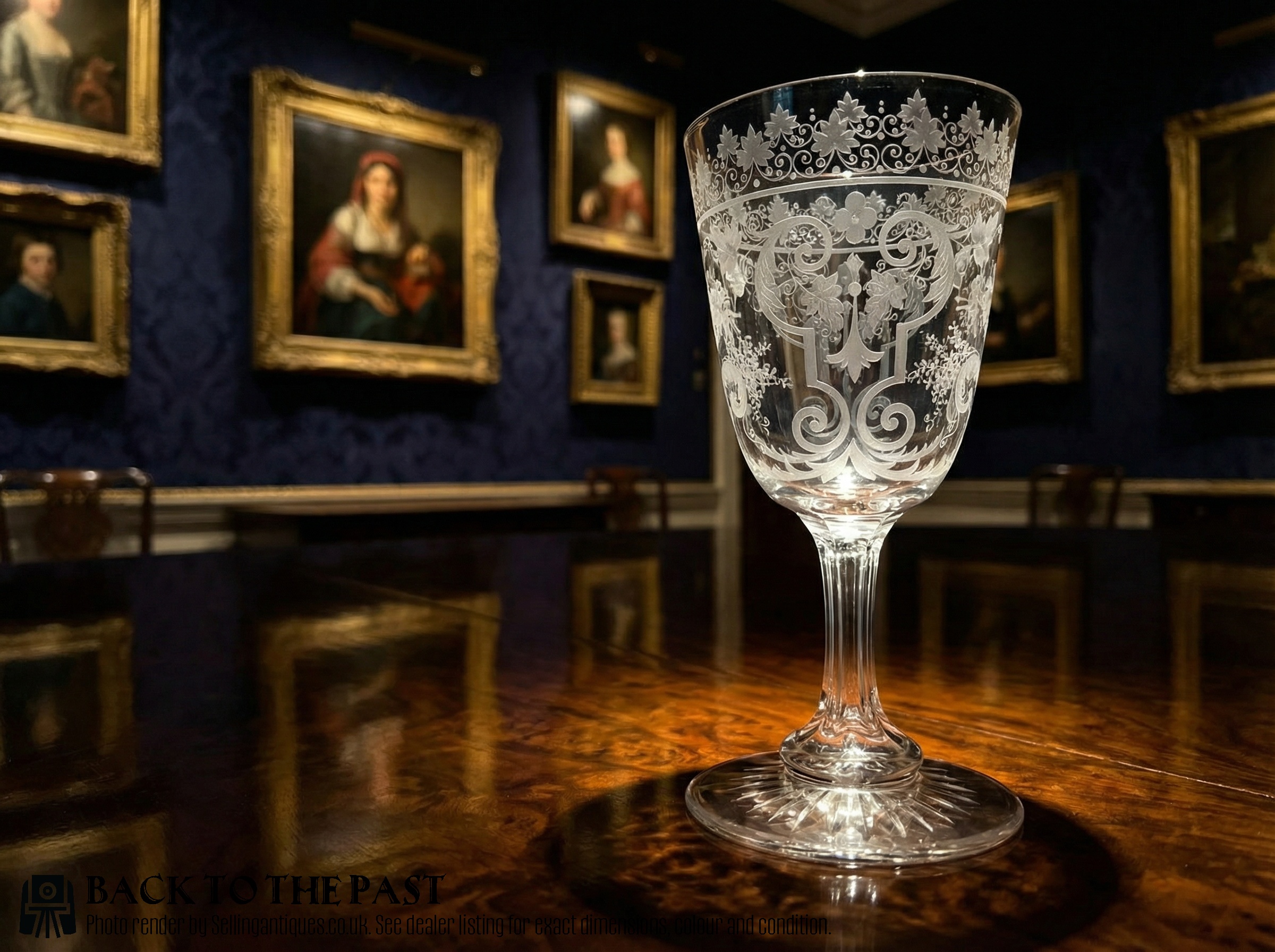
Victorian Engraved Wine Goblet
A Victorian engraved wine goblet brings together the robust forms of nineteenth-century glassware and silver with meticulous surface decoration. When you search for a victorian engraved wine goblet, you encounter deep-bowled drinking vessels produced during the nineteenth century, most frequently appearing from the 1850s through to the 1890s.
The glassware examples on this page range from clear lead crystal rummers to amber Bohemian roemers featuring intricate etched or wheel-cut flora. Alongside glass, you find sterling silver and silver-plated chalices, sometimes parcel gilt or paired as presentation pieces and communion vessels.
Assessing quality in nineteenth-century goblets
Quality rests upon the crispness of the wheel engraving and the clarity of the metal or glass substrate. Superior examples display deep, deliberate cuts with sharp detail rather than shallow, acid-etched approximations.
In silver and plated wares, the weight of the metal and the precision of the applied gilding distinguish workshop standards. Balanced proportions and heavy-gauge lead crystal separate the finest drinking vessels from standard production pieces.
Listings span the 19th century, featuring clear glass, lead crystal, sterling silver, silver plate, and gold gilding.
Moser Bohemian·George Unite·John Hunt and Robert Roskell·Fordham and Faulkner·Stevens and Williams
The Victorian Engraved Wine Goblet Glossary
- Lead crystal
- A type of glass containing lead oxide, which increases brilliance, weight, and workability for deep wheel engraving. This material gives nineteenth-century stemware its resonant ring and substantial feel.
- Roemer
- A traditional large-bowled drinking glass, often in green or amber glass, featuring a studded stem and extensive engraving. Bohemian makers produced these distinctive pieces throughout the nineteenth century.
- Parcel gilt
- An object made of silver or another metal that is partially gilded with gold on specific interior or exterior areas. This technique highlights particular engraved motifs against the silver background.
- Rummer
- A large, wide-bowled drinking glass designed for wine, rum, or ale during the eighteenth and nineteenth centuries. These sturdy vessels frequently rest on a short stem and conical foot.
- Old Sheffield plate
- A composite material made by fusing a thin sheet of silver to a thicker copper base before rolling and forming. This early plating method produces durable nineteenth-century hollowware.
Victorian Engraved Wine Goblet: Frequently Asked Questions
How do I date a glass goblet?
Examine the pontil mark on the underside of the foot, the weight of the lead crystal, and the style of the wheel engraving. Earlier nineteenth-century examples often display rough snapped pontils and heavier forms.
Compare the decorative motifs, such as ferns or naturalistic flowers, against documented production periods from makers like Stevens and Williams or Bohemian houses.
Can I use these for drinking wine?
Many buyers enjoy using these antique vessels for special occasions, as lead crystal and sturdy silver are structurally robust. Hand washing is essential to preserve the nineteenth-century glass and parcel gilding.
Avoid sudden temperature changes to protect the old lead crystal from thermal shock during use.
What is the difference between etched and engraved?
Engraved glass utilises rotating wheels of stone or copper to cut deep lines and facets into the surface. Etched glass employs acid to eat away the design through a resist, creating shallower, frosted lines.
Wheel-engraved pieces typically show greater depth and tactile variation across the floral patterns.
Were silver goblets used for drinking?
Sterling silver and plated chalices served both as functional drinking vessels and as presentation pieces for cricket matches and civic events. Many feature inscriptions detailing their original competitive purpose.
Church silver on the page functioned specifically as communion chalices rather than secular tableware.