




Etched Crystal Wine Glass
An etched crystal wine glass brings nineteenth-century weight and delicate wheel-cut detail to the dining table.
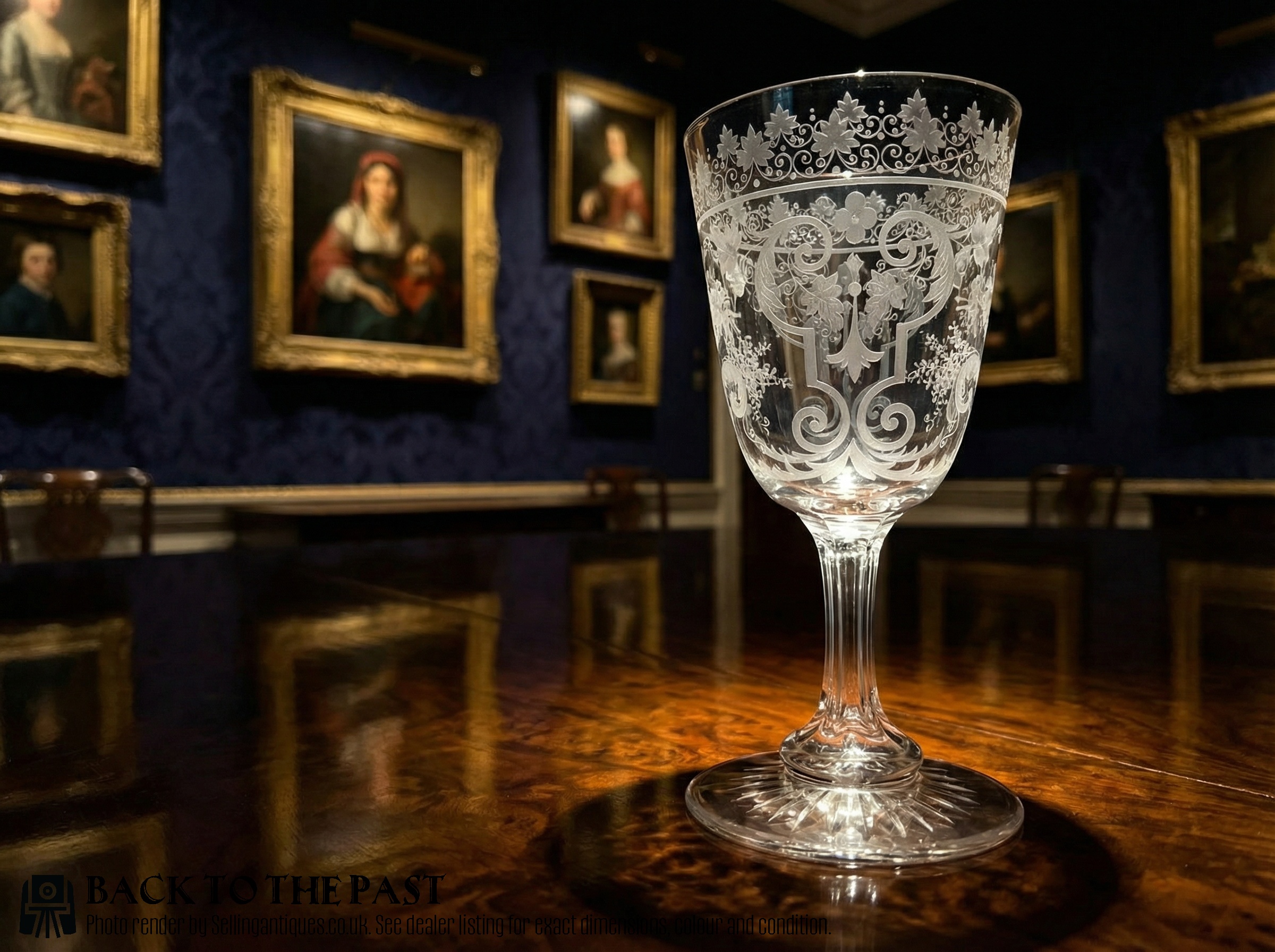
Etched Crystal Wine Glass
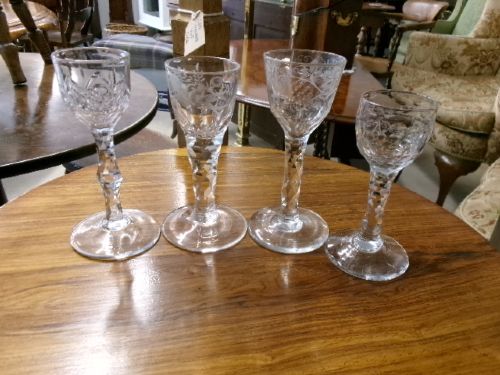
When searching for an etched crystal wine glass, collectors encounter drinking vessels primarily originating from the Victorian and Edwardian eras, alongside pieces spanning the nineteenth century. The selection ranges from individual dessert wine glasses and harlequin sets to taller hock glasses and roemers.
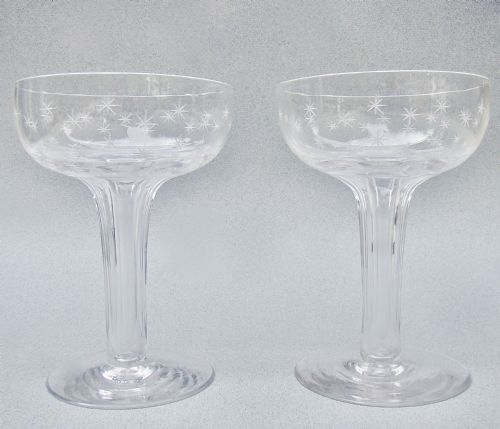
Victorian examples dominate the available forms, often featuring hollow stems, star-etched motifs, or elaborate fruiting vine patterns around the bowl. These items reflect the heavy dining culture of the late eighteen-hundreds, where clear crystal and cut glass served both decorative and practical functions.
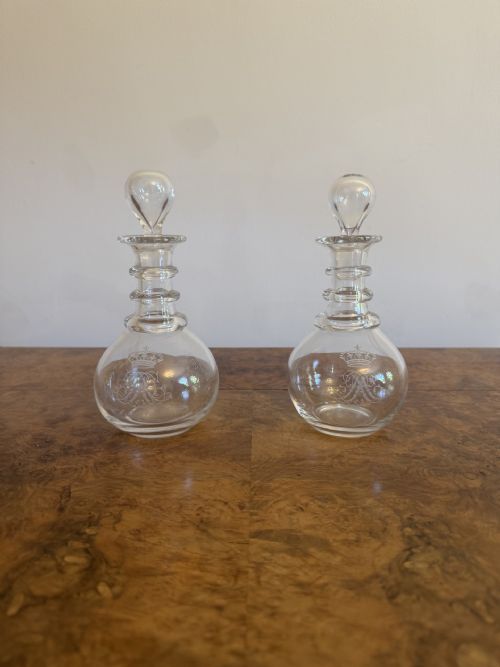
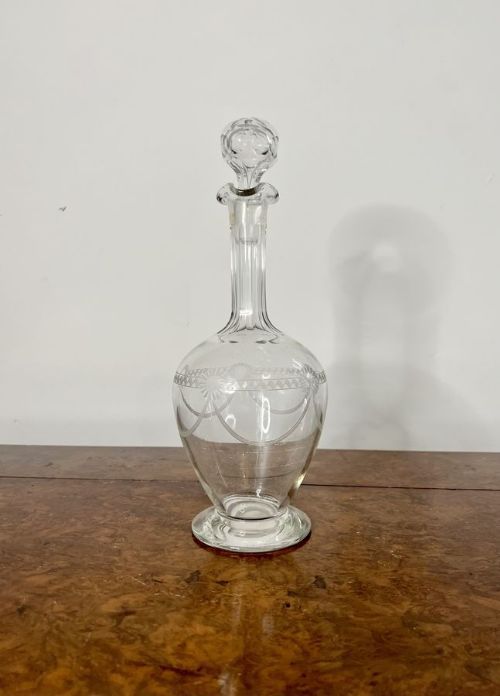
Alongside standard wine glasses, related glassware such as decanters, claret jugs, champagne coolers, and rummer goblets appear frequently within the inventory. The primary material focus remains on lead crystal and clear glass, augmented by period engraving techniques.
How they were made
The objects in this category rely primarily on heavy lead crystal and clear glass, which provided the clarity and weight necessary for deep wheel-cutting and fine engraving. Craftsmen utilised abrasive wheels to cut facets and geometric patterns into the surface of the glass.
Surface decoration often involved acid etching or hand engraving to produce delicate floral motifs, grapes, and vines. Some coloured pieces combined a layer of coloured glass over clear crystal before cutting back the top layer to reveal the contrasting tone underneath.
What varies in quality
Quality in these drinking vessels rests upon the depth and precision of the wheel-cut or etched decoration rather than surface shine alone. Crisp lines in the engraved foliage and a clear, resonant ring from the lead crystal distinguish superior examples from ordinary production.
The balance of the stem and the uniformity of the glass thickness also separate finer specimens from standard utility ware. Items retaining crisp, unpolished wheel marks display the direct hand of the glass cutter.
Asprey and Co. Ltd·Stevens and Williams·Orfèvrerie Produx Saint Hilaire·St Louis
The Etched Crystal Wine Glass Glossary
- Lead crystal
- A type of glass containing lead oxide, which increases the weight, brilliance, and softness required for deep cutting and engraving.
- Roemer
- A traditional continental European wine glass, typically featuring a large spherical bowl resting on a cylindrical stem decorated with applied prunts.
- Rummer
- A heavy, large-bowled drinking glass common in the nineteenth century, often supported by a short stem and a wide foot base.
- Hock glass
- A tall wine glass, frequently made of coloured or colour-over-crystal glass, designed for German white wines.
- Prunt
- An applied lump of molten glass used on the stems of historical drinking vessels to provide a secure grip.
Etched Crystal Wine Glass: Frequently Asked Questions
Are these wine glasses safe to use?
Most antique crystal and glass drinking vessels remain entirely suitable for serving wine and other beverages during formal meals. Lead crystal from the nineteenth century meets traditional manufacturing standards for table use.
Inspect the rim and base for any minute chips before pouring drinks, as older glass can develop tiny vulnerabilities along high-contact edges.
How can I tell Victorian glasses apart from Edwardian ones?
Victorian glassware generally exhibits heavier forms, deeper wheel-cuts, and robust stems, reflecting the ornate aesthetic of the late nineteenth century. Common motifs include dense fruiting vines and star-etched patterns.
Edwardian pieces often display slightly lighter proportions and more restrained engraving styles, aligning with the shift towards neoclassical revival and simpler decorative schemes.
What is the difference between cut glass and etched glass?
Cut glass involves grinding deep facets and geometric patterns into the thick body of the crystal using rotating abrasive wheels. This technique alters the profile of the glass and creates heavy light refraction.
Etched glass uses acid or fine tools to create shallow surface designs, such as delicate grape vines and floral borders, leaving the underlying shape of the bowl smooth.