

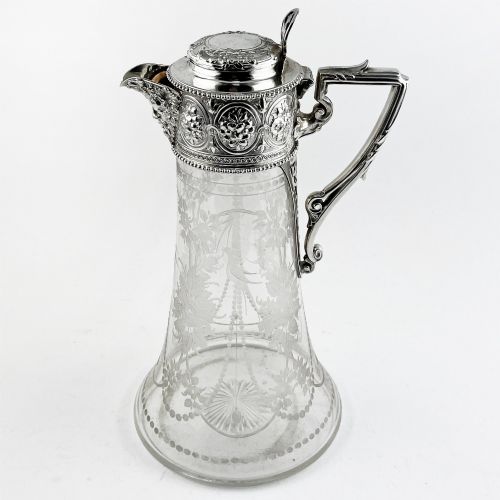
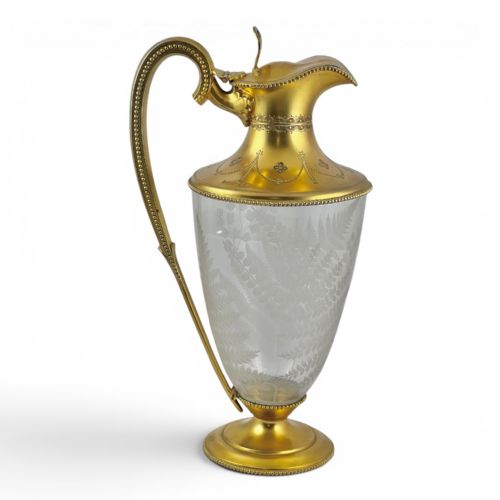


Etched Glass Wine Jug
These etched glass wine jug examples bring nineteenth century craft and silver mounts to the table.
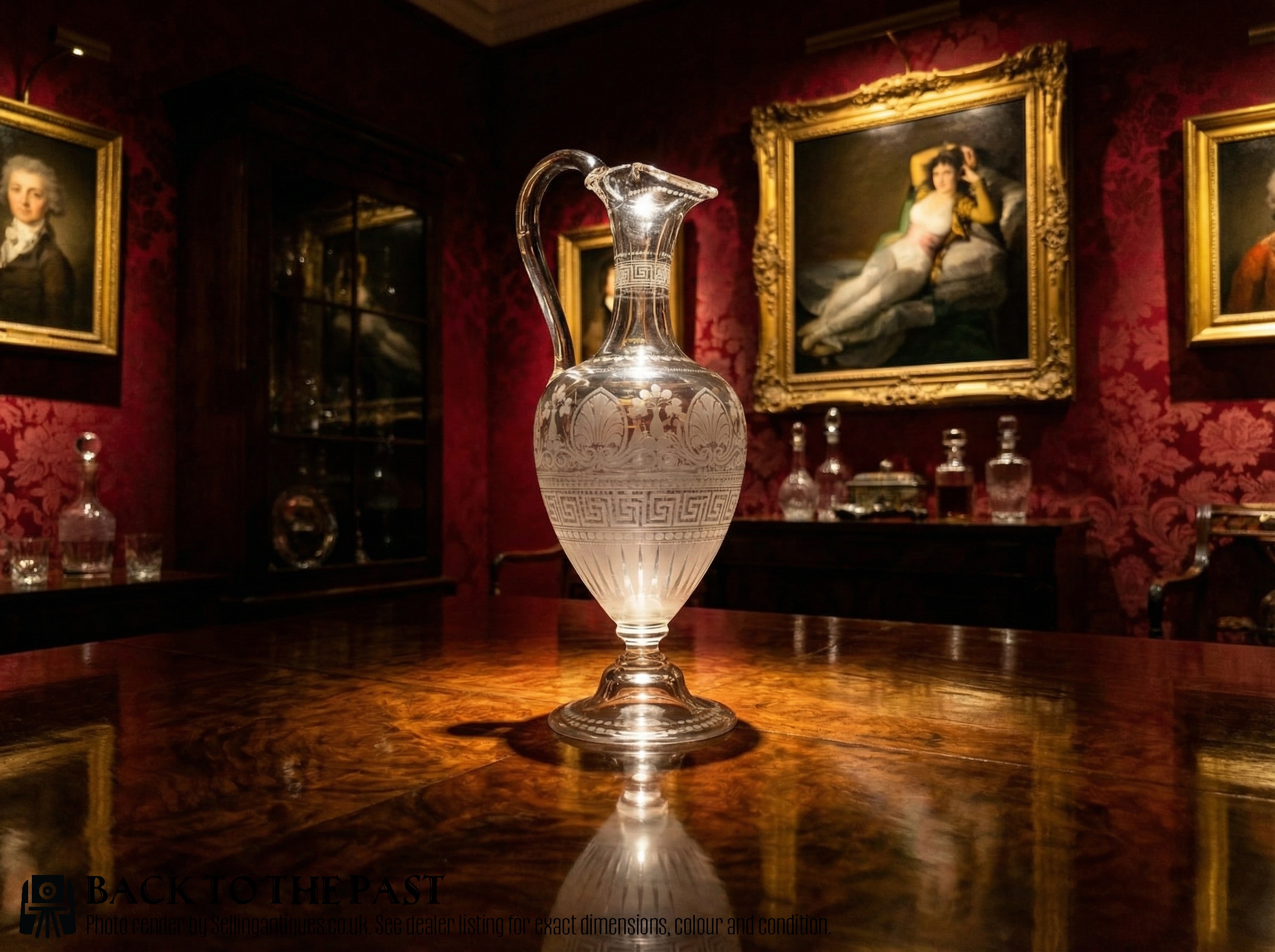
Etched Glass Wine Jug
An etched glass wine jug combines functional serving vessels with decorative nineteenth century ornamentation, spanning forms from claret jugs to ewers and pitchers. The most common examples met on this page date from the Victorian period, often featuring intricate glasswork alongside silver plate or sterling silver mounts.
Makers utilised various techniques to decorate these containers, pairing clear, cranberry, or overlaid glass with floral, grape, and vine motifs. Pieces range from straightforward nineteenth century table glass to elaborate decorative items bearing mounts in styles such as French Rococo Revival and Art Nouveau.
Buyers encounter forms that served specifically for wine, claret, and spirits, frequently accompanied by silver-mounted handles, collars, and spouts. These vessels demonstrate a convergence of glass production and metalwork across Victorian, Edwardian, and later twentieth century periods.
How they were made
Makers formed these vessels using glass and lead crystal, sometimes employing clear glass overlaid with coloured glass or selecting cranberry glass for visual depth. Acid-etching and engraving techniques created detailed surface patterns such as grape and vine motifs across the bodies.
Mounts and hardware utilised sterling silver, silver gilt, and silver plate to construct handles, hinged lids, and pouring spouts. Metalwork was frequently cast and chased in revival styles, then secured firmly to the glass bodies.
Listings feature Victorian, Edwardian, and twentieth century pieces in materials including silver, lead crystal, and coloured glass.
What varies in quality
The sophistication of the surface decoration separates standard vessels from finer examples, particularly the depth and precision of the acid-etching or floral engraving upon the glass. Superior pieces display crisp botanical motifs and well-defined glass bodies.
The quality and weight of the metal mounts contribute significantly to a piece, with robust sterling silver or substantial silver-plate mounts providing better balance and structural integrity than simpler alternatives.
Asprey and Co. Ltd·Elkington·Amphora
The Etched Glass Wine Jug Glossary
- Claret jug
- A vessel specifically designed for serving claret or red wine at the table. These items typically feature a handle and a hinged metal lid.
- Ewer
- A large jug with a wide spout and a decorative handle, often used historically for water or wine. Many nineteenth century examples double as decorative display pieces.
- Silver gilt
- Silver that has been coated with a thin layer of gold on its surface. This technique provides the rich appearance of solid gold while utilising a silver base.
- Lead crystal
- A type of glass containing metallic lead oxide to increase brilliance and weight. It allows for deeper cutting and clearer engraving than standard glass.
- Acid-etched
- A method of decorating glass by applying acid to eat away exposed areas, leaving a frosted design. This technique allows for intricate patterns like grapevines.
Etched Glass Wine Jug: Frequently Asked Questions
What is an etched glass wine jug?
An etched glass wine jug is a decorative serving vessel featuring acid-etched or engraved patterns on the glass body, usually accompanied by metal mounts such as silver plate or sterling silver.
These pieces were produced primarily during the nineteenth and early twentieth centuries to serve wine or claret at the dining table.
How were these jugs used?
These vessels were utilised during meals to decant and serve wine, particularly claret, directly to guests at the table.
Beyond functional dining use, many served as decorative table ornaments, especially those featuring elaborate silver mounts and coloured glass.
How do I care for silver and glass?
Care requires gentle hand washing with lukewarm water and mild soap to protect both the delicate glass surface and any applied metal mounts.
Silver-plated or sterling silver elements benefit from occasional polishing with a suitable cloth, avoiding abrasive cleaners that might harm the etched glass designs.
How do I identify Victorian pieces?
Victorian items often display characteristic revival styles, such as French Rococo Revival or Art Nouveau influences, alongside traditional botanical motifs like grapes and vines.
Examination of the metal mounts for hallmarks or silver-plate marks often helps establish the period and manufacturing origin.