
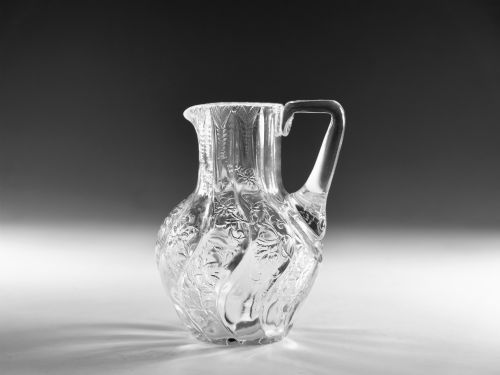
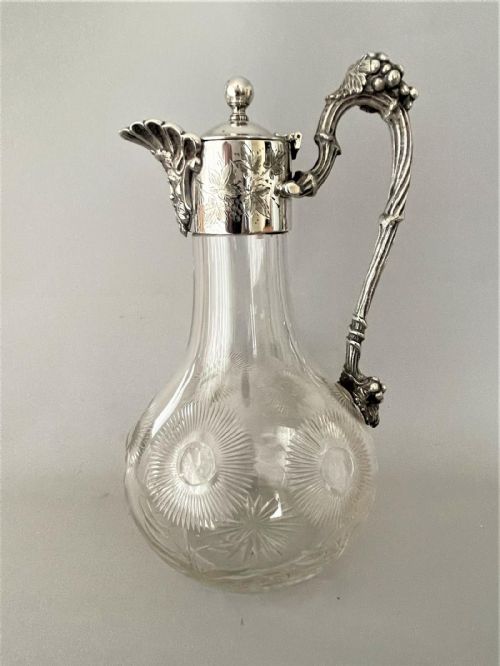
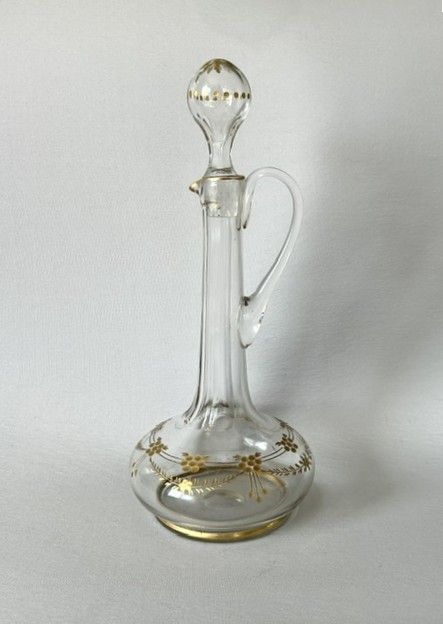


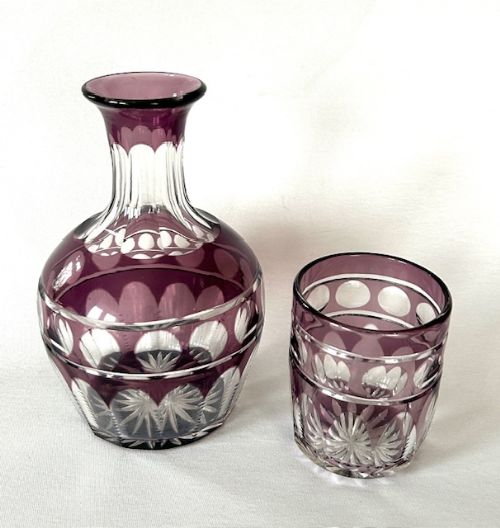


Victorian Cut Glass Pitcher
A victorian cut glass pitcher brings heavy, light-catching crystal and gleaming metal mounts together for serving wine and water at the table.
Victorian Cut Glass Pitcher
When you search for a victorian cut glass pitcher, you encounter vessels designed primarily for serving claret, wine, water, and lemonade during the nineteenth and early twentieth centuries. The most common form on this page is the silver-plated and cut glass claret jug, alongside wine jugs, ewers, and carafes.
These pieces emerge predominantly from Victorian and Edwardian periods, stretching from the mid-nineteenth century through to the early 1900s. English makers dominate the selection, alongside Bohemian and French workshops producing similar glassware mounted in silver plate or sterling silver.
Distinctions in Standard
Quality rests in the crispness and depth of the glass cutting, the weight and clarity of the lead crystal, and the substance of the metal mounts. Superior pieces display intricate hand-engraving and well-balanced proportions between the glass body and the silver-plated or sterling collar.
Makership plays a significant role, with recognised design work and hallmarked silver mounts elevating an ordinary vessel into a more accomplished piece. The integration of functional additions, such as internal ice tubes and tightly sealing hinged lids, separates standard domestic ware from finer examples.
Some Victorian wine jugs feature mischievous face spouts glaring up at you while you pour your claret.
Stevens & Williams·Mappin & Webb·Richardsons·Elkington & Co·Hukin & Heath·Dr Christopher Dresser
The Victorian Cut Glass Pitcher Glossary
- Claret Jug
- A specialised pouring vessel created specifically for serving red wine at the dining table. They typically combine a glass body with a metal handle, collar, and hinged lid.
- Ewer
- An ornamental pitcher with a wide spout and a curved handle, originating from traditional washing vessels but used here for serving wine or water.
- Silver Plate
- A base metal, often copper or Britannia metal, coated with a thin layer of silver. This technique provided the appearance of solid silver at a lower cost for Victorian tableware.
- Lead Crystal
- Glass manufactured with the addition of lead oxide, which increases the weight, refractive index, and clarity of the material, making it ideal for deep cutting.
- Ice Tube
- A metal cylinder suspended down the centre of the pitcher to hold ice. This design chills the contents without melting ice directly into the drink.
Victorian Cut Glass Pitcher: Frequently Asked Questions
What were these pitchers originally used for?
These vessels served wine, claret, lemonade, and water at formal dining tables and drawing rooms during the nineteenth and early twentieth centuries.
The hinged lids and spouts allowed hosts to pour drinks smoothly while keeping contents covered between servings.
How do I clean a cut glass pitcher?
Wash the glass gently by hand using warm water and mild detergent, avoiding harsh abrasives that might scratch the surface or damage silver-plated mounts.
Keep silver mounts polished with a suitable cloth while ensuring moisture does not become trapped inside hollow handles or hinged mechanisms.
How can I tell the period?
Examine the style of the glass cutting, the motifs used in any engraving, and the design of the metal handle and collar.
Silver mounts often bear hallmarks indicating the assay office and date letter, while stylistic cues like Aesthetic Movement or Arts and Crafts lines help narrow the decade.
Are these pitchers safe for serving drinks today?
Most of these vessels remain entirely functional for serving water, wine, or summer punches at modern gatherings.
Check that the silver plate or crystal remains sound and clean the interior thoroughly before use.