



Victorian Etched Glass Jug
A victorian etched glass jug brings pattern and brilliance to a table, combining clear or coloured vessels with detailed wheel or acid engraving.
Victorian Etched Glass Jug
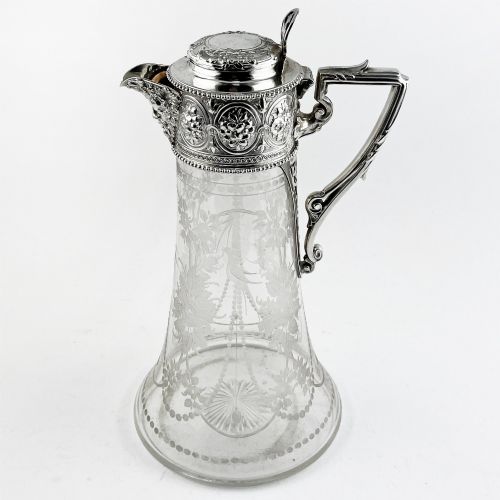
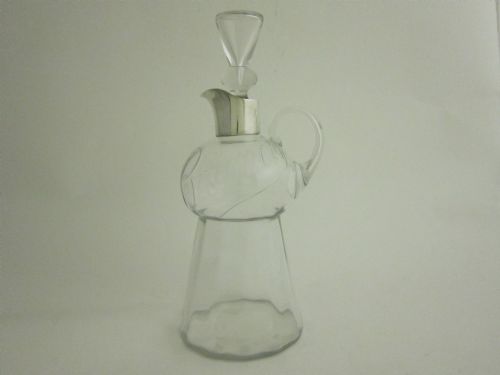
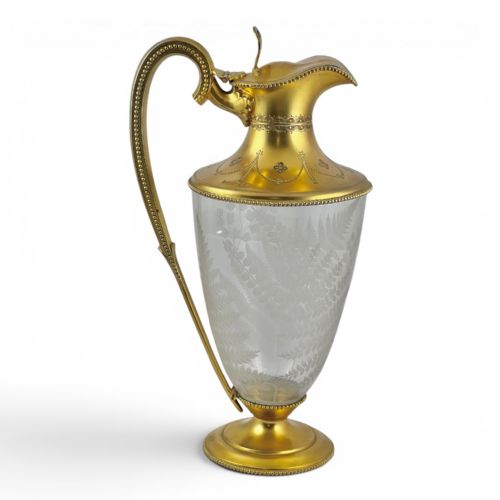
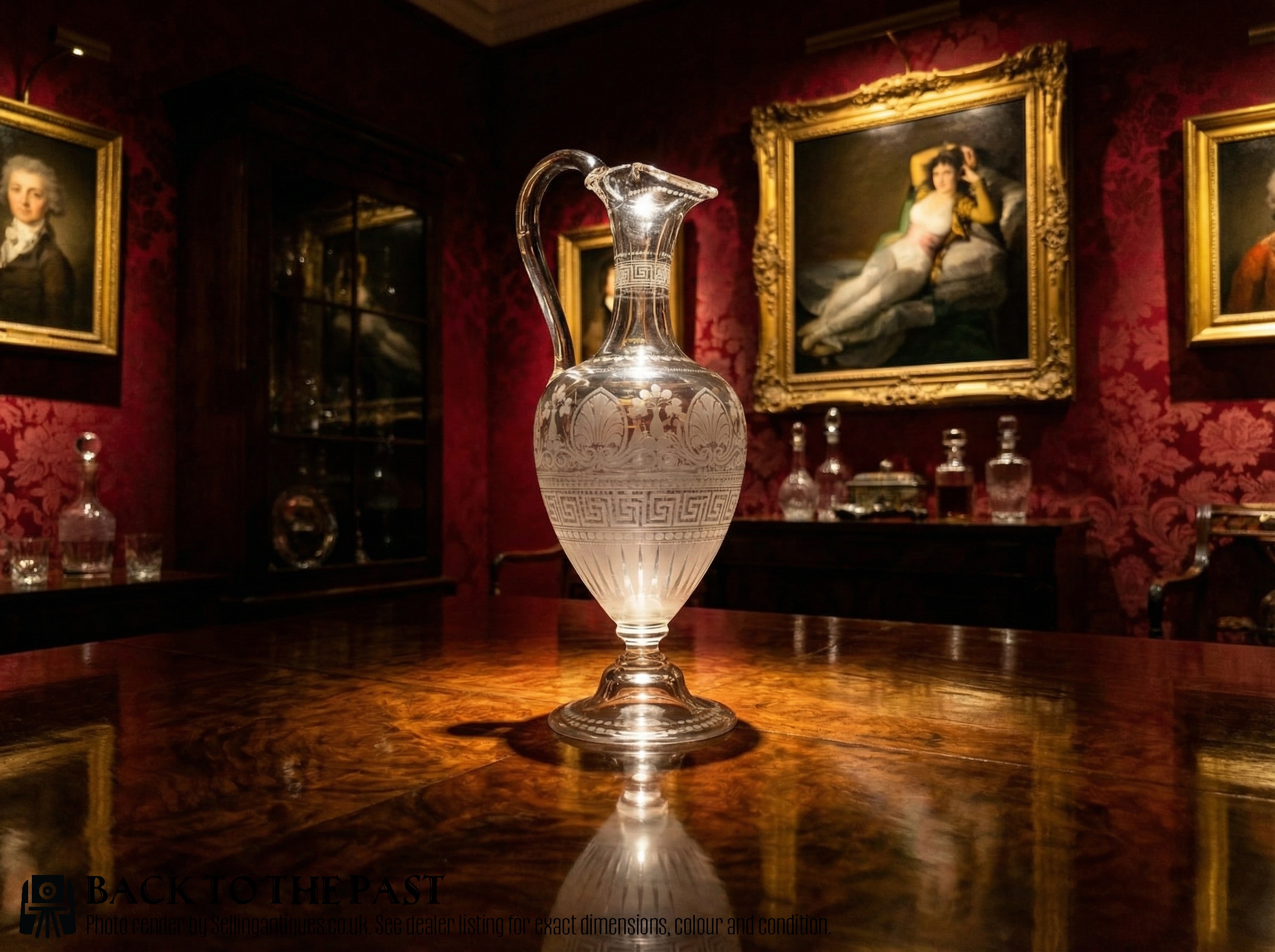
A victorian etched glass jug serves wine, water, or lemonade, appearing in forms such as claret jugs, ewers, and pitchers. These vessels combine functional pouring spouts with decorative glass bodies, often paired with metal mounts.
Examples on this page span the nineteenth century, with pieces dating from the eighteen sixties through to nineteen ten. The selection includes English, French, Bohemian, and German origins.
Claret jugs dominate the selection, alongside water jugs and ewers. Many incorporate floral motifs, birds, and grapevines into the glass surface.
Materials and Construction
Vessels are formed from clear glass, coloured glass, cut glass, lead crystal, or cased glass overlaid with another shade. Etching is applied by hand wheel engraving or acid treatment to create frosted and detailed surface designs.
Metal mounts in sterling silver, silver gilt, and silver plate provide handles, lips, and hinged lids. Makers join the glass bodies to these metal collars using secure collars and mounts.
Motifs on these vessels include birds, branches, grapevines, and floral patterns.
Evaluating Quality
Quality rests on the depth and clarity of the glass engraving, alongside the weight and substance of the vessel. Crisp botanical or figurative details denote skilled hand work.
The weight of the silver or silver-plated mount and the precision of its fit to the glass body distinguish finer examples. Maker marks from established firms indicate higher workshop standards.
Asprey and Co. Ltd·Elkington and Co.·Webb and Son
The Victorian Etched Glass Jug Glossary
- Claret jug
- A pouring vessel specifically designed for serving red wine at the dining table. They frequently combine glass bodies with ornate silver or plated mounts and hinged lids.
- Ewer
- A large pitcher with a wide spout and a curved handle, traditionally used for water. Victorian examples often feature decorative etched glass and metal mounts.
- Lead crystal
- Glass containing lead oxide, which increases brilliance, weight, and clarity. This material allows for deeper and sharper cuts during engraving.
- Silver plate
- A base metal coated with a layer of silver. This technique provided the appearance of solid silver for nineteenth century tableware.
- Wheel engraving
- A technique where a glass vessel is held against rotating metal or stone wheels of various sizes to grind patterns into the surface.
Victorian Etched Glass Jug: Frequently Asked Questions
What is a victorian etched glass jug used for?
These vessels served drinks such as claret, water, and lemonade at formal dining tables during the nineteenth century. They held liquids for pouring while displaying decorative glasswork.
Today they function as decorative table centrepieces or serving pieces for wine and water during meals.
How do I identify a victorian etched glass jug?
Look for nineteenth century stylistic traits such as botanical motifs, birds, or grapevines etched into clear or coloured glass. Silver or silver-plated mounts often accompany the vessels.
Dates range across the Victorian period, with specific years occasionally indicated by hallmarks on the metal mounts or the engraving style.
Are the metal mounts sterling silver?
Mounts on these jugs consist of sterling silver, silver gilt, or silver plate depending on the piece. Hallmarks on the metal help determine the exact metal standard and manufacturing date.
Silver-plated mounts frequently bear marks from prominent nineteenth century plating firms and workshops.
How should I clean my etched glass jug?
Wash the vessel gently by hand using warm water and mild detergent. Avoid abrasive sponges that could scratch the glass or damage the etched surface.
Dry the metal mounts promptly after washing to protect silver and silver-plated surfaces from tarnishing or moisture damage.