

Hallway Stick Storage
Hallway stick storage brings order to the entrance, combining heavy cast iron, solid oak and gleaming brass to hold umbrellas and walking canes.
Hallway Stick Storage
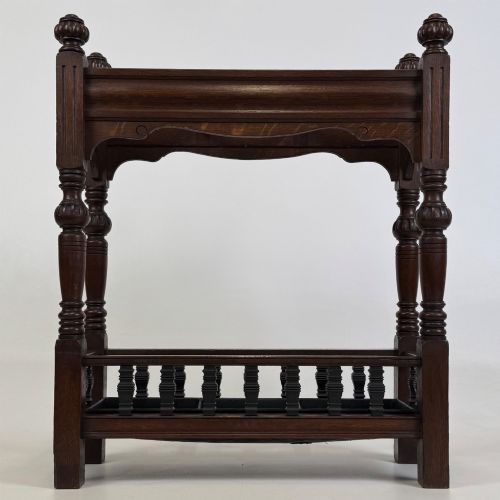
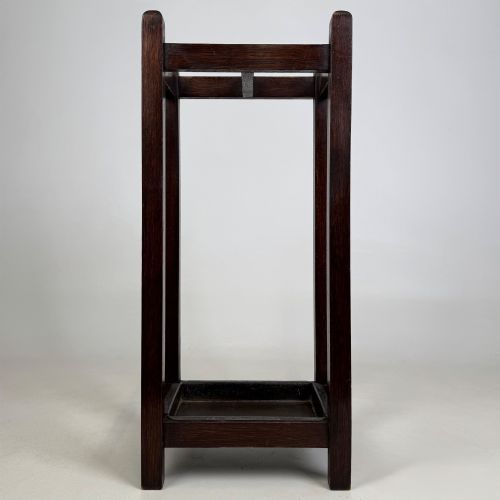
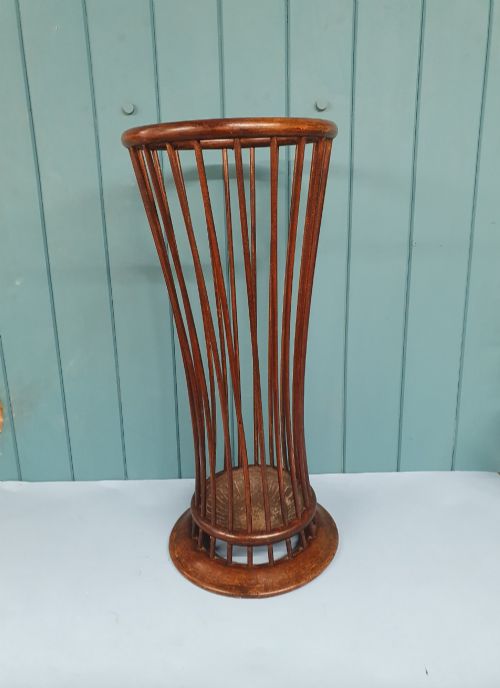
Hallway stick storage encompasses umbrella stands, stick stands, and combined hall stands originating primarily from the Victorian and Edwardian periods. These practical furnishings appear frequently in oak, mahogany, and pitch pine, often taking the form of dedicated umbrella and stick stands for busy entrances.
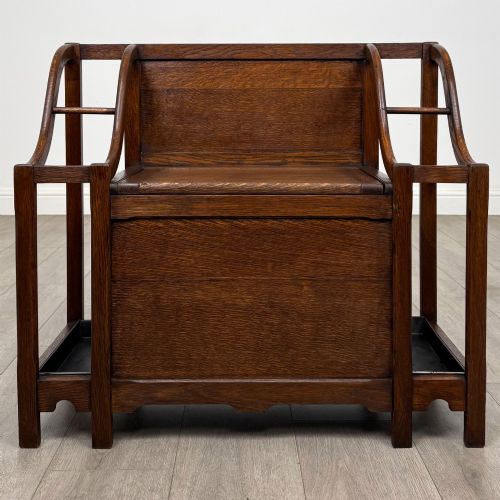
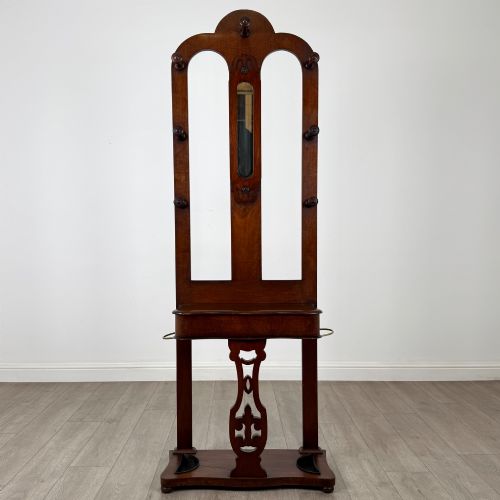
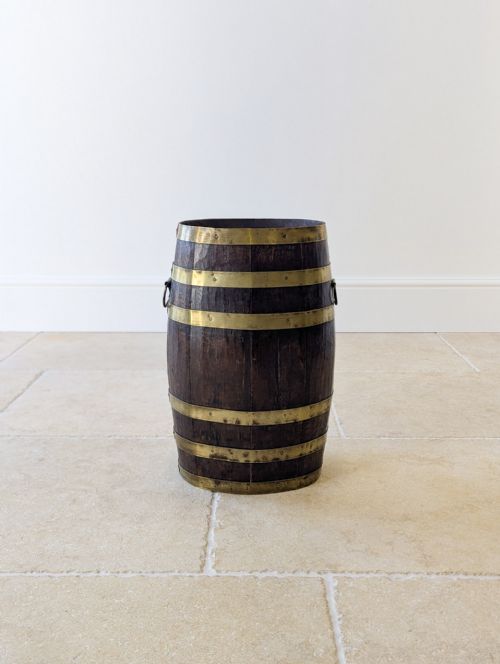
Buyers encountering this category will frequently find freestanding cast iron designs or coopered oak barrels fitted with brass bands. Multi-functional pieces such as hall seats and coat stands also serve the hallway, integrating stick storage directly into larger wooden furniture.
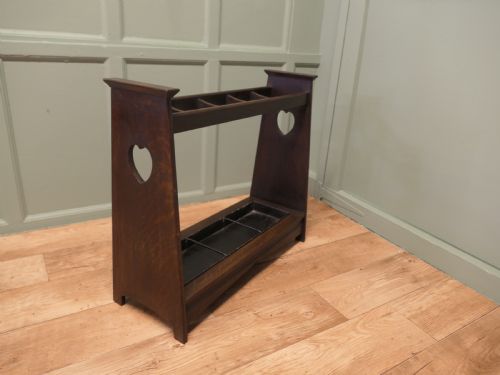
Stylistic influences range from the robust craftsmanship of the Arts and Crafts movement to the decorative curves of Art Nouveau and Aesthetic Movement pieces. Simpler country house examples appear alongside refined architectural forms dating from the nineteenth century into the nineteen-thirties.
Materials and Construction
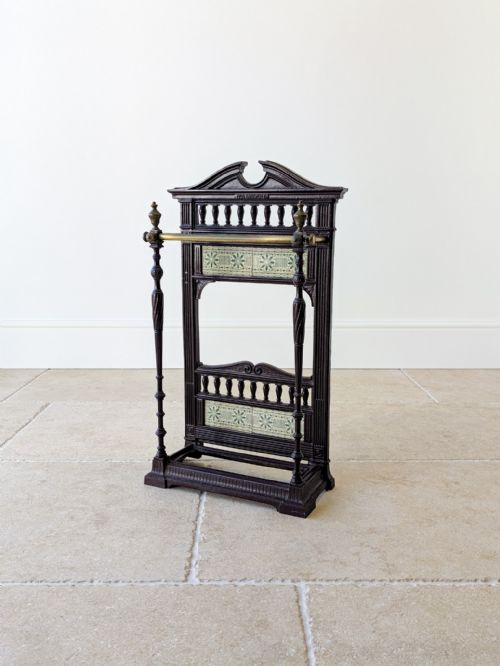
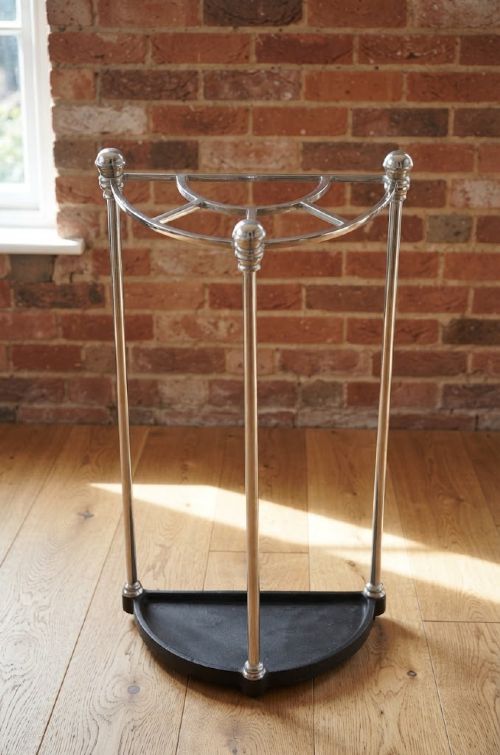
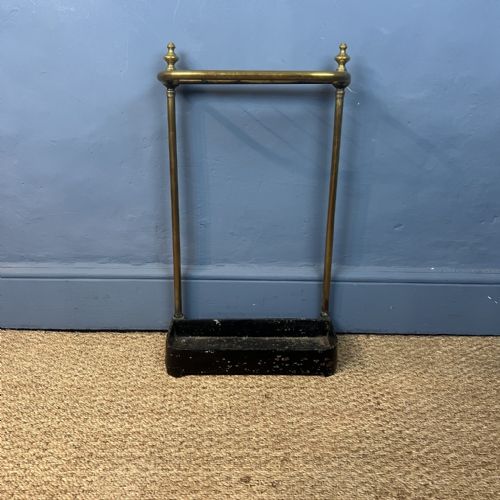
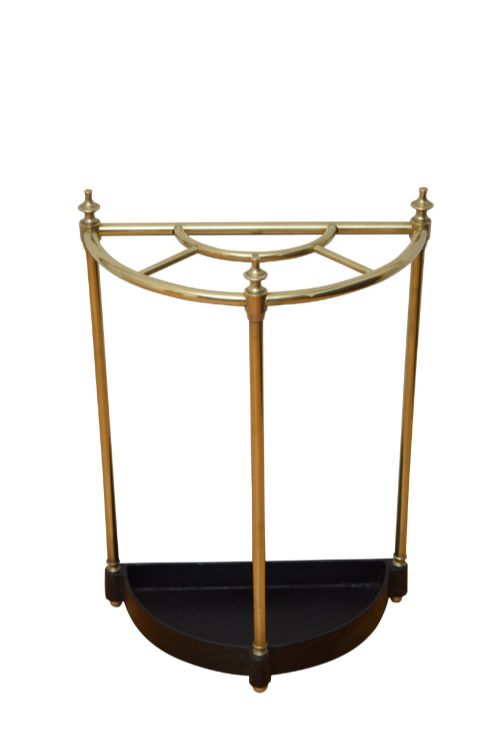
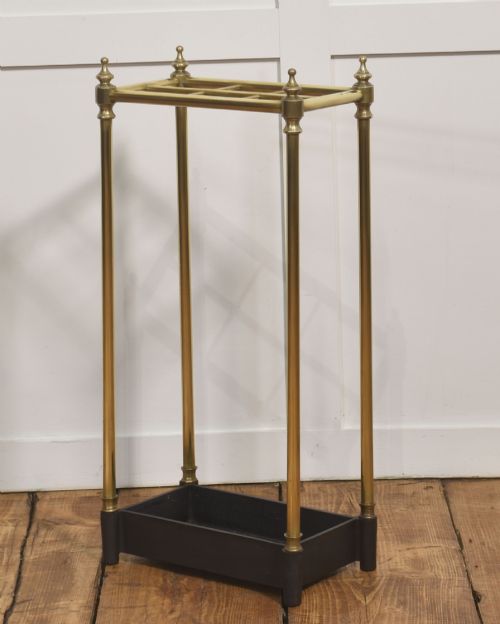
Metal components rely heavily on cast iron, brass, and steel, utilised both for structural frames and intricate decorative panels. Foundry work allows for openwork scrolling and geometric divisions, while cast brass provides half-moon demi-lune shapes and sturdy bun feet.
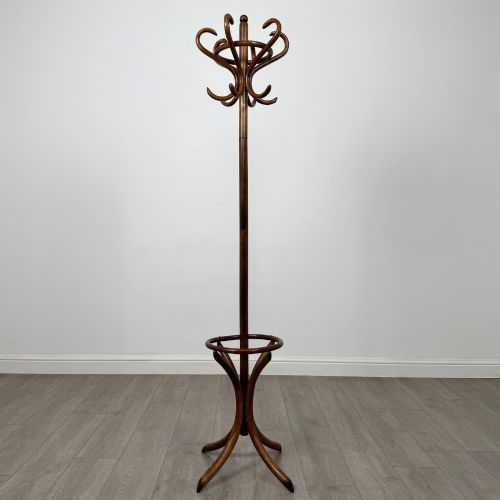
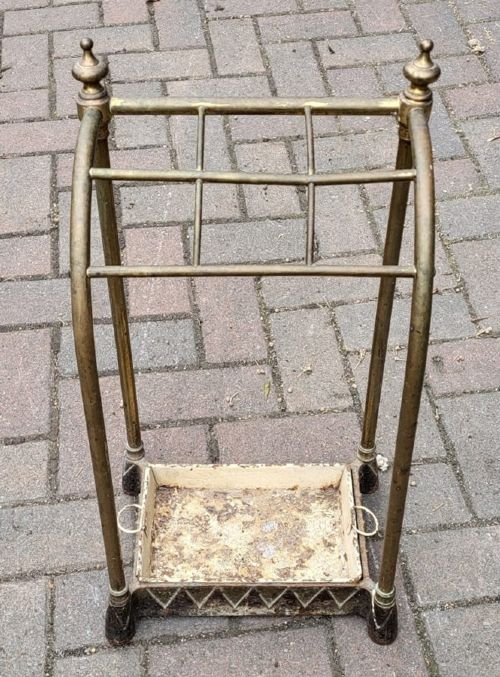
Woodworking traditions in these pieces showcase solid oak, mahogany, and beech, frequently shaped using coopered stave construction for barrels or steam-bending techniques for bentwood frames. Original metal drip trays are often integrated at the base to catch moisture from wet umbrellas.
Listings feature oak, cast iron, and brass predominantly, spanning the Victorian and Edwardian eras into the nineteen-thirties.
Distinctions in Quality
The distinction between standard production and superior examples rests on the crispness of foundry castings and the selection of timber. Finer cast iron and brass pieces display sharp, clean relief work without distortion, while better wooden stands utilise well-figured oak or mahogany with sound joinery.
Completeness of original elements heavily influences the character of a piece, particularly the retention of fitted metal drip trays and matching hardware. Maker attribution, visible in specialised foundry marks or recognised design idioms, further separates utilitarian items from distinguished works.
Coalbrookdale·Thomas Jeckyll·Thonet·A. Kenrick & Sons
The Hallway Stick Storage Glossary
- Demi-lune
- Half-moon shape. This semi-circular profile allows metal and brass stands to sit flush against hallway walls.
- Coopered
- Stave-built construction using wooden staves bound by metal hoops. This technique mirrors barrel-making traditions seen in oak umbrella buckets.
- Drip tray
- A removable metal basin positioned at the base of a stand. It catches water runoff from wet sticks and umbrellas to protect flooring.
- Bentwood
- Wood softened by steam and bent into curved shapes. Beech is commonly utilised in this manner for lightweight umbrella stands.
- Arts and Crafts
- A design movement prioritising traditional craftsmanship and simple forms. Pieces from this tradition often feature exposed oak grain and honest construction.
Hallway Stick Storage: Frequently Asked Questions
How do I identify a coopered oak umbrella stand?
Coopered umbrella stands are constructed from vertical wooden staves bound together by metal bands, resembling miniature wooden barrels. They rely on traditional barrel-making techniques rather than standard cabinet joinery.
These pieces often date to the Victorian era and utilise oak fitted with brass bands and an internal metal base.
Are drip trays usually original to the stand?
Original drip trays are made of metal and fitted specifically to the dimensions of the base frame. Many survive alongside the main structure, though replacements are common due to corrosion from standing water.
Examining the fit and patina of the tray helps determine whether it has stayed with the piece over the decades.
What woods were used for hallway stands?
Oak and mahogany are the primary hardwoods found in nineteenth and early twentieth-century hallway furniture. Pitch pine and beech also appear, particularly in country house furnishings and steam-bent designs.
Golden oak is especially common in Edwardian examples, while darker mahogany is typical of earlier Victorian pieces.