


Oak Umbrella Hall Stand
When you search for an oak umbrella hall stand, you are looking at sturdy hallway furniture designed to hold wet walking gear and coats.
Oak Umbrella Hall Stand
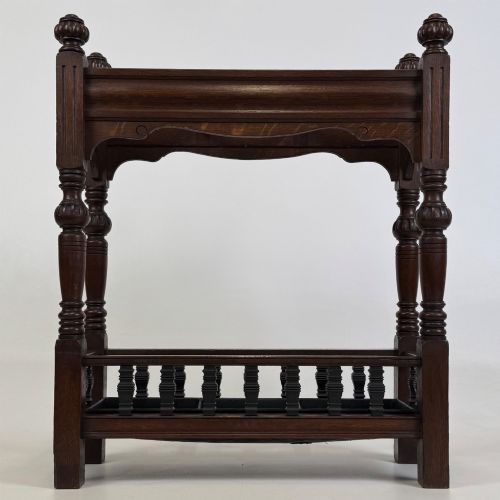
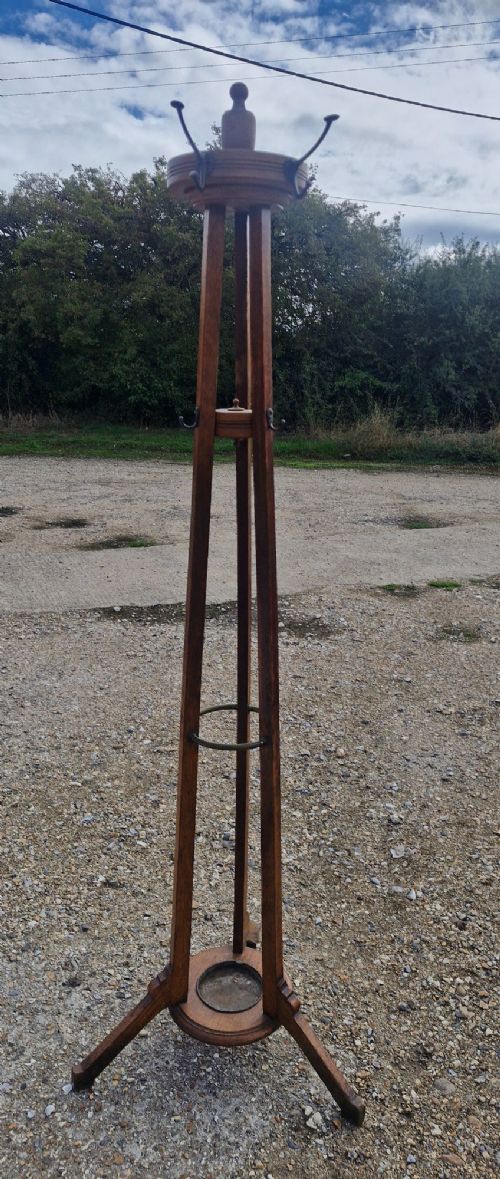
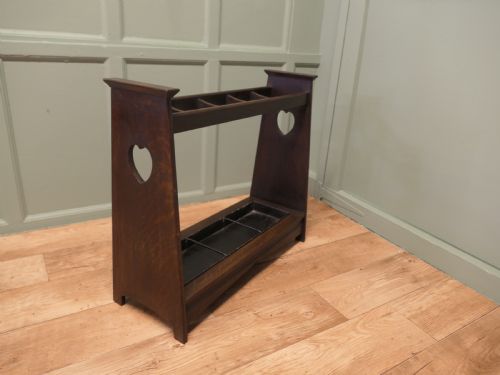
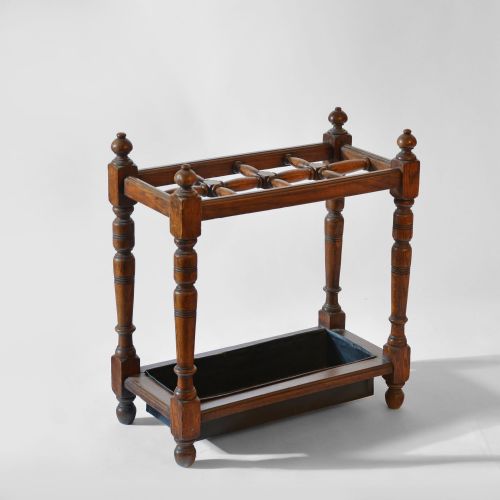
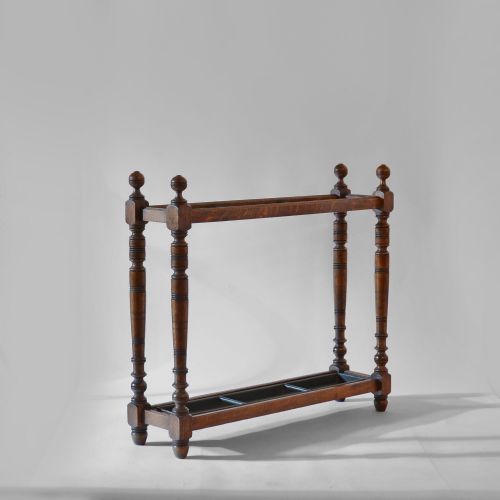
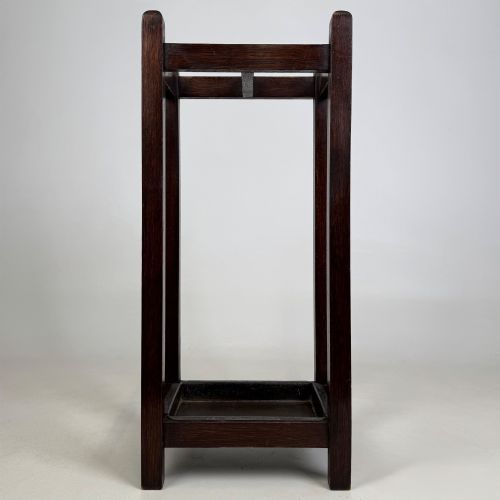
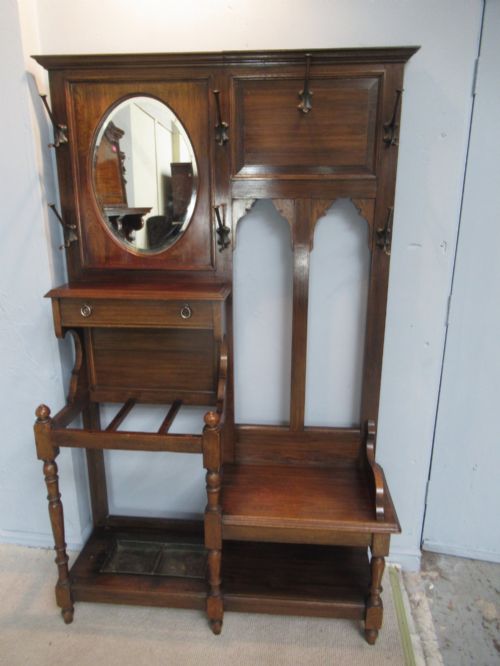
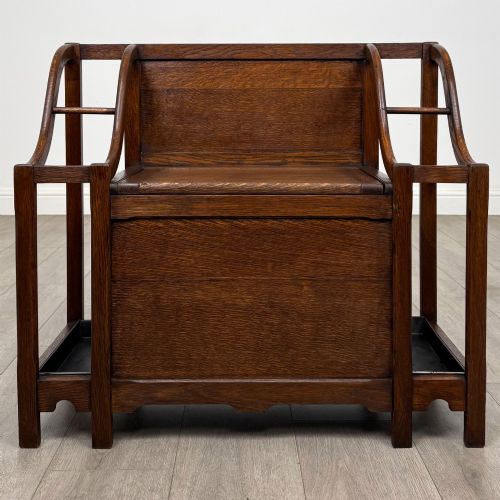
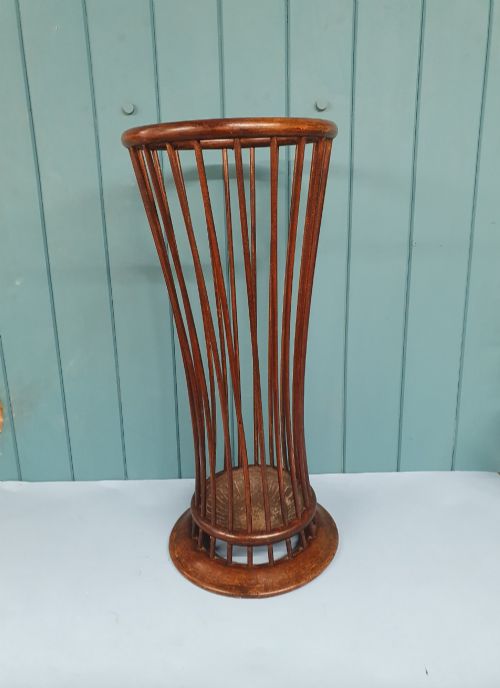
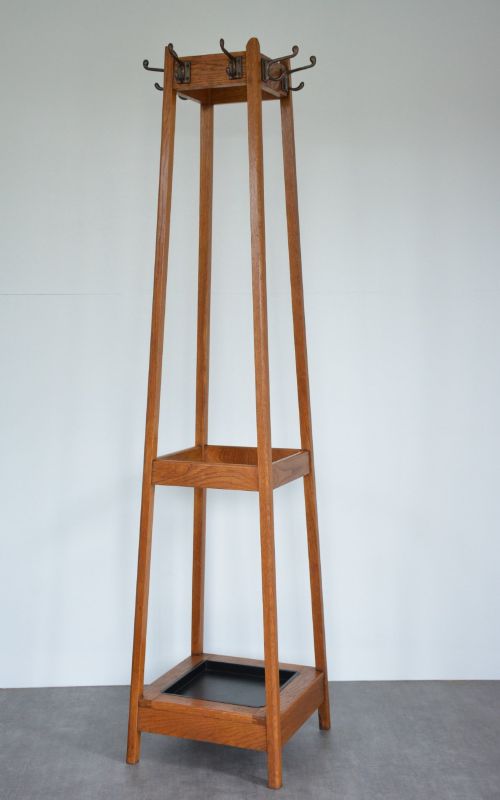
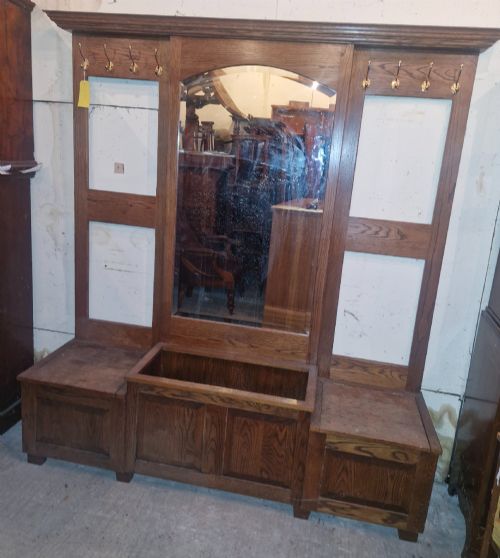
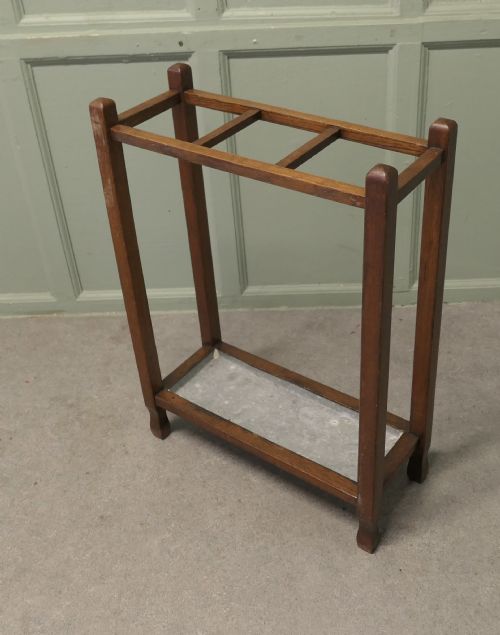
An oak umbrella hall stand serves as a central piece for an entryway, combining coat hooks, hat storage, and dedicated umbrella or stick wells into a single item of furniture. The pieces seen in this selection range from simple standalone stick racks to large multi-functional hall seats with integrated mirrors and storage compartments.
The prevailing styles reflect late nineteenth and early twentieth-century design movements, spanning Victorian, Edwardian, and Arts and Crafts periods. You will frequently encounter compact umbrella stands alongside larger hall trees that incorporate benches and carved wooden details.
Origins are rooted in British domestic architecture, where entrance halls required robust storage to manage outdoor apparel. These items transitioned from grand country houses to smaller suburban hallways while retaining their practical function.
How They Were Made
Makers utilised solid oak as the primary structural timber, often selected for its durability and prominent grain pattern. Golden oak and dark fumed oak finishes appear frequently across the periods represented.
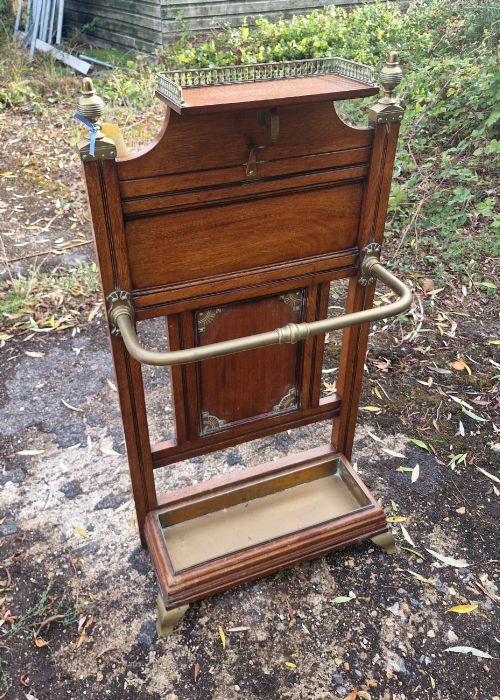
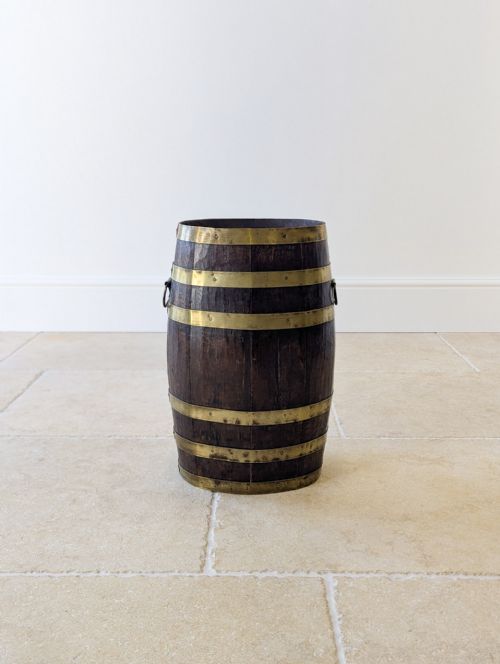
Metal components play an essential role in construction, particularly brass, iron, and cast iron used for coat hooks, decorative strapwork, and integrated drip trays. Coopered construction methods appear in cylindrical stick stands, binding wooden staves together with metal bands.
Listings feature oak hall stands spanning the Victorian, Edwardian, and Art Deco periods, incorporating brass and cast iron fittings.
What Varies in Quality
The standard of craftsmanship shows in the depth and execution of carved details, such as foliate motifs, linenfold panels, or characteristic Green Man masks. Simpler utilitarian examples rely on straightforward joinery, whereas higher-end workshop pieces display considered proportion and refined decorative hardware.
The presence of original fittings, including cast metal drip trays, brass rods, and maker-stamped hooks, distinguishes well-preserved pieces from those with later replacements. Structural integrity in the joints and the condition of the timber base where moisture collects also separate standard items from superior examples.
Liberty & Co.·Heals of London·J. Parker of Woodstock·Astrola·Fischel·William Whiteley
The Oak Umbrella Hall Stand Glossary
- Coopered
- Constructed from curved wooden staves joined edge-to-edge and bound with metal hoops, much like a barrel. This technique provides water resistance for cylindrical umbrella and stick stands.
- Drip tray
- A removable metal basin placed at the base of stick stands to catch moisture from wet umbrellas. These trays are often zinc, brass, or painted iron.
- Hall tree
- A tall piece of hallway furniture combining a hat rack, coat hooks, a mirror, and an umbrella stand. Some larger versions also incorporate a hinged bench seat.
- Fumed oak
- Oak darkened by exposure to ammonia fumes, a process popularised by Arts and Crafts designers to achieve a deep, rich colour without traditional staining.
- Green Man
- A sculptural architectural ornament depicting a human face disgorged from foliage. It appears frequently as a carved motif on Victorian and Edwardian oak furniture.
Oak Umbrella Hall Stand: Frequently Asked Questions
What is an oak umbrella hall stand?
It is a multifunctional hallway furnishing built to organise outer garments and wet walking gear in one place.
Most examples combine upright panels with coat hooks, hat racks, and sunken wells or metal trays for umbrellas.
How were these stands used historically?
They stood in entrance halls of homes and hotels to receive coats, hats, and wet sticks upon arrival.
Visitors and residents used the integrated mirrors to check attire before heading out through the front door.
How do I care for antique oak furniture?
Keep the wood away from direct heat sources and sudden humidity shifts to prevent timber splitting.
Regular dusting and occasional application of appropriate wax will maintain the finish of the oak.
How do I identify Edwardian oak hall stands?
Edwardian pieces often display lighter golden oak tones and simpler lines compared to heavier Victorian designs.
They frequently incorporate brass hooks and Arts and Crafts influences while maintaining practical proportions for smaller hallways.