

Wooden Umbrella Drip Stand
A wooden umbrella drip stand organises heavy hall entrances with sturdy timbers and metal trays designed to catch wet winter weather.
Wooden Umbrella Drip Stand
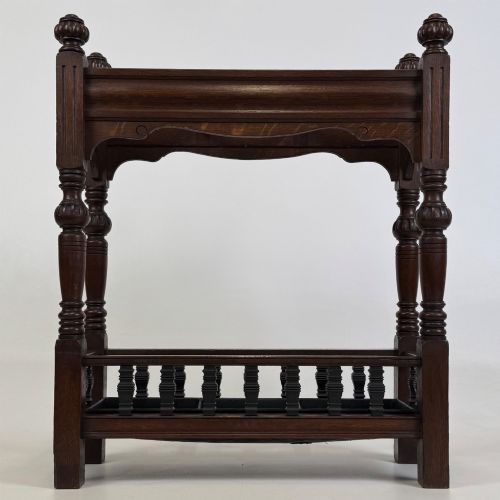
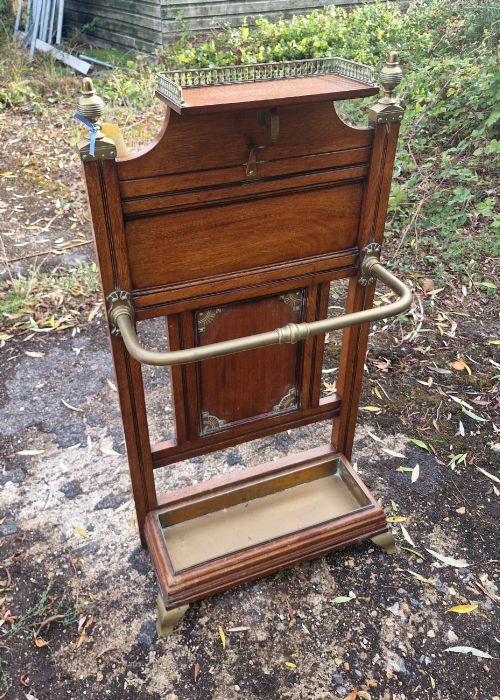
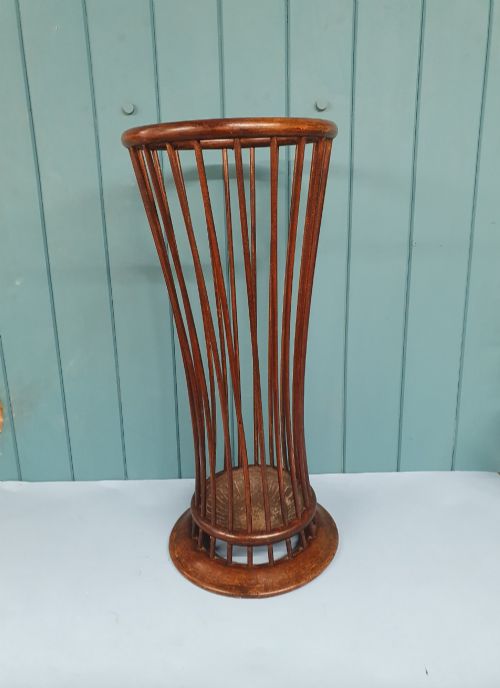
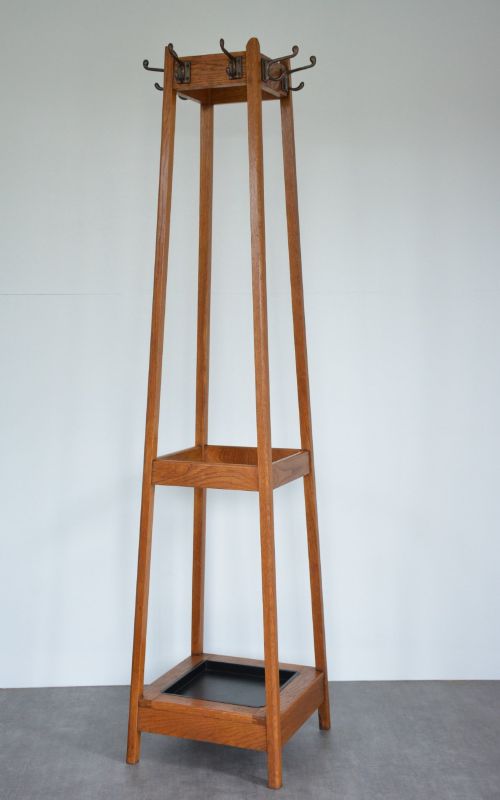
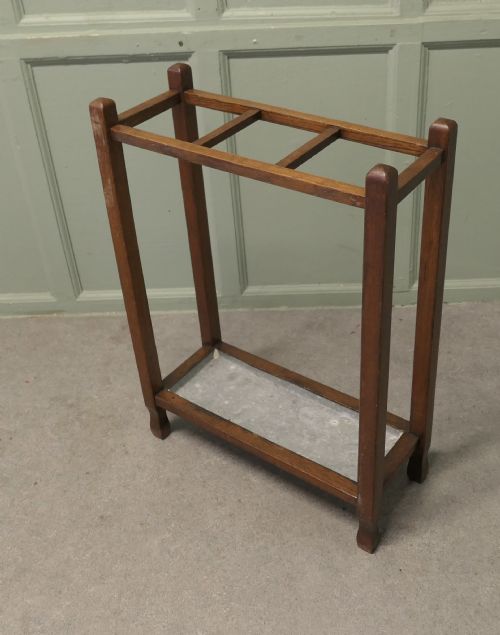
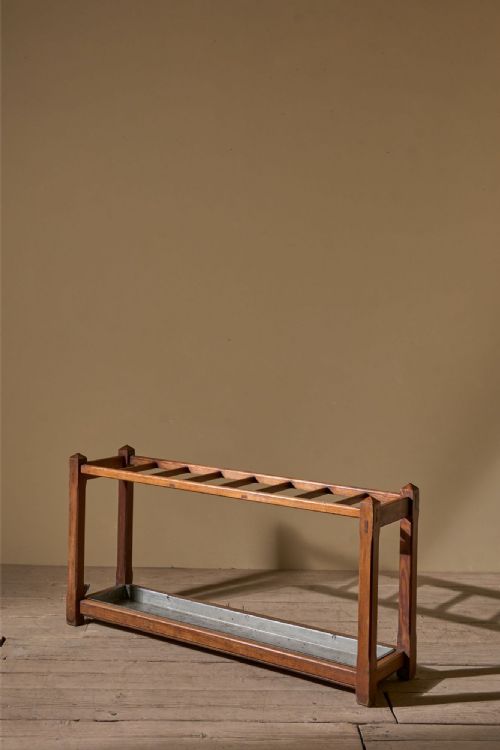
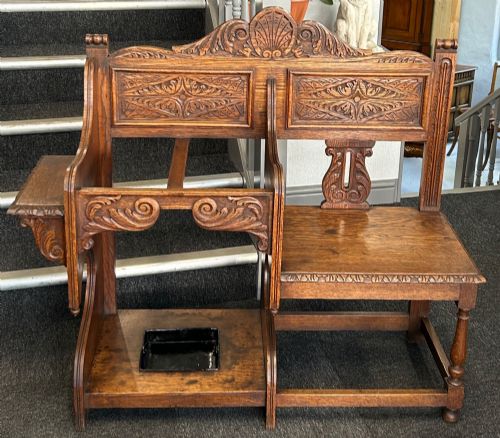
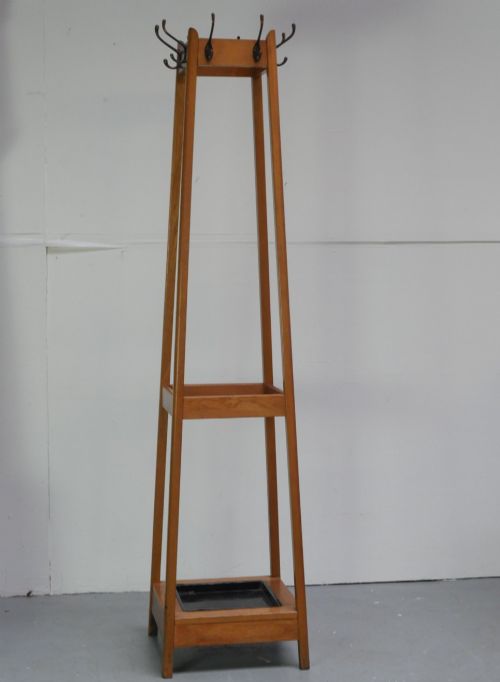
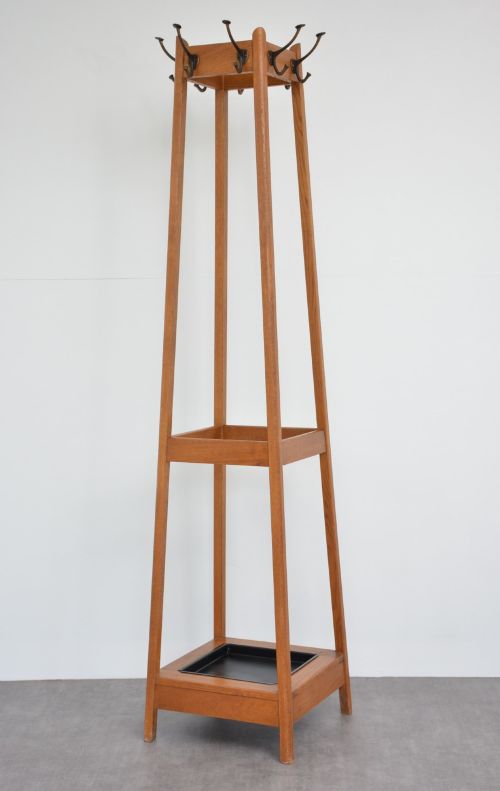
A wooden umbrella drip stand is a practical hall furnishing designed to hold wet walking sticks, canes, and umbrellas while protecting floors from moisture. The pieces found here range from simple domestic umbrella racks to large combined hallstands incorporating coat hooks and seating.
Most examples encountered on this page date from the nineteenth and early twentieth centuries, spanning the Victorian and Edwardian eras. Oak is the primary timber seen, alongside mahogany, pitch pine, and bentwood, reflecting the heavy domestic requirements of country houses and town residences.
How they were made
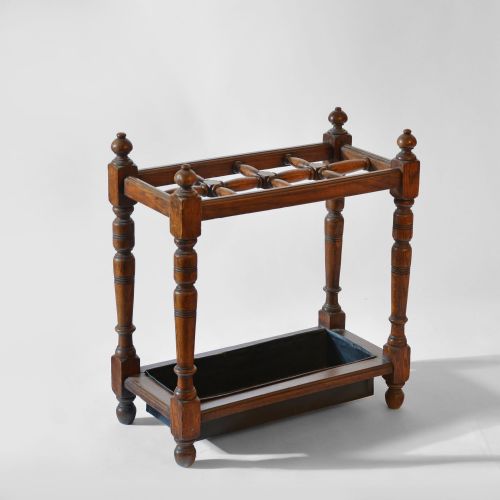
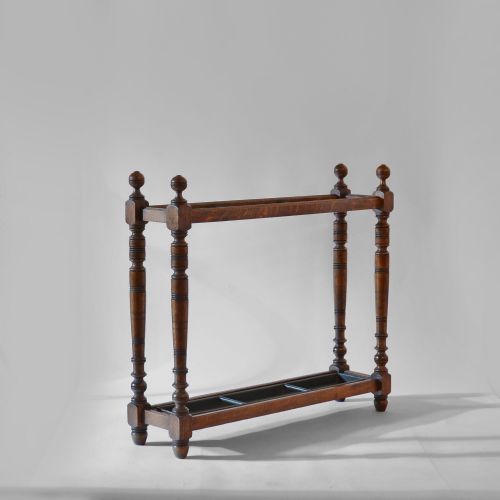
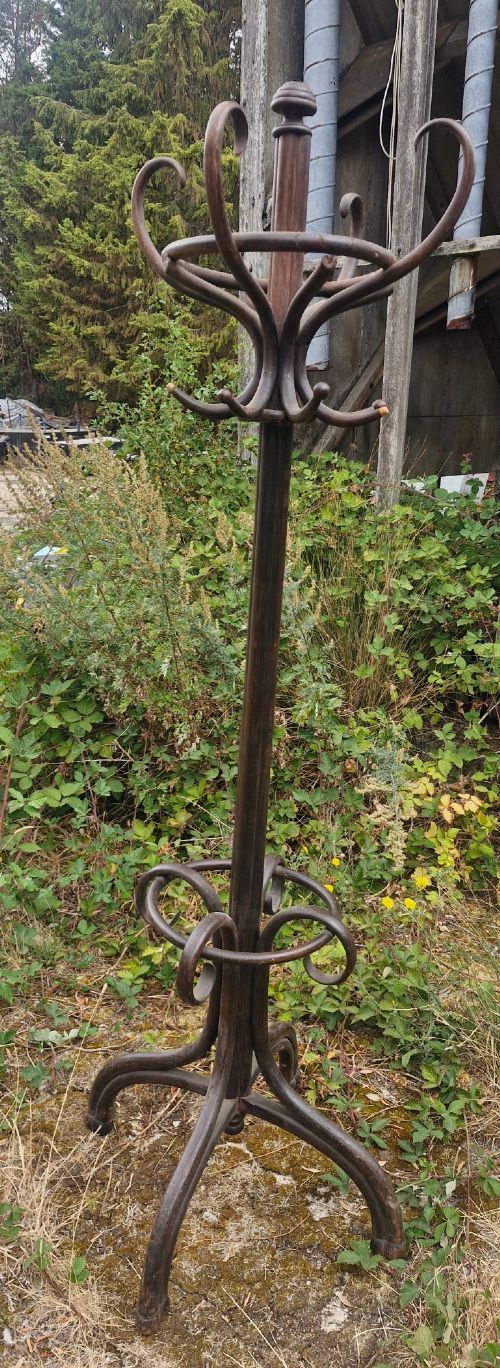
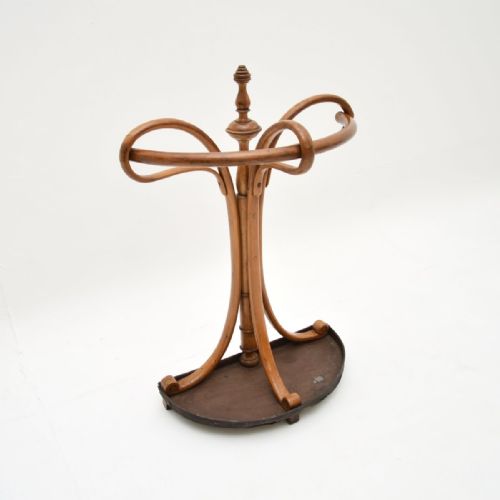
Construction relies heavily on durable timbers like oak and mahogany, often shaped through traditional joinery or steam bending in the case of bentwood items. Cabinet makers utilised these sturdy woods to withstand the daily weight and dampness of wet walking gear.
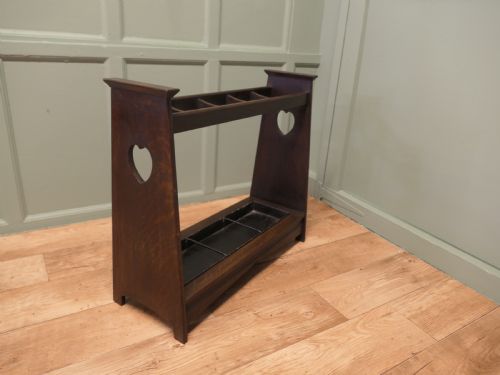
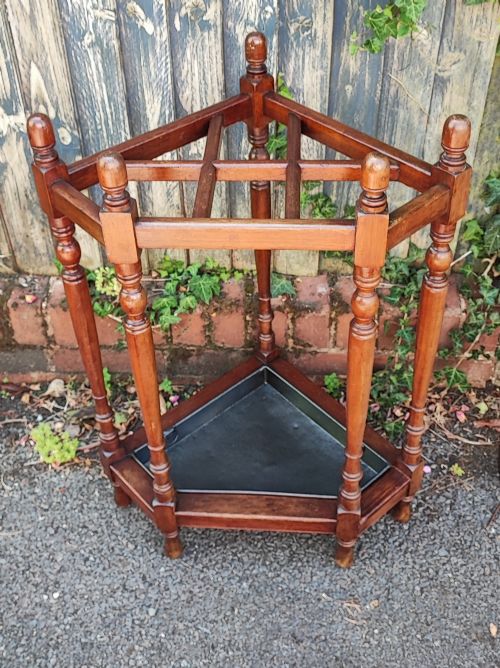
Functional metal elements form an integral part of the manufacture, featuring brass rods, iron frames, and zinc or metal drip trays inserted at the base. These corrosion-resistant metals catch the water running off umbrellas, protecting the timber structure from rotting over decades of service.
The listings show oak as the dominant timber, accompanied by mahogany and pitch pine across Victorian and Edwardian periods.
What varies in quality
Quality rests upon the integrity of the timber framing and the survival of original components such as metal drip trays and brass division rails. Examples retaining their initial hardware and uncompromised wood joints demonstrate superior original manufacture.
Design ambition separates basic utility pieces from refined aesthetic examples, particularly those bearing the geometric simplicity of the Arts and Crafts movement or the fluid curves of Art Nouveau. Carved detailing and integrated hall seating elevate standard hallway items into sophisticated interior furnishings.
Thonet·Heals of London·GW Evans·Shoolbred
The Wooden Umbrella Drip Stand Glossary
- Hallstand
- A large multifunctional piece of hallway furniture combining umbrella storage with coat hooks, mirrors, and occasionally a bench seat. They dominate large entrance spaces in country houses.
- Bentwood
- Wood softened through steam and bent into curved structural forms, famously utilised by makers like Thonet. This technique creates lightweight yet robust umbrella stands.
- Demi lune
- A half-moon shape used for furniture designed to sit flush against a hallway wall. This profile maximises floor space in narrow entrance passages.
- Stick stand
- A piece of furniture specifically designed to hold walking sticks and riding crops alongside umbrellas. They often feature multiple internal divisions to keep items upright.
Wooden Umbrella Drip Stand: Frequently Asked Questions
What is a wooden umbrella drip stand?
A wooden umbrella drip stand is a hallway furnishing built to store wet umbrellas and walking sticks upright while protecting floors with an integrated basin.
These items range from compact domestic racks to substantial pieces combined with coat hooks and mirrors for entrance halls.
Where were these stands placed?
They were traditionally positioned in the entrance hall or vestibule of Victorian and Edwardian homes for convenient access upon entering or leaving.
Their location near the front door allowed household members and visitors to deposit wet outerwear and umbrellas immediately.
How do I care for the wood?
Protect the timber from standing water by ensuring the metal drip tray remains empty and dry after wet weather use.
Apply traditional wax polish occasionally to maintain the finish and feed the oak or mahogany surfaces against indoor humidity changes.
How do I identify an Arts and Crafts stand?
Arts and Crafts stands display visible construction methods, honest golden oak timber, and geometric or medieval revival influences rather than ornate carvings.
They often emphasise utilitarian function combined with clean lines, sometimes featuring hammered brass fittings or copper details.