


Umbrella Holder Stand
An umbrella holder stand keeps hallways tidy while bringing structural character from the Victorian, Edwardian, and Art Deco periods into an entryway.
Umbrella Holder Stand
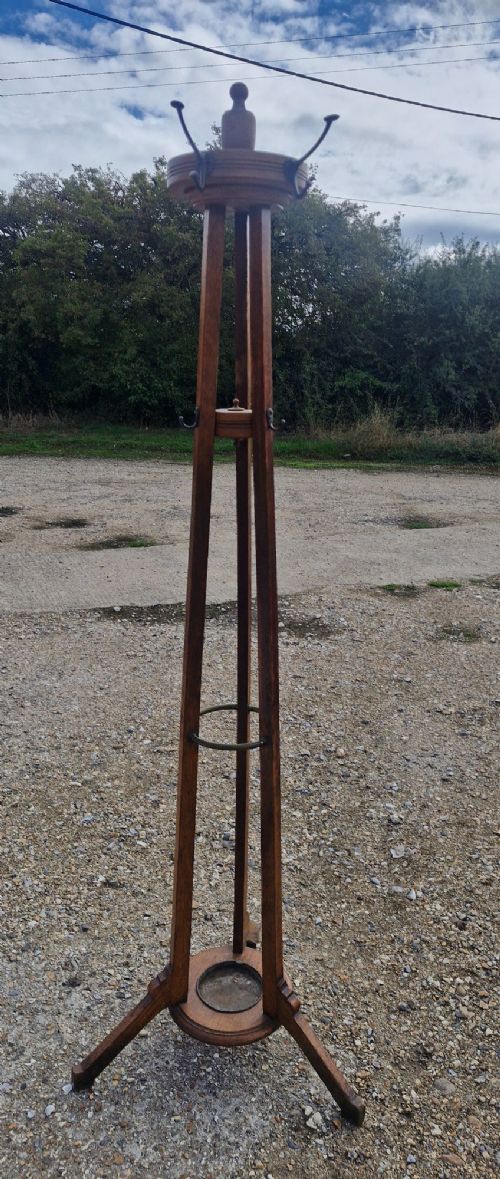
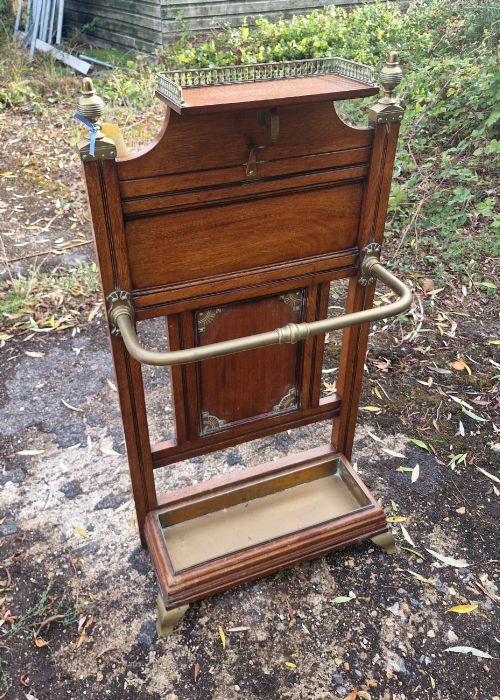
An umbrella holder stand appears in multiple configurations across the Victorian and Edwardian eras, spanning dedicated stick stands, hall stands, and combined coat and hat units. Buyers encounter sturdy oak frames alongside cast iron and brass structures designed for heavy daily use in entrance halls.
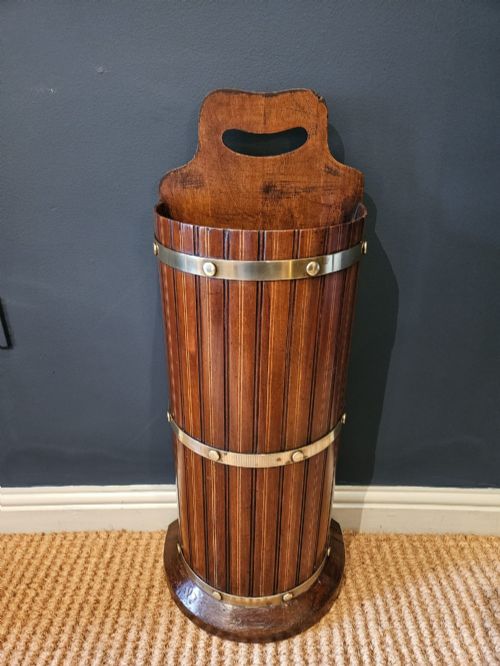
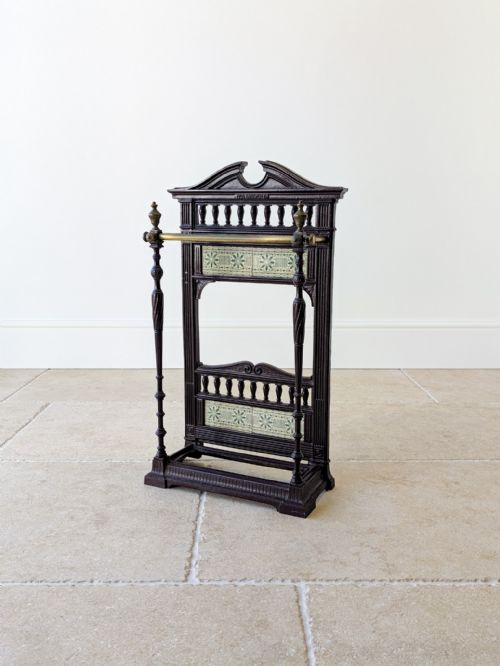
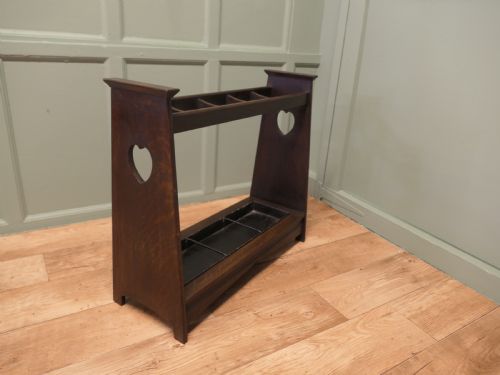
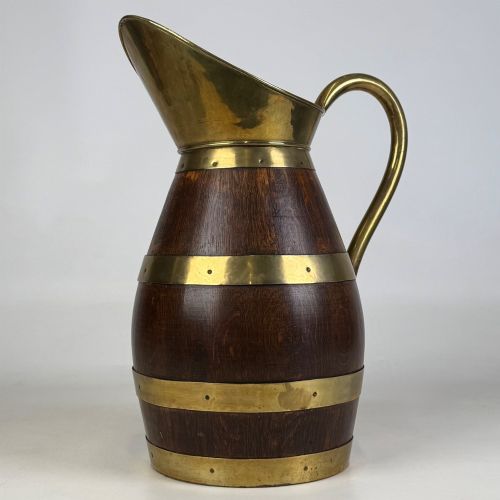
Makers produced these pieces in various regional styles, including Aesthetic Movement, Arts and Crafts, and Art Nouveau designs. Simpler barrel-shaped coopered examples sit alongside architectural hall furniture incorporating integrated metal drip trays and compartmentalised divisions.
Materials and construction methods
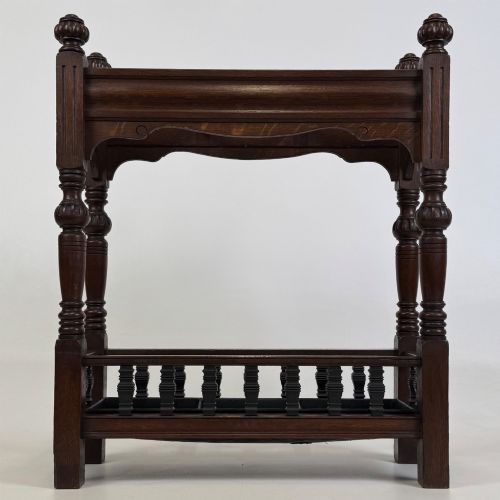
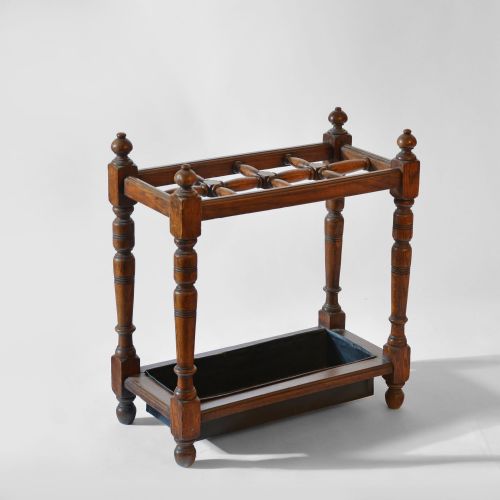
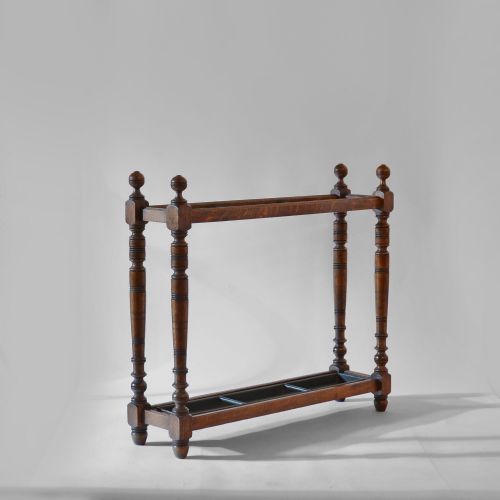
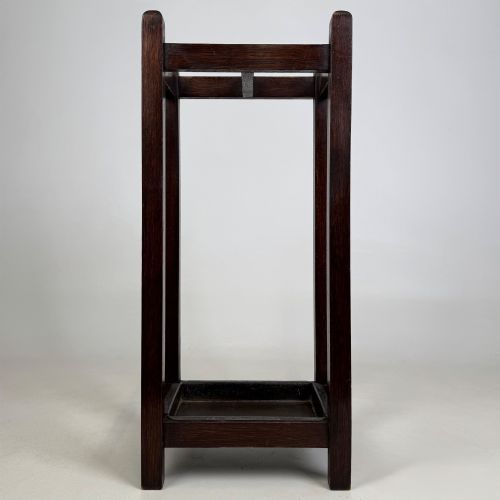
Makers constructed wooden umbrella holder stand examples predominantly from solid oak, beech, and pine, frequently utilising coopered stave techniques with brass binding or applied metal bands. These timber frames often feature turned supports and panelled backs designed to withstand moisture from wet walking sticks and umbrellas.
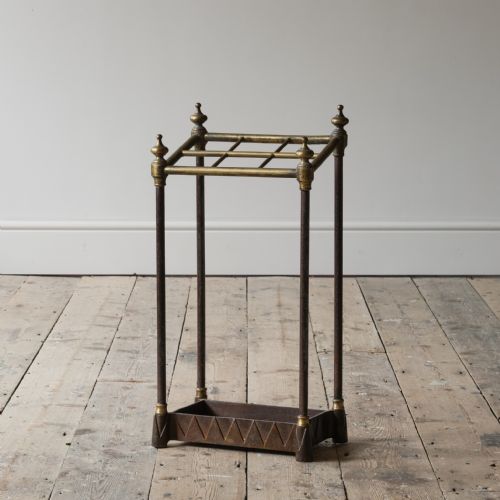
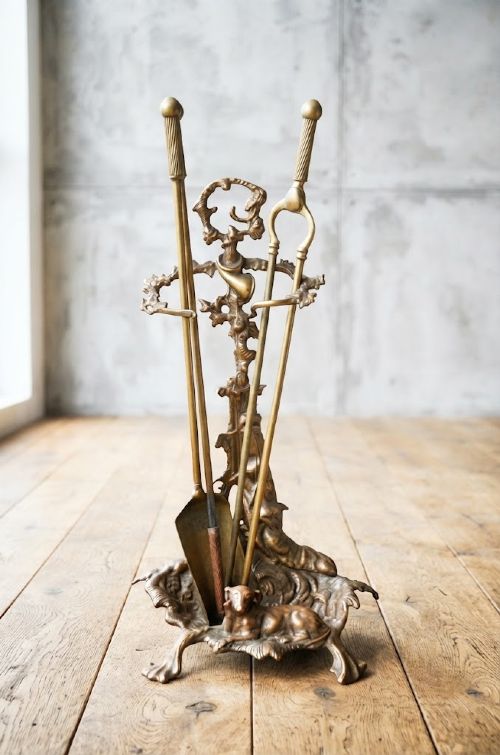
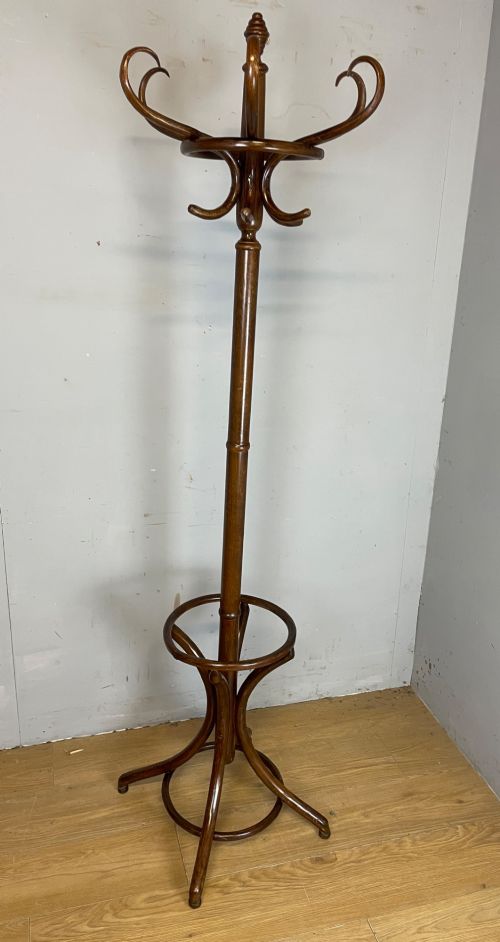
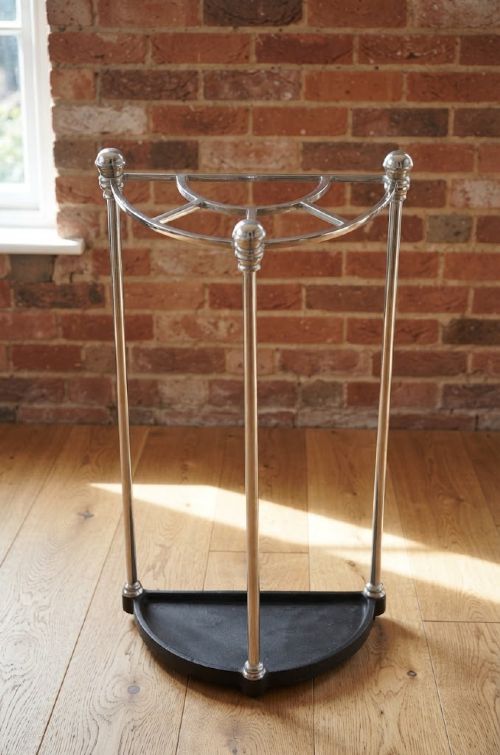
Metal variations rely on cast iron, brass, and nickel-plated finishes, sometimes incorporating zinc liners or removable drip trays to catch water. Foundry work yields intricate pierced patterns typical of the Aesthetic Movement and Art Nouveau periods, while bentwood techniques shape flexible timber into curved frames.
Some cast iron stands double as fire tool holders, proving that Victorian hallways and hearths shared the same ironmongery.
Judging build quality and condition
Superior execution in an umbrella holder stand shows in the integrity of the original metal drip trays, secure joints, and the retention of maker stamps or foundry marks. Lesser examples suffer from missing liners, replacement hardware, or structural timber movement caused by prolonged dampness.
The finesse of surface decoration, from cast iron openwork to brass finials and coopered stave alignment, separates standard utility items from finer design pieces. Original patination on both the timber and metal surfaces indicates how well the piece has survived decades of hallway use.
Coalbrookdale·Harrison and Hipwood·Théodore Deck
The Umbrella Holder Stand Glossary
- Coopered
- Construction method using tapered wooden staves bound with metal hoops, commonly seen in barrel-style wooden stands. This technique mirrors traditional bucket and cask making.
- Drip tray
- A removable metal basin placed at the base of a stand to catch water from wet umbrellas. Original trays are specific to each frame.
- Demi-lune
- A half-moon shape allowing the stand to sit flush against a hallway wall. This profile saves floor space in narrow corridors.
- Japanned
- A European imitation of East Asian lacquerwork using dark varnishes and decorative motifs. This finish appears on certain Edwardian examples.
- Aesthetic Movement
- A late nineteenth-century design style focusing on visual beauty rather than narrative meaning. Pieces from this movement display distinctive linear patterns.
Umbrella Holder Stand: Frequently Asked Questions
How do I prevent water damage to wooden stands?
Ensure the stand retains its original metal liner or drip tray to catch moisture before it reaches the timber base.
Regularly empty and dry the tray to protect the surrounding oak or beech structure from rotting.
Are cast iron stands too heavy for modern halls?
Cast iron and brass stands provide substantial weight that prevents tipping when heavy walking sticks and umbrellas are stored inside.
Their sturdy footprint makes them stable on both wood flooring and carpeted entranceways.
How do I distinguish Edwardian stands from Victorian ones?
Victorian stands tend to feature heavier, more ornate cast iron ornamentation or dark, heavily carved oak.
Edwardian and later examples often display lighter proportions, simpler lines, or influences from the Arts and Crafts and Art Nouveau movements.
Can I use a hall stand for coats as well?
Combined hall stands integrate umbrella holders with hooks for hats and coats, alongside dedicated mirror panels or glove boxes.
These larger pieces suit spacious entryways where multi-purpose furniture organises everyday outdoor garments.