

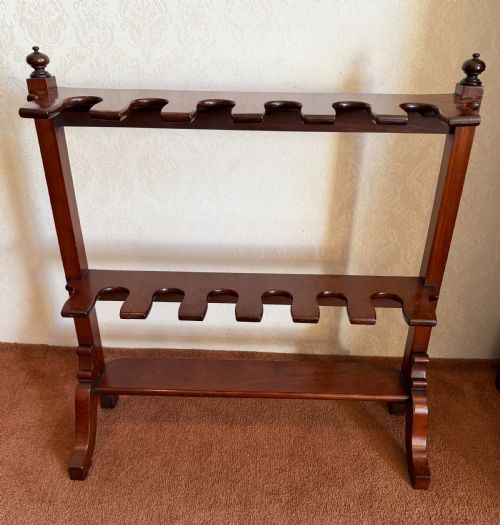
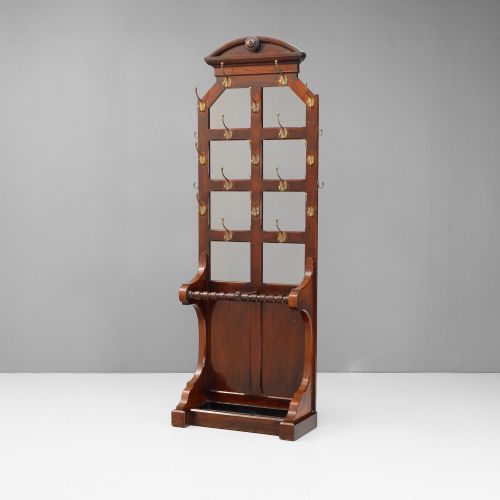


Mahogany Stick Rack
Mahogany stick racks are functional hall furnishings designed to hold walking sticks, umbrellas, and whips, bringing traditional order to an entranceway.
Mahogany Stick Rack
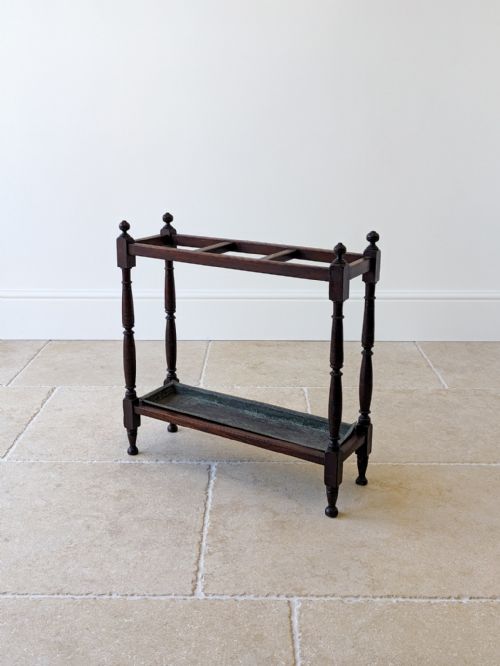
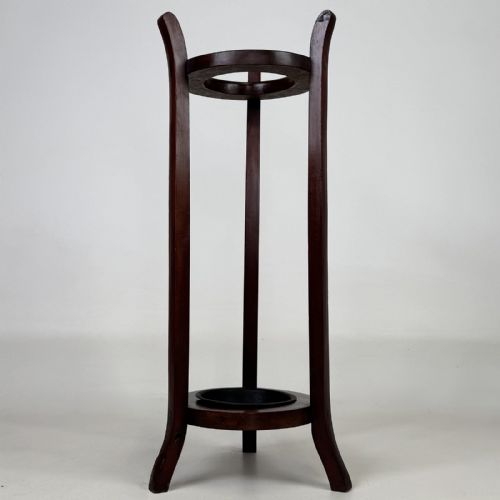
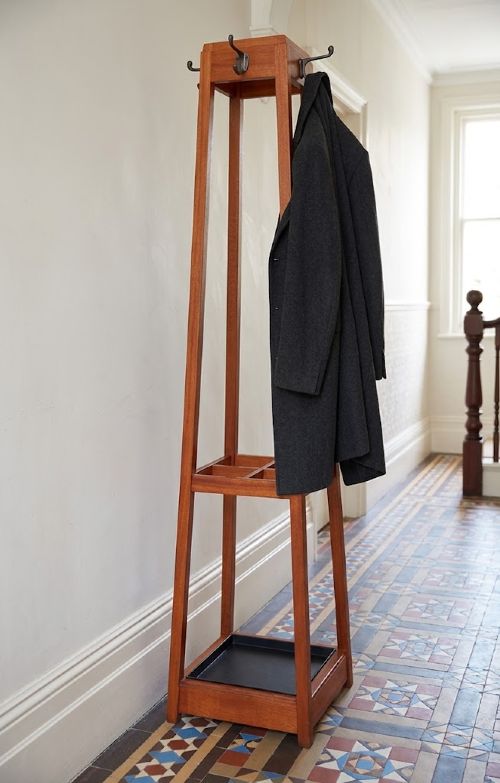
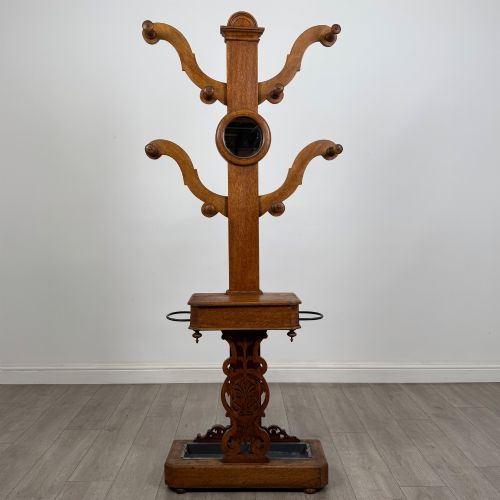
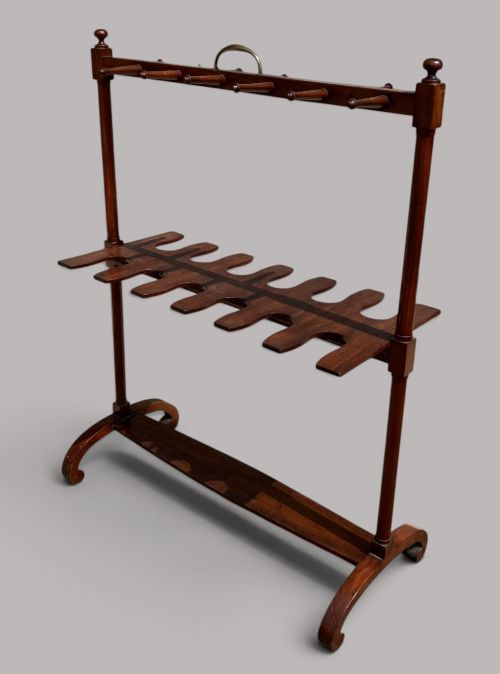
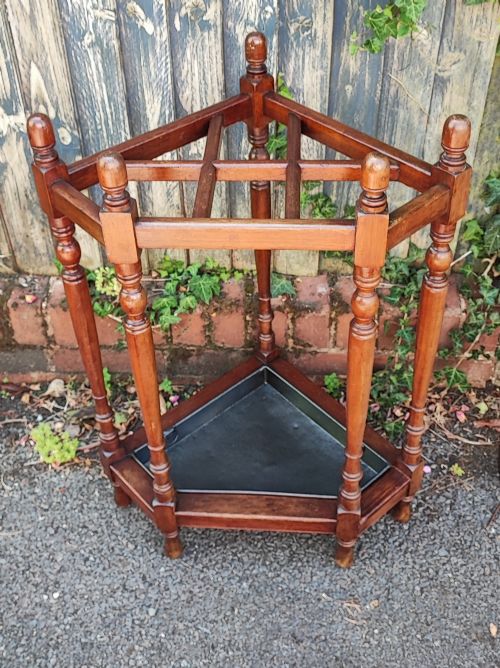
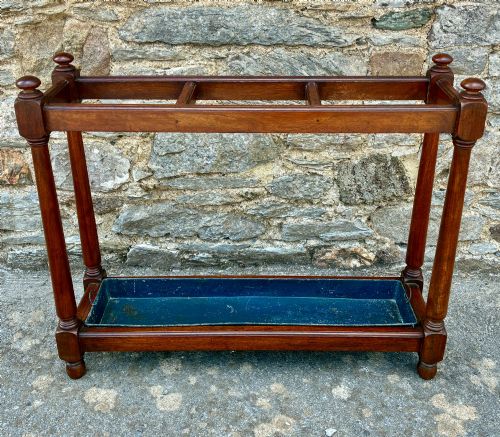
A mahogany stick rack serves as a practical entryway piece for holding walking sticks, umbrellas, and whips, often appearing within larger hall stands or as dedicated umbrella stands. The variations seen here span from compact corner stands to substantial country house designs, with Victorian and Regency periods heavily represented alongside Arts and Crafts examples.
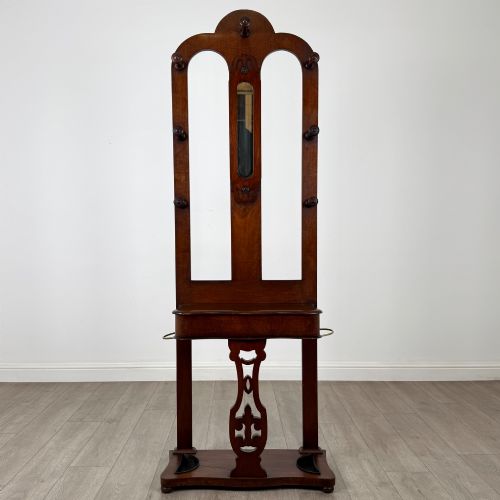
Buyers will encounter multiple configurations including boot and whip stands, cue stands, and combined hallstands featuring mirrors and marble shelves. The predominant forms utilise solid mahogany or mahogany veneers, frequently accompanied by brass mounts and cast iron or metal drip pans to catch moisture from wet weather gear.
How They Were Made
Cabinet makers utilised dense mahogany timbers, turning supports and shaping frames to bear the weight of heavy walking sticks and damp umbrellas. Brass rails, hooks, and mountings provide structural contrast and functional hanging points, while metal or cast iron components are integrated at the base to manage water runoff.
Selected pieces incorporate inlaid details, mirrored panels, and marble shelves, demonstrating the transition from functional utility to decorative domestic furniture. Construction methods rely on traditional joinery techniques suited to tall, narrow items subjected to daily household use.
The listings on this site encompass periods from the Regency era through to Edwardian times, utilising brass, marble, and cast iron alongside mahogany.
What Varies in Quality
Quality rests on the selection of timber grain, the weight and finish of the brass mounts, and the integrity of the base construction. Superior examples display thoughtful proportions, crisp turning on uprights, and well-integrated drip trays that do not compromise the surrounding woodwork.
The presence of secondary materials such as marble shelves, bevelled glass mirrors, or specialised hardware like mechanical snooker cue fittings elevates the sophistication of a piece. Finer items balance robust daily utility with refined cabinet work characteristic of their period.
Shoolbred
The Mahogany Stick Rack Glossary
- Mahogany
- A durable reddish-brown tropical hardwood used extensively for fine cabinet making. Its stability makes it ideal for tall entryway furnishings.
- Drip pan
- A removable metal or painted sheet metal tray placed at the base of a stand. It catches water running off wet umbrellas to protect the floor.
- Hallstand
- A multifunctional entrance piece combining clothes hooks, a mirror, a glove box, and a stick rack. It addresses multiple hallway storage needs in one footprint.
- Arts and Crafts
- A design movement emphasising handcrafting, simple forms, and honest materials. Pieces from this tradition often display subtle inlaid details and unpretentious joinery.
Mahogany Stick Rack: Frequently Asked Questions
How do I care for a mahogany stick rack?
Keep the wood nourished with appropriate wax polish to maintain the sheen and protect the surface from dry air.
Ensure that metal drip pans are emptied and dried regularly to prevent moisture damage to the base timber.
Where should I place a stick stand?
These pieces suit entrance halls, boot rooms, and corridors where coats and outdoor gear are naturally deposited.
Position them away from direct heat sources to prevent the mahogany timber from warping or splitting over time.
How do I tell Victorian from Regency stands?
Regency pieces often display cleaner architectural lines, reeded legs, and restrained classical proportions typical of the early nineteenth century.
Victorian examples frequently present more elaborate turning, carved details, and integrated mirrors or marble shelves.
Were these stands only used for umbrellas?
Many examples served multiple purposes in country houses, doubling as whip stands and boot racks for riders.
Specialised variants also exist for holding walking sticks, canes, and even snooker cues in recreational rooms.