
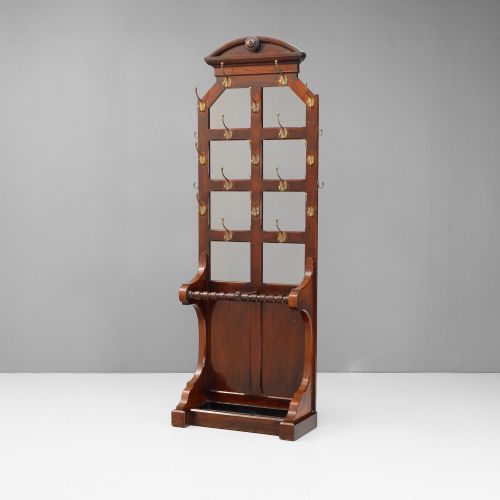


Victorian Mahogany Stick Stand
These Victorian mahogany stick stands keep hallways orderly while bringing rich timber tone and gleaming metal mounts to your entrance.
Victorian Mahogany Stick Stand
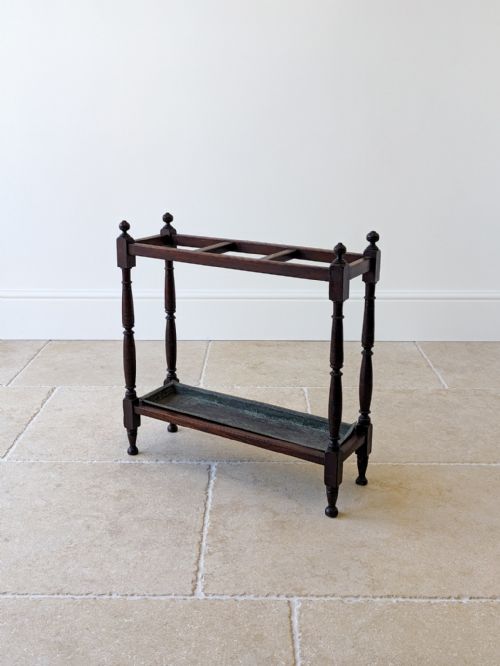
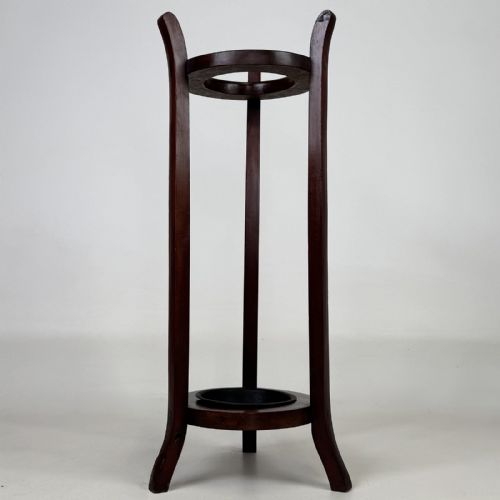
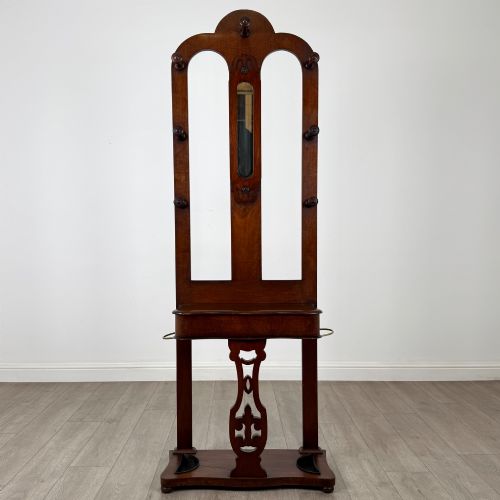
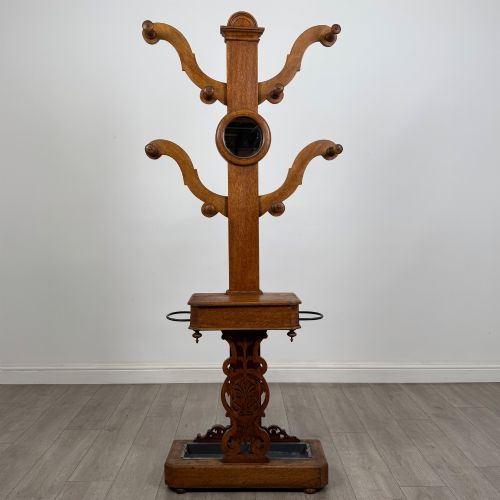
A victorian mahogany stick stand serves to organise umbrellas, walking canes and riding crops in entrance halls and country house boot rooms. The selection on this page ranges from compact umbrella holders to large multifunctional pieces combining coat hooks, mirrors and marble shelves.
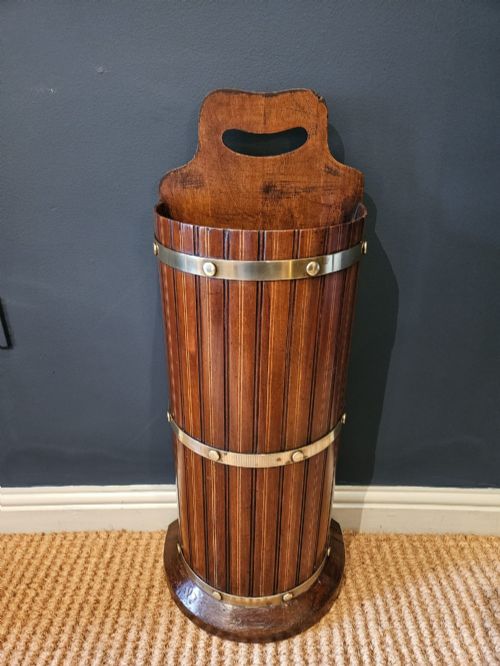
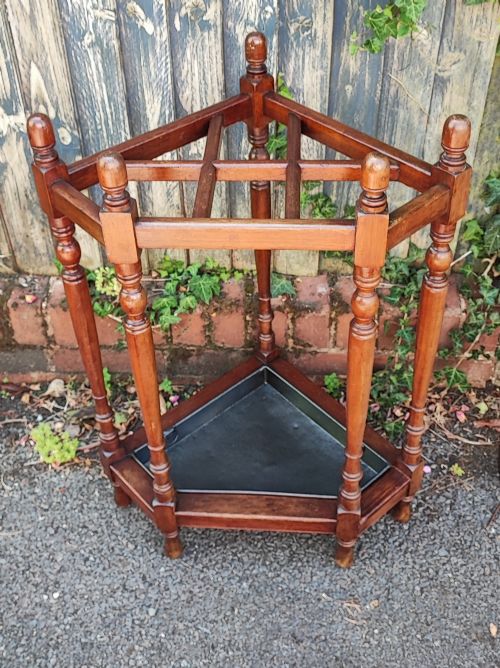
Most examples originate from the nineteenth century, spanning periods from mid century Regency influences through to late Victorian and Arts and Crafts designs. Buyers encounter various formats here, including circular copper or brass bound tubs, corner stands and substantial architectural hallstands.
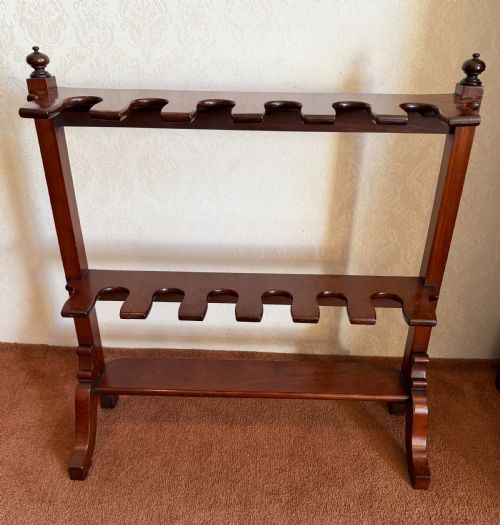
Specialist variations also appear among the listings, such as tack room whip stands, mechanical snooker cue holders and boot scrapers. These specific forms reflect the diverse domestic and sporting requirements of nineteenth century households.
Materials and construction methods
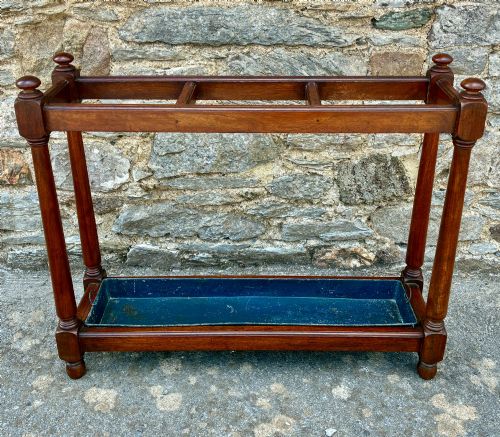
Makers relied primarily on solid and veneered mahogany for the main bodies of these pieces, pairing the deep timber with structural metals. Brass rails, bands, mounts and cast iron components frequently provide support rings and drip trays.
Secondary materials enhance functional surfaces and decorative detail across the pieces. Marble shelves, mirrored glass panels, tiled inserts and painted sheet metal trays appear in the construction to handle moisture and daily wear.
Listings feature materials including mahogany, brass, glass, cast iron, marble, painted sheet metal and iron.
Assessing quality and proportion
Quality rests upon the selection of timber and the integration of structural metalwork. Pieces with heavy brass banding, cast brass mounts and solid mahogany frames demonstrate superior craftsmanship compared to simpler variants.
Shoolbred
The Victorian Mahogany Stick Stand Glossary
- Hallstand
- A multi-functional piece of furniture combining stick and umbrella storage with coat hooks, hat pegs and frequently a mirror or glove drawer. These substantial items dominated Victorian entrance halls.
- Drip tray
- A metal base insert, often made of brass or painted sheet metal, positioned beneath the stick holders to catch rainwater from wet umbrellas. Original trays significantly enhance authenticity.
- Brass bound
- A descriptor for wooden vessels reinforced with external brass bands or hoops. This technique provided both structural strength and decorative contrast against the dark mahogany.
- Corner stand
- A space-saving form shaped at a ninety-degree angle to fit neatly into hallway corners. These utilise otherwise neglected floor space.
- Tack room
- A dedicated space for storing riding equipment, saddle gear and whips. Stands designed for this environment often feature specific hooks or notches for crops and hunting poles.
Victorian Mahogany Stick Stand: Frequently Asked Questions
What fits in a stick stand?
These stands accommodate walking sticks, umbrellas, parasols and riding crops within their designated wooden rings or compartments.
Larger hall stands also incorporate hooks for coats and hats alongside the lower umbrella wells.
Where were hall stands placed?
Victorian households positioned these pieces directly in the entrance hall, vestibule or country house boot room for immediate access upon entry.
Their placement allowed guests and family members to deposit wet outdoor gear before stepping further into the home.
How do I care for mahogany?
Maintain the timber by dusting regularly with a soft cloth and applying quality beeswax sparingly to nourish the grain.
Keep the stand away from direct heat sources and radiators to prevent the mahogany and any veneered surfaces from splitting.
Are original drip trays common?
Original metal drip trays do survive in many pieces, though replacement liners are also found in antique stands.
Inspect the base interior to determine if the tray matches the age and wear pattern of the surrounding brass mounts.
How do I date a stick stand?
Dating relies on stylistic clues such as Arts and Crafts linearity, Regency curves, or the presence of late Victorian mirrored backs.
Construction methods and timber characteristics also help align a piece with nineteenth-century manufacturing periods.