


Vintage Brolly Stand
A vintage brolly stand keeps hallway clutter at bay, combining practical utility with the robust weight of cast iron or warm pitch pine.
Vintage Brolly Stand
When you search for a vintage brolly stand, you are looking at hallway furniture designed to hold wet umbrellas and walking sticks without dampening the floor. These pieces serve as the first point of contact in a home, offering an orderly home for everyday gear. Most examples found here originate from the Victorian, Edwardian, and Arts and Crafts periods, reflecting the heavy foot traffic of traditional houses.
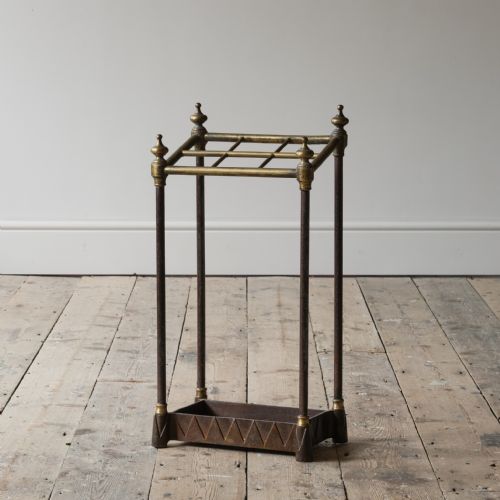
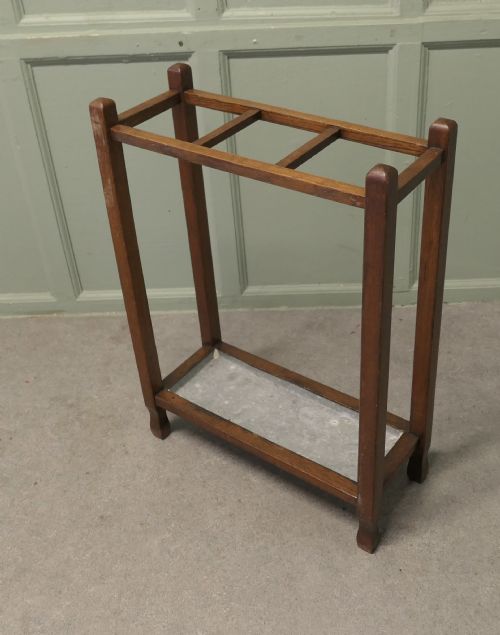
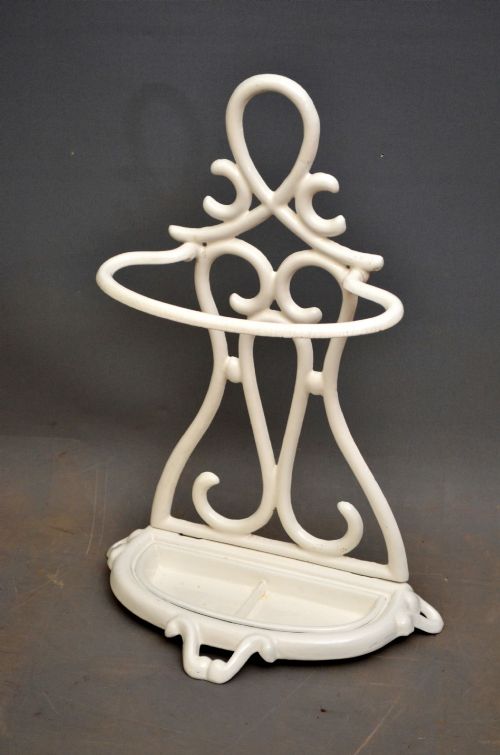
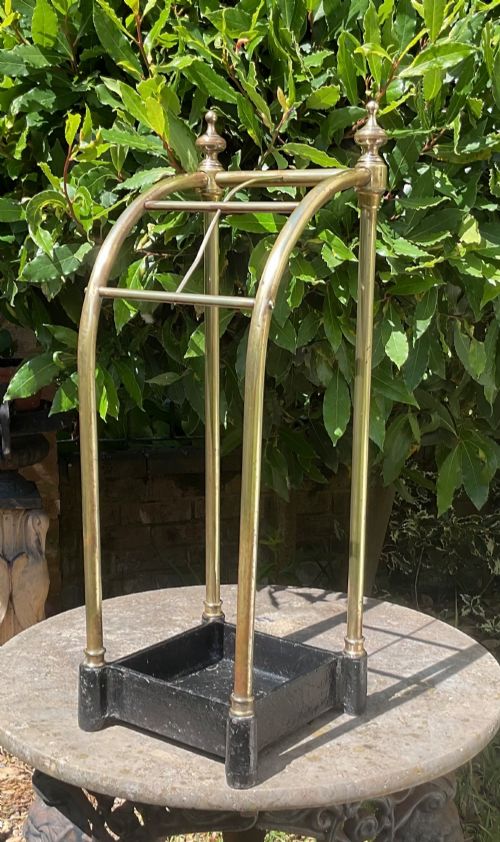
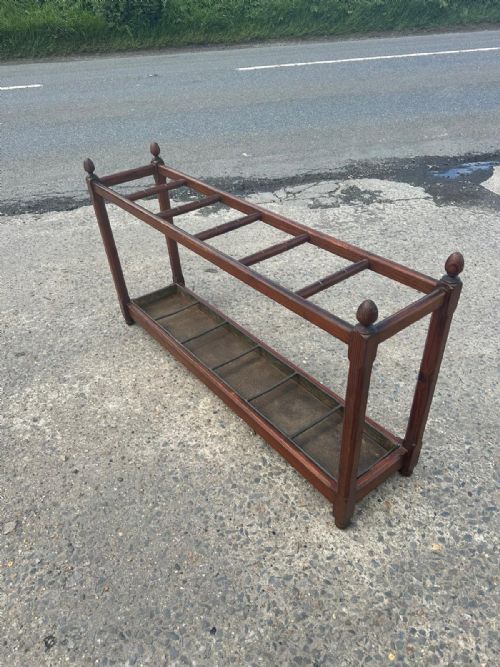
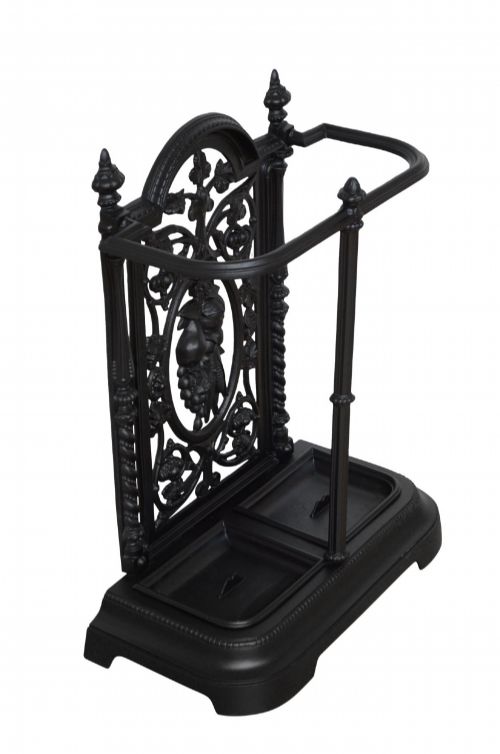
The version you are most likely to meet on this page is a heavy cast iron stick stand, often finished in black, white enamel, or brass trim. These metal forms range from simple oval and circular frames to elaborate French Art Nouveau designs and Coalbrookdale style castings. Alongside iron, you will also encounter wooden iterations shaped from golden oak and pitch pine.
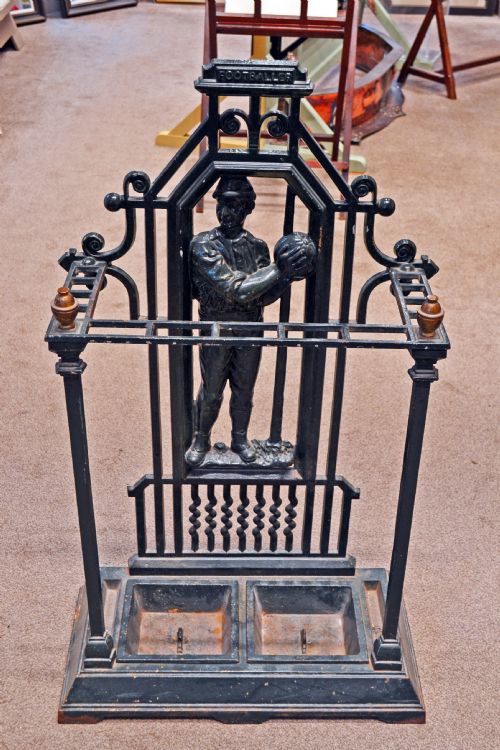
Many of these stands feature integrated drip pans made from zinc or copper to catch rainwater, protecting the floors beneath them. The objects vary from architectural portico styles with umbrella loops to novelty shapes, including football motifs and umbrella-shaped brass frames. Each piece brings a distinct period character to a porch, hallway, or boot room.
How they were made
The construction of these pieces relies on durable metals and seasoned timbers suited to heavy domestic use. Cast iron examples were shaped in foundry moulds, yielding intricate openwork patterns, structural loops, and rigid frames that resist tipping under the weight of heavy walking sticks. Enamel finishes were applied to metal surfaces for added protection against rust and moisture.
Wooden stands utilise solid cuts of pitch pine and golden oak, often joined with traditional carpentry methods to withstand damp conditions. Brass components, including tubular rails and decorative castings, provide bright contrast against darker woods and iron bodies. Removable zinc or copper trays were integrated at the base to manage water runoff from wet umbrellas.
Vintage Brolly Stand Retail Price Guide 2026
Typical asking prices for vintage brolly stand among the pieces listed under this phrase on Sellingantiques today, from the lower quarter to the upper quarter. They describe what is for sale here now, not the wider market.
Listings feature items spanning the nineteenth century through the Edwardian era, incorporating cast iron, brass, oak, and zinc.
What varies in quality
Quality in these hall stands lies in the crispness of the casting and the integrity of the materials. Finer metal examples display sharp, well-defined surface details in their foliage or figurative motifs, whereas lesser castings appear soft and muddled in the edges. The presence of the original matching drip pan elevates a piece significantly, as these removable trays are frequently lost or replaced over time.
In wooden variants, the choice of timber and the stability of the joints dictate the standard of the work. Quarter-sawn oak and heavy pitch pine denote better construction than softer utility woods, ensuring the frame remains rigid when loaded with wet sticks. The gauge of the brass or ironwork also determines longevity, separating sturdy hall furniture from lighter decorative items.
The Vintage Brolly Stand Glossary
- Portico stick stand
- A substantial hall stand featuring an architectural framework with upper loops to separate individual umbrellas.
- Drip pan
- A shallow removable tray, typically formed from zinc or copper, positioned at the base to catch water.
- Arts and Crafts
- A design movement favouring honest construction, visible joinery, and materials like golden oak.
- Art Nouveau
- A style defined by organic, flowing lines and asymmetrical plant-like curves, seen on continental ironwork.
- Coalbrookdale
- A renowned ironworks style associated with elaborate, decorative openwork castings used in Victorian hardware.
Vintage Brolly Stand: Frequently Asked Questions
Where should I place my stand?
These pieces belong in an entrance hall, porch, or boot room where guests arrive and outdoor gear accumulates near the door.
Position the stand on a hard floor surface rather than thick carpet to prevent moisture from trapping against underlying textiles.
How do I clean cast iron?
Dust the iron framework regularly with a dry cloth and remove accumulated dirt from the recesses using a soft brush.
Avoid harsh chemical cleaners that might strip original paint finishes or enamel surfaces.
Are the drip pans removable?
Most metal and wood stands include a loose metal tray at the base designed to lift out independently for emptying and washing.
Check that the tray is secure yet accessible so you can manage trapped rainwater without moving the heavy main frame.
How do I date a stand?
Look to the materials, manufacturing style, and period characteristics such as Victorian cast iron or Edwardian brass work.
Heavier ornamentation often points to the nineteenth century, while simpler geometric lines tend toward later Arts and Crafts periods.