


White Umbrella Stand
A white umbrella stand holds wet weather gear neatly in a hallway while adding brightness and structure to an entrance.
What these pieces are
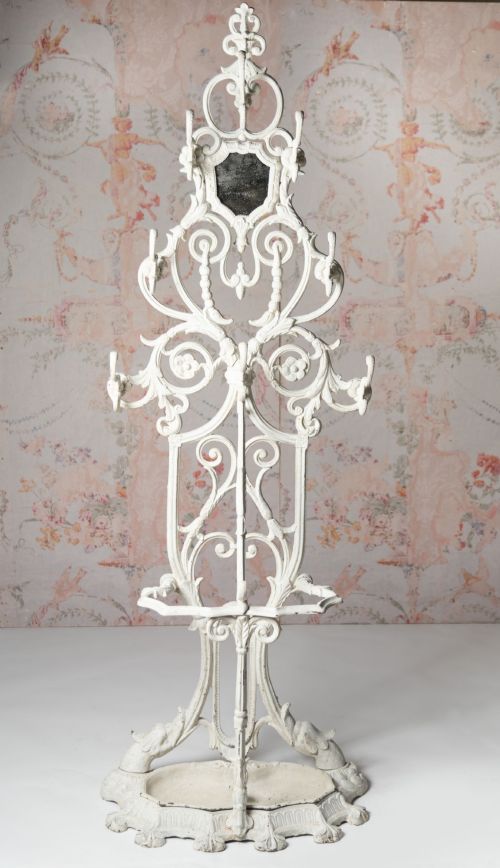
A white umbrella stand serves the practical purpose of holding walking sticks and wet umbrellas in a hallway or entrance. The items on this page cover both umbrella stands and stick stands designed for domestic use. Forms range from dedicated single stands to large hall stands incorporating coat and hat hooks.
Buyers are most likely to meet examples from the Victorian period up to 1900, alongside Edwardian revival and 1930s pieces. Common configurations include floor-standing items constructed to handle damp items without damaging interior floors. Origins span English, French, and Japanese manufacture.
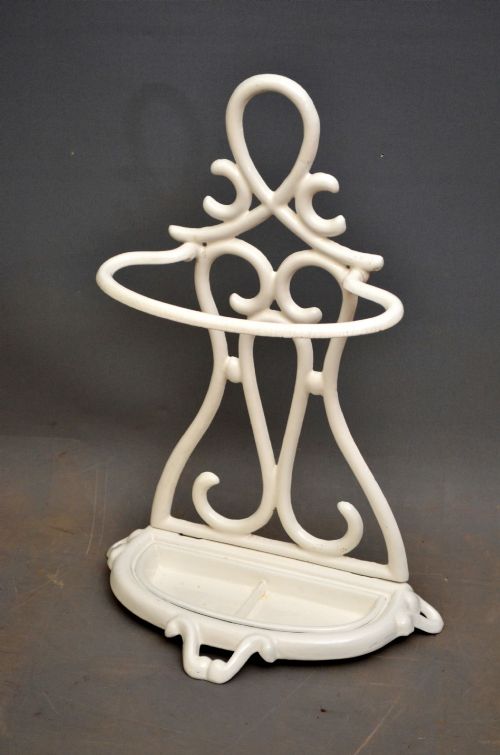
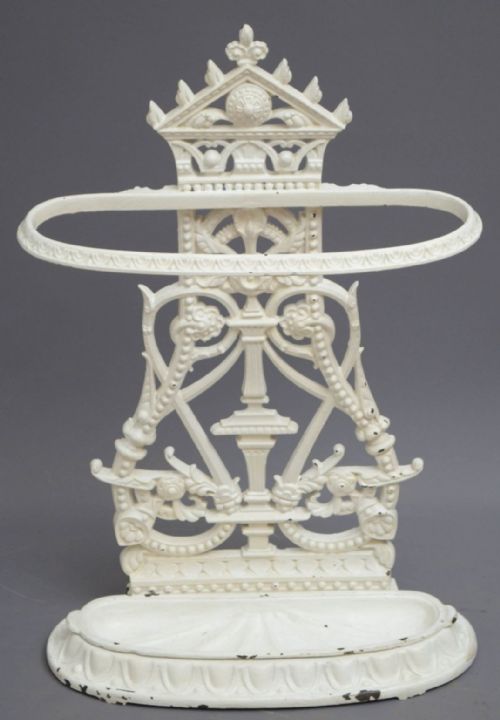
The aesthetic vocabulary encompasses Victorian Gothic revival, Art Nouveau curves, and simpler turned woodwork. Some pieces feature structural metal loops or portico designs to keep long sticks upright. Colour is predominantly white, achieved through enamel finishes, paintwork, or the natural tone of white marble.
How they were made
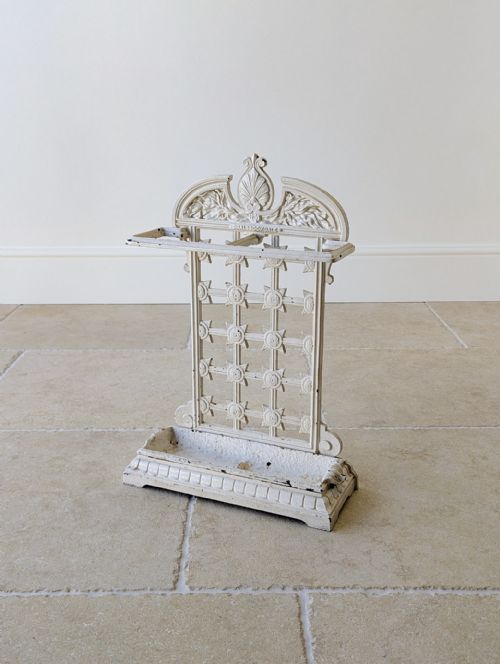
Makers utilised heavy materials such as cast iron, ironstone china, ceramic, and carved oak to ensure the stands remained stable under the weight of wet umbrellas and heavy walking sticks. Metal components frequently received a white enamel finish or protective paint to prevent rust and provide a clean surface. Painted wood employed turning techniques, such as barley twist legs, to shape structural supports.
Ceramic and porcelain examples utilised blue and white decoration, sometimes incorporating motifs like rambling roses. Carved oak tree hall stands relied on traditional carpentry and detailed woodworking to form branches and panels that doubled as coat and hat storage. Cast iron structures were cast from moulds, creating intricate openwork patterns and sturdy umbrella loops.
Some oak hall stands are carved to resemble trees, turning your hallway into a miniature indoor forest.
What varies in quality
The distinction between standard and superior pieces rests on the ambition of the design and the integrity of the materials. Cast iron stands with detailed Art Nouveau moulding or architectural portico forms demand greater skill than plain cylindrical vessels. Similarly, large carved oak tree hall stands represent more complex cabinetmaking than simple turned wooden shafts.
Surface finish preservation marks another division in quality. Intact white enamel over cast iron or well-preserved original paint on barley twist wood retains the intended appearance of the piece. Integrated drip trays and robust structural joinery also separate utilitarian holders from substantial entrance furniture.
The White Umbrella Stand Glossary
- Stick stand
- A piece of furniture designed specifically for holding walking sticks and canes. They often share forms with umbrella stands.
- Barley twist
- A type of woodturning that creates a helical, spiral column resembling twisted barley sugar. It appears frequently on wooden furniture legs and supports.
- Ironstone
- A type of heavy, durable ceramic patented in the nineteenth century that bridges the gap between earthenware and porcelain. It frequently forms large cylindrical vessels.
- Portico
- An architectural framework style adapted for furniture to create a porch-like structure around the items held within. This design gives certain iron stands a monumental appearance.
- Gothic revival
- An architectural and decorative style drawing on medieval ecclesiastical motifs, featuring pointed arches and heavy carved woodwork. It frequently appears on nineteenth-century hall furniture.
Frequently Asked Questions
What is a white umbrella stand?
A white umbrella stand is a piece of hallway furniture designed to store wet umbrellas and walking sticks while keeping floors dry.
Materials for these items include cast iron, enamel, painted wood, and ceramic, appearing in styles from the Victorian era to 1900.
How do I date a stick stand?
Dating relies on identifying stylistic markers, manufacturing techniques, and materials associated with specific eras like the Victorian period.
Evidence from past pieces shows distinct shifts from Gothic revival carved oak to later cast iron and enamel finishes.
Where should I place an umbrella stand?
These stands belong in a hallway, entrance, or boot room where people enter the house with wet gear.
Positioning them near the front door allows guests to deposit dripping umbrellas before walking onto interior carpets.
Are all these stands made of iron?
No, materials vary considerably across the selection available to buyers.
While cast iron and metal are common, listings also feature painted wood, ironstone china, ceramic, and white marble.