





Painted Cast Iron Stand
A painted cast iron stand is a durable and decorative furnishing for hallways and gardens, built to hold coats, umbrellas, or plants.
Painted Cast Iron Stand
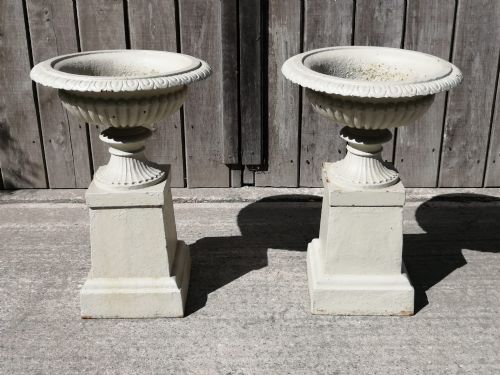
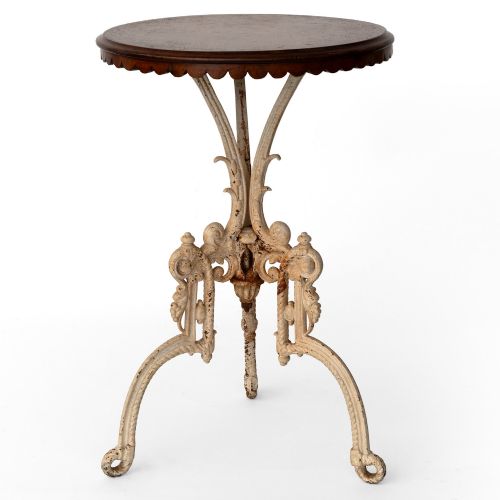
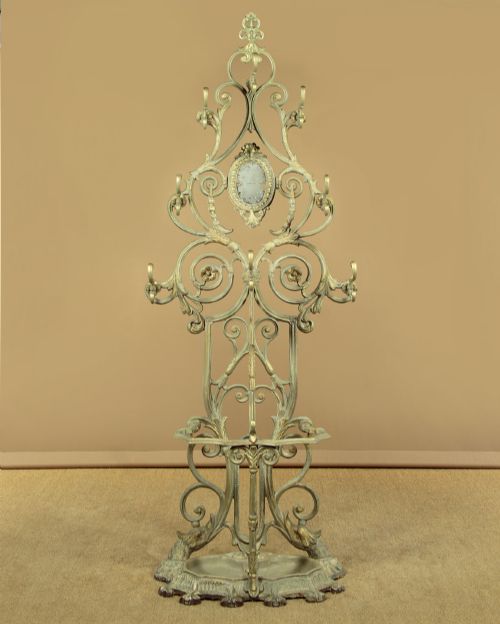
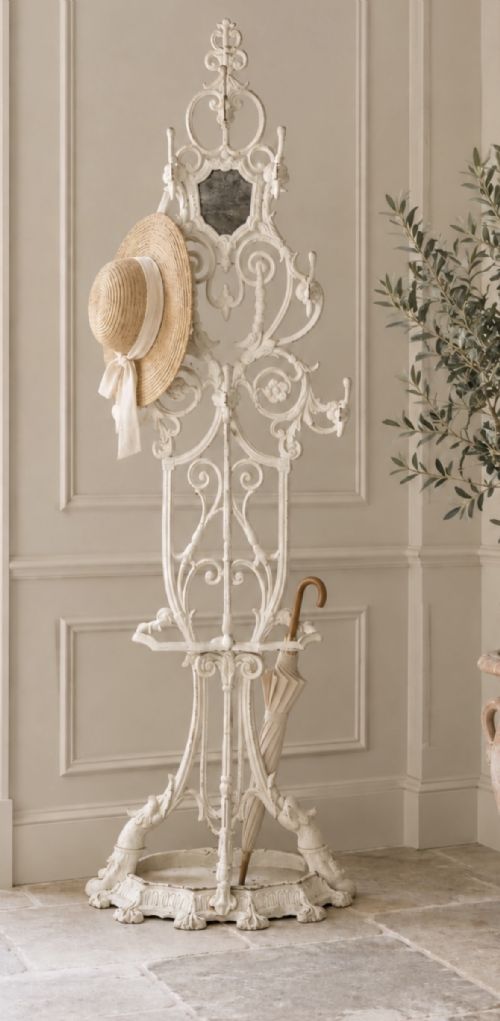
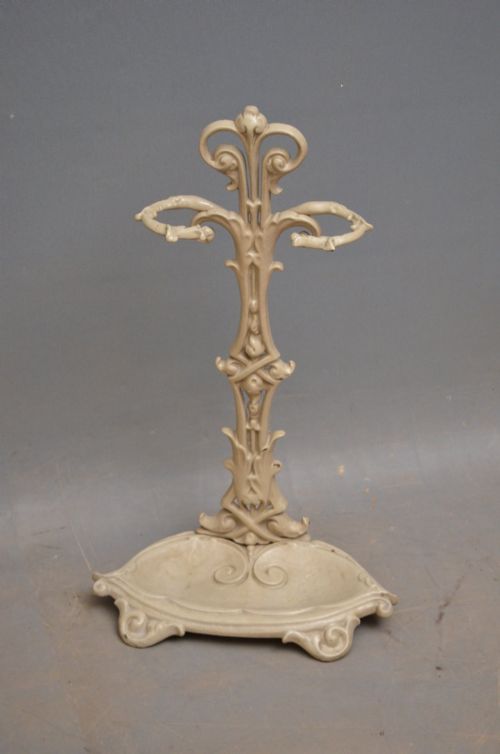
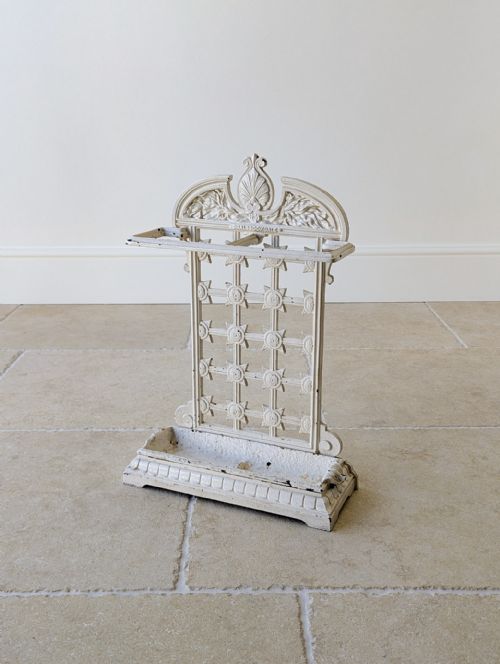
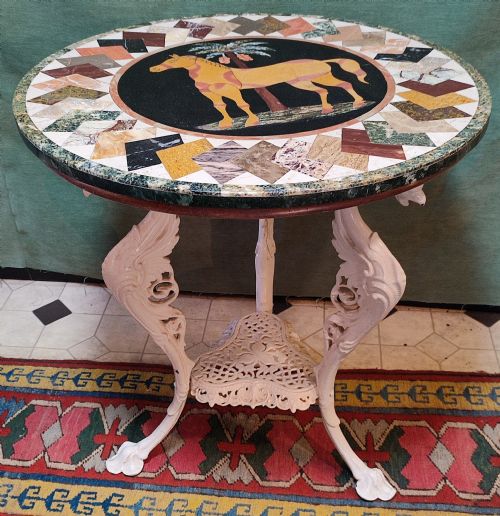
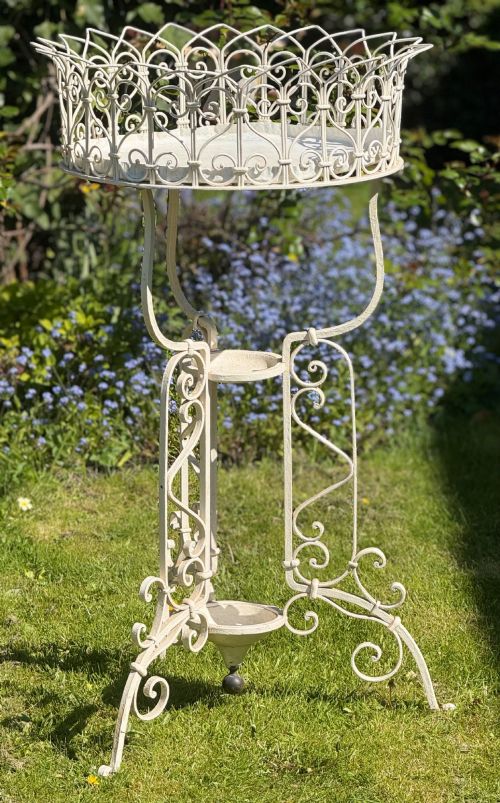
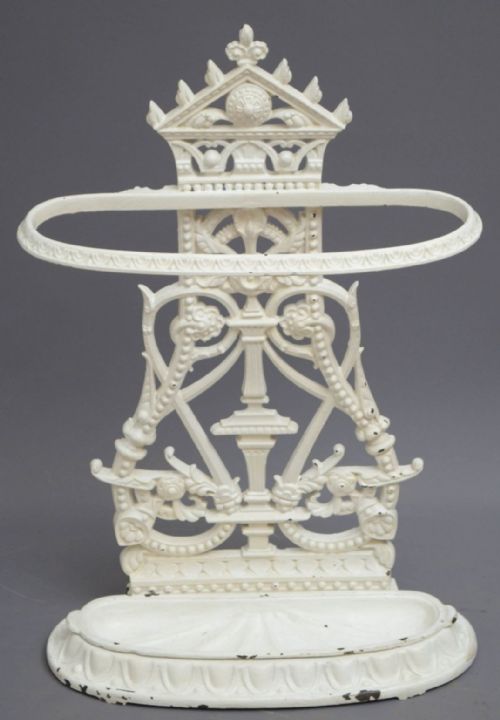
When you search for a painted cast iron stand, you encounter heavy utility furniture designed for Victorian and Edwardian entryways and gardens. The pieces on this page are predominantly umbrella and stick stands, alongside garden urns, plant stands, and hall stands from the nineteenth century.
You will frequently find hall stands and umbrella loops intended for practical domestic use, often featuring architectural forms like porticos or faux bamboo. Garden planters and urns on pedestals also appear regularly, reflecting nineteenth-century tastes for outdoor ornamentation.
How they were made
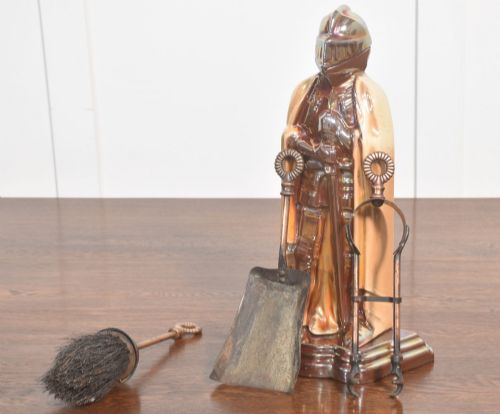
Foundries utilised moulds to cast molten iron into intricate decorative patterns, incorporating styles from Gothic Revival to Art Nouveau. These structural frames received protective and decorative layers of paint, sometimes accented with copper finishes.
Combinations of cast iron and wrought iron provided structural rigidity for taller items like coat racks and stick stands. Additional elements such as glass, marble tops, or wirework occasionally appeared on tables and jardinieres.
Painted Cast Iron Stand Retail Price Guide 2026
Typical asking prices for painted cast iron stand among the pieces listed under this phrase on Sellingantiques today, from the lower quarter to the upper quarter. They describe what is for sale here now, not the wider market.
Listings feature cast iron pieces spanning the Victorian and Edwardian eras, including garden urns, umbrella stands, and hall stands.
What varies in quality
The sophistication of the casting distinguishes standard utility pieces from exceptional foundry work. Crisp relief moulding on figures, acanthus leaves, and structural frames indicates superior craftsmanship.
The integrity of the original form and the preservation of the painted surface dictate the standing of an item. Pieces retaining early or original paint finishes demonstrate greater historical preservation than those stripped down or heavily recoated.
Coalbrookdale·Zimmermann·Chubb·Waring and Sons
The Painted Cast Iron Stand Glossary
- Cast iron
- A strong, hard alloy of iron and carbon poured into moulds to create rigid forms. It allowed nineteenth-century foundries to produce complex decorative motifs in high volume.
- Stick stand
- A piece of furniture designed to hold walking sticks and umbrellas in a hallway. These tall items often incorporate drip trays at the base to catch rainwater.
- Hall stand
- A combined entryway furnishing featuring hooks for coats, a mirror, and a base for umbrellas. They served as central functional pieces in Victorian and Edwardian hallways.
- Jardiniere
- An ornamental pot or stand for holding plants or flowers. In ironwork, these often take the form of urns or column planters.
- Gothic Revival
- An architectural and decorative style drawing inspiration from medieval design. It frequently appears on nineteenth-century ironwork through pointed arches and quatrefoil patterns.
- Acanthus leaf
- A classical ornament based on the Mediterranean plant of the same name. Foundries cast this foliage onto urns, pedestals, and structural brackets.
Painted Cast Iron Stand: Frequently Asked Questions
Can I put cast iron outdoors?
Many cast iron plant stands, garden urns, and jardinieres were engineered specifically for exterior garden environments. The robust metal handles outdoor placement well.
Keep an eye on the paint finish over time, as moisture can cause surface oxidation where the protective coating chips or wears thin.
How do I date a cast iron stand?
Examine the stylistic clues in the casting, such as Victorian neoclassical motifs, Gothic Revival arches, or later Art Nouveau curves. Design patents and foundry marks stamped into the iron also help pinpoint the era.
Heavier decorative detail and registration numbers often point to nineteenth-century production by prominent foundries like Coalbrookdale.
How do I clean painted iron?
Dust the piece regularly with a dry cloth and remove grime using a damp cloth with mild soap. Avoid harsh chemical solvents that might strip the historic paint finish.
Dry the metal thoroughly after cleaning to prevent any moisture retention in recessed areas of the casting.