


Half Moon Stick Stand
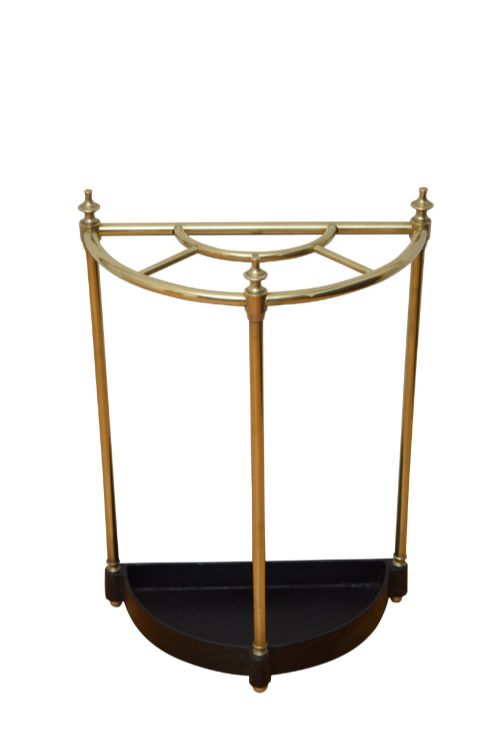
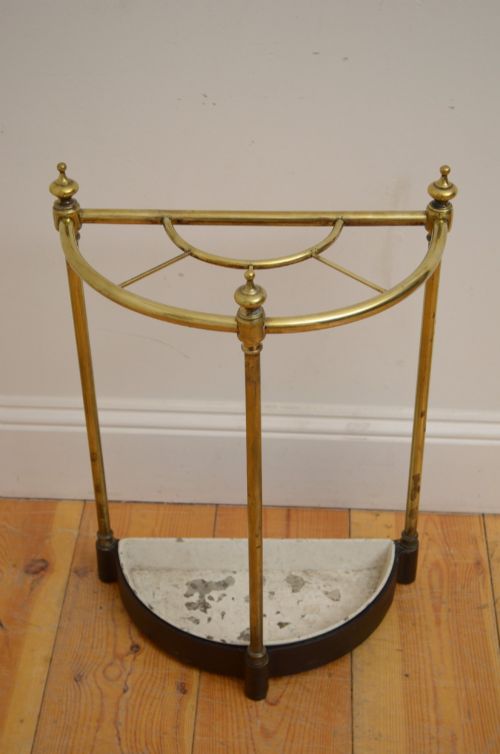
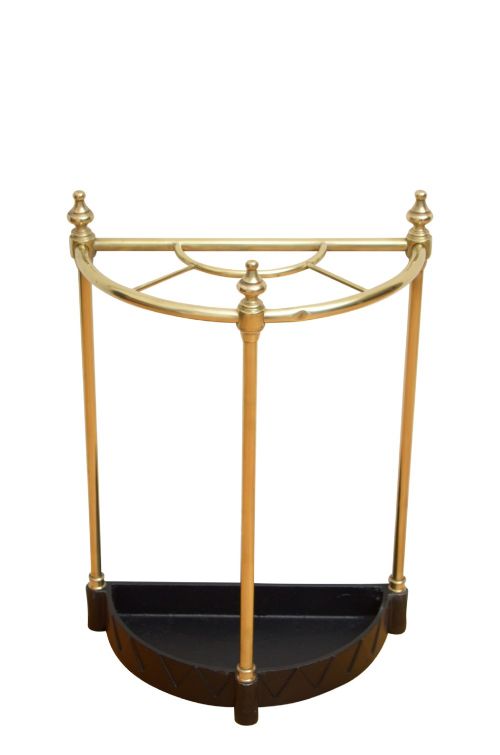
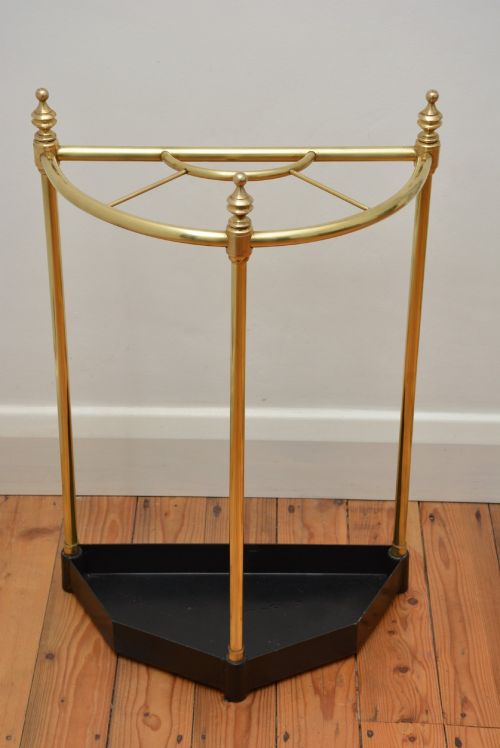
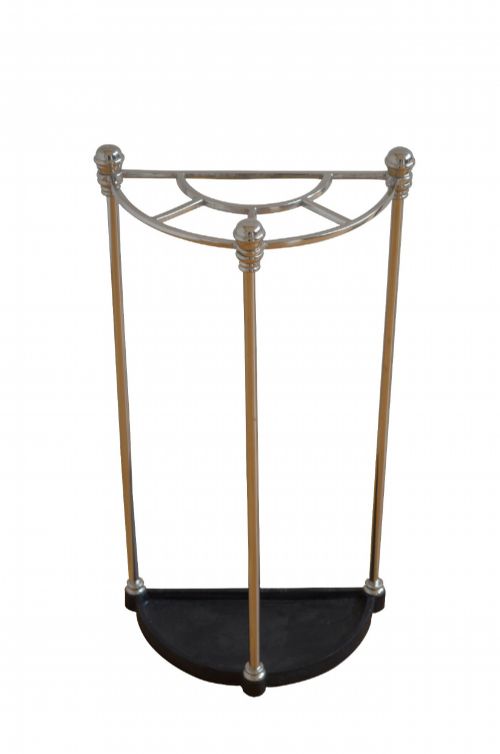
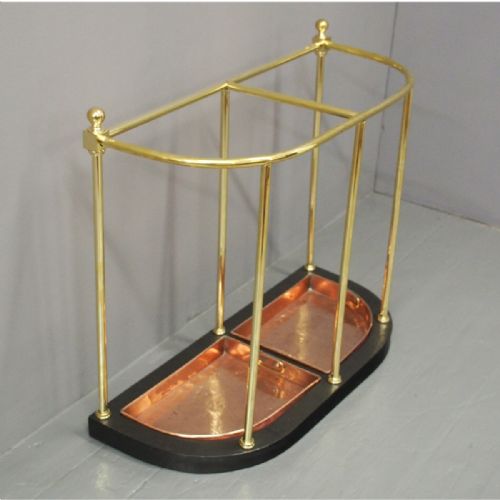
Half moon stick stand pieces combine flat backs for narrow hallways with curved rails to hold umbrellas and walking sticks.
What half moon stick stand examples are
The selections available here span from the Victorian period through the Edwardian era into the 1920 and 1930 decades. Styles cover Victorian, Edwardian, Jacobean Revival, and Art Deco designs reflecting changing domestic tastes across Britain.
You encounter objects listed as umbrella stands, umbrella stand variants, and stick stands. Materials range from traditional brass and cast iron to nickel, oak, painted wood, and general wood constructions.
How they were made
Metal versions utilise brass, cast iron, and nickel, often shaped into demi-lune frames with drip trays beneath. Brass and nickel components provide bright metallic surfaces that resist the moisture dripping from wet umbrellas.
Wooden examples rely on oak and painted wood, sometimes incorporating decorative turned elements like barley twist columns. These wooden structures combine sturdy framing with traditional joinery suited to daily domestic service in busy hallways.
Retail Price Guide 2026
Typical UK retail prices for half moon stick stand, calculated from the Sellingantiques database of over a million retail prices indexed since 2003. This retail price guide relies exclusively on Sellingantiques data; no external sources or auction records are used, so the figures do not describe the wider market.
A white painted barley twist stand brings a cheerful cottage brightness to the serious business of dripping umbrella management.
What varies in quality
Quality rests upon the weight of the metal and the selection of timber used in the frame. Solid brass castings and dense oak provide structural stability that lighter, thinner materials simply lack.
The refinement of decorative details, such as crisp casting work on metal frames or precise turning on wooden supports, separates standard utility items from finer hallway furnishings.
The Half Moon Stick Stand Glossary
- Demi Lune
- A half-moon shape used to describe the flat-backed footprint of these hallway stands. This curved profile allows the piece to sit tightly against a wall.
- Stick Stand
- A piece of furniture intended for holding walking sticks and canes. They share floor space in hallways with umbrella storage.
- Barley Twist
- A form of woodturning resembling a spiralling rope. This decorative technique appears on wooden uprights.
- Drip Tray
- A shallow metal base fitted at the bottom of the stand to catch water from wet umbrellas. It protects hallway floors from moisture damage.
Frequently Asked Questions
Where should a half moon stick stand go?
These stands fit neatly against hallway walls or beside entrance doors where floor space is limited. Their flat backs allow them to occupy minimal depth while keeping walking sticks accessible.
They serve practical duties in entryways by organising wet umbrellas and canes right where people enter the house.
What materials are common in these stands?
Common materials include brass, cast iron, nickel, oak, painted wood, and general timber. Metal versions often feature built-in trays to catch moisture.
Wooden examples rely on oak and painted surfaces, sometimes displaying decorative turning like barley twist columns.
How do I date a stick stand?
Dating relies on stylistic clues like Edwardian revival details, Victorian brass casting methods, or Art Deco geometric lines. Materials such as nickel or specific oak treatments also point to eras like the nineteen thirties.
Comparing construction techniques and the presence of period revival styles helps place the piece within its manufacturing decade.
Are these stands suitable for modern hallways?
Their compact half-moon footprint makes them practical for contemporary entrances with restricted space. They hold modern umbrellas and walking sticks just as effectively as antique ones.
Placing one in a modern hall adds traditional character alongside functional umbrella storage.