
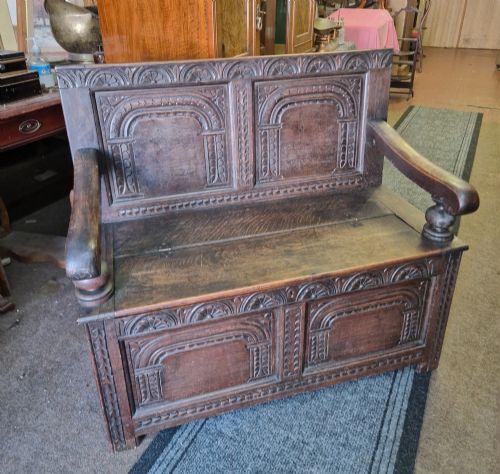
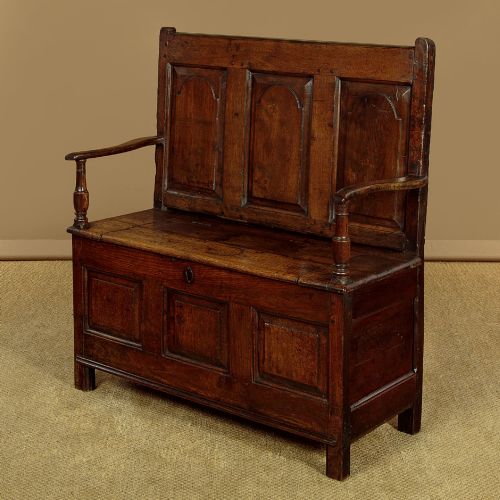
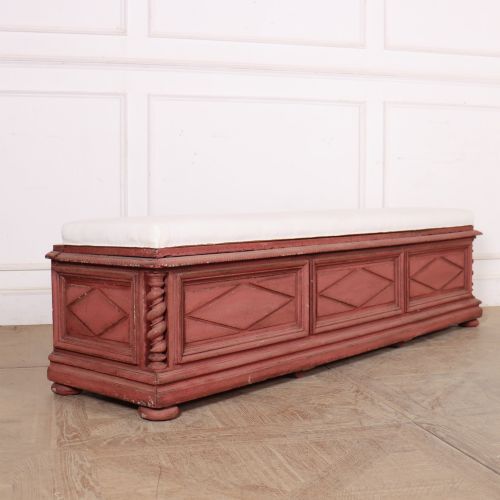
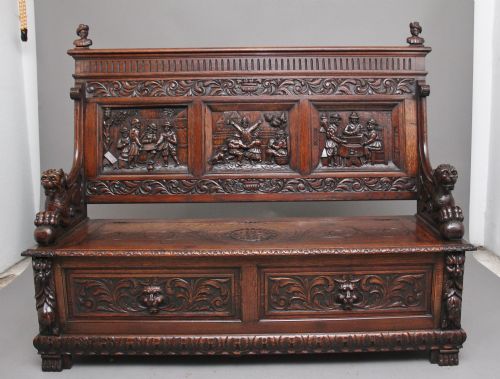


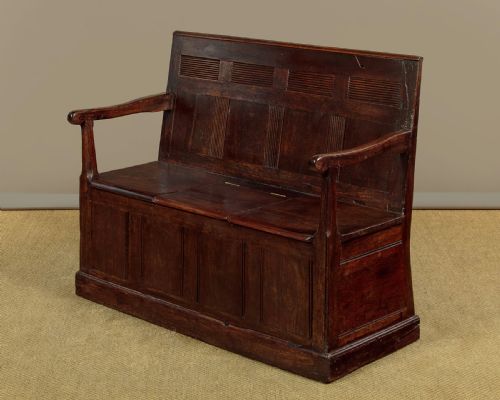
Hallway Coffer Bench
A hallway coffer bench offers dual seating and hidden storage, bringing practical utility and period character to an entrance.
Hallway Coffer Bench
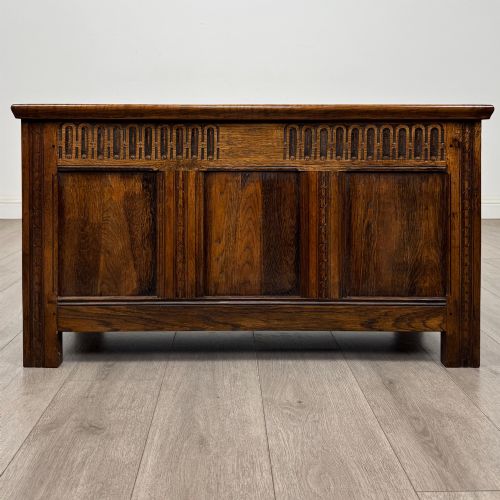
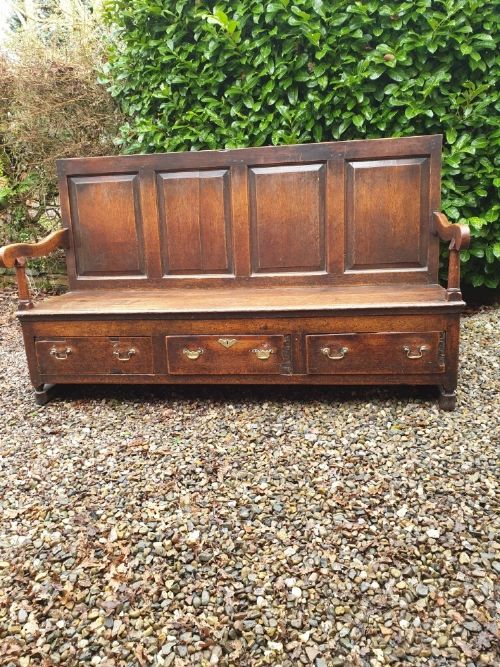
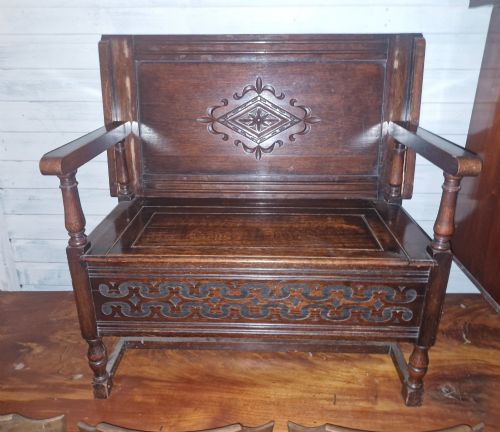
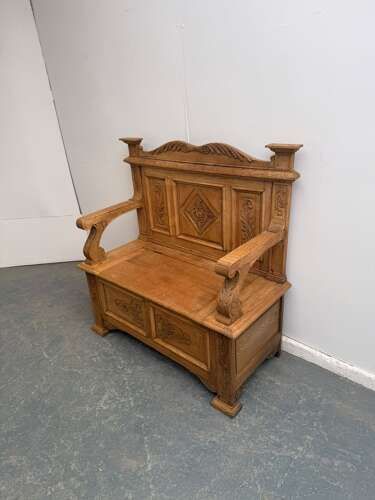
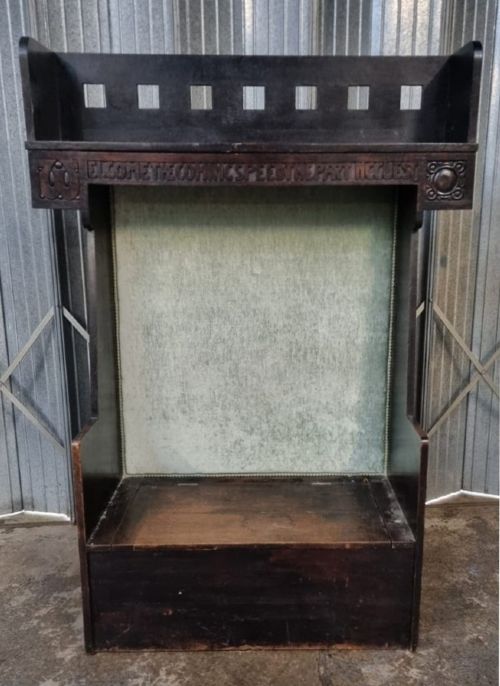
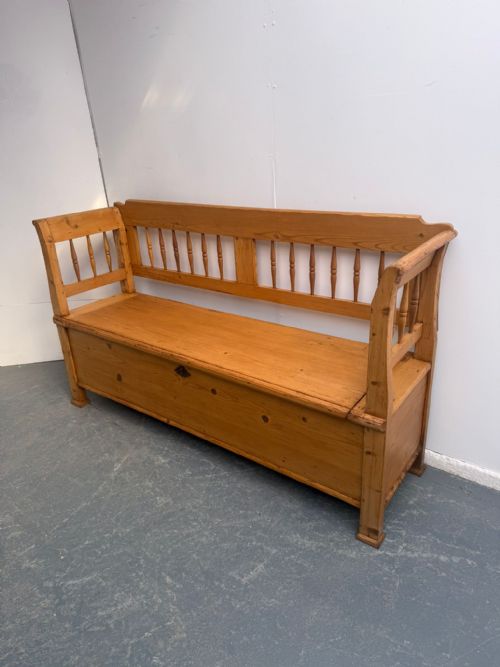
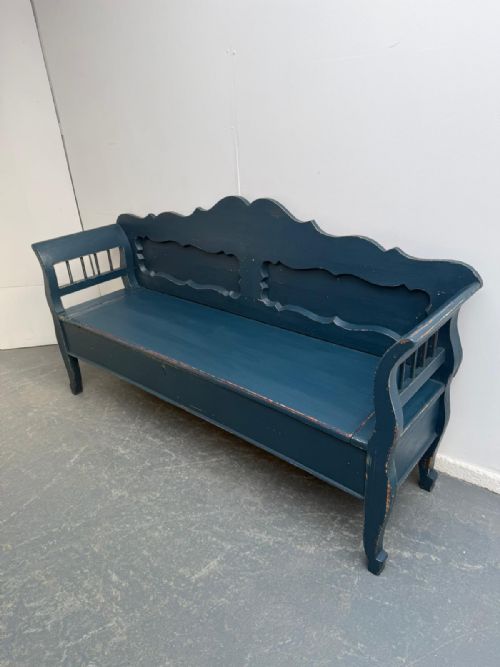
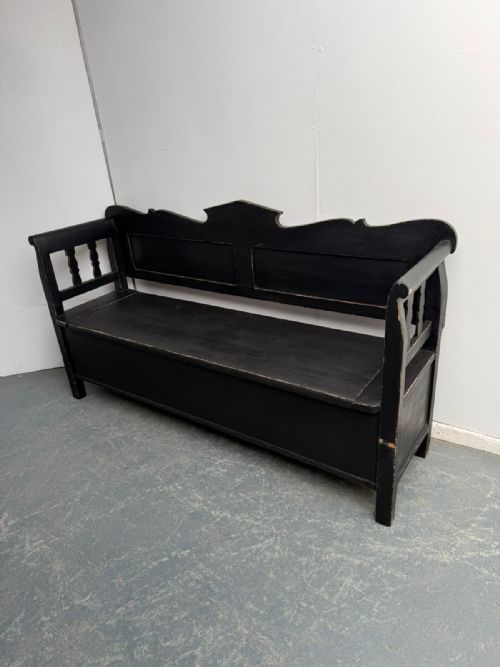
A hallway coffer bench serves as a seating option incorporating a lidded chest or compartment beneath the seat. When exploring a hallway coffer bench, buyers encounter pieces configured as settles, monk benches, blanket boxes, and hall seats.
The selections span centuries, featuring examples from the 17th, 18th, and 19th centuries, alongside later pieces from the 1920s and Edwardian era. Designs range from English country house styles and Georgian country forms to Victorian, Jacobean Revival, and Arts and Crafts movements.
Regional variations include Scottish, Welsh, Italian, and Hungarian origins, with certain items displaying carved motifs like the Green Man or elaborate panel work. Forms vary from compact small seats to large high-back settles intended for spacious entrance halls.
Materials and construction
Solid timber forms the primary construction material, with oak and pine appearing most frequently across the listings, supplemented by walnut, mahogany, and metal accents such as iron and brass. Wood surfaces are finished with wax or left in their original painted states, including blue and black pigment.
Listings span from the 17th century to the 1920s, with oak and pine as the dominant materials across various European origins.
Evaluating craftsmanship
The standard of carving distinguishes superior pieces from simpler utilitarian items, where depth, crispness, and detail in motifs such as the Green Man reveal the hand of a skilled artisan. The choice of timber also dictates quality, with dense, figured oak and select mahogany holding greater weight than standard pine.
Integrity of construction and originality of surface finish determine long-term desirability, as pieces retaining untouched waxed surfaces or authentic historic paint finishes command deeper appreciation. The sophistication of the mechanism, whether a fold-over top or a balanced lidded box, further separates standard examples from exceptional ones.
Shapland & Petter·Liberty
The Hallway Coffer Bench Glossary
- Settle
- A wooden bench with a high back, solid arms, and a box compartment beneath the seat. This form provided draught protection in older hallways.
- Monk bench
- A dual-purpose piece featuring a back that folds down to create a table top over a box seat. It is commonly associated with Victorian and 1920s production.
- Mule chest
- A chest featuring a drawer or drawers beneath the main coffer compartment. It bridges the gap between a simple box and a full chest of drawers.
- Jacobean Revival
- A 19th-century stylistic movement emulating 17th-century English furniture design. It is characterised by heavy oak construction and deep geometric or figural carving.
Hallway Coffer Bench: Frequently Asked Questions
What is a hallway coffer bench used for?
A hallway coffer bench provides a designated seat for putting on shoes while concealing storage space beneath the lid for blankets, boots, or household items. Its dual functionality makes it an efficient furniture choice for entryways and corridors.
Historically, the enclosed base and high back also served to block cold draughts in large, unheated entrance halls. Today, homeowners utilise them to maintain a tidy hallway while displaying period character.
How do I tell an 18th-century piece from a Victorian revival?
Eighteenth-century pieces typically exhibit natural timber ageing, hand- cut joinery marks, and simpler, utilitarian wear patterns consistent with their age. The construction methods reflect the limitations and techniques of the period.
Victorian revival items, such as those in the Jacobean style, often feature sharper, machine-assisted finishing and deeper, more dramatic carved motifs like the Green Man. Examining the interior timber and the nature of the hinges helps clarify the manufacturing era.
Are these benches suitable for small hallways?
Many examples are made in compact proportions, including small hall seats and narrow box settles designed specifically for restricted spaces. These variants offer storage without overwhelming narrow corridors.
Larger high-back settles and wide three-seater benches require more generous floor space and clearance for opening lids or fold-over tops. Measuring the hallway depth against the bench footprint ensures adequate clearance.
How do I care for a waxed oak finish?
Maintaining a waxed oak surface involves regular dusting with a soft, dry cloth and occasional application of traditional beeswax to nourish the timber. Avoiding direct sunlight and excessive heat prevents the wood from drying out or splitting.
Spills should be wiped away immediately to prevent water marks from penetrating the wax barrier. Over time, gentle buffing enhances the natural sheen of the wood.