




Hadley Royal Worcester
Hadley royal worcester pieces bring together Victorian sculptural form and delicate hand painting, offering collectors a tangible link to late nineteenth-century ceramic artistry.
Hadley Royal Worcester
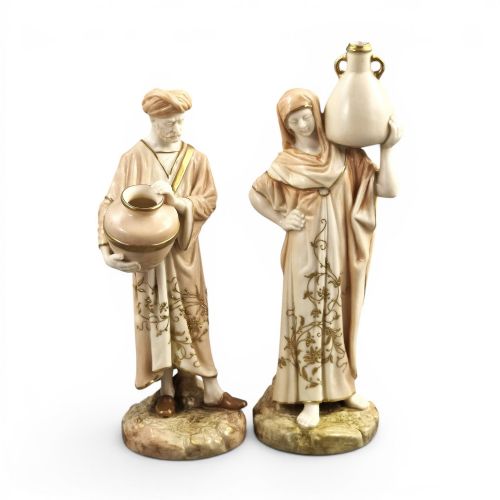
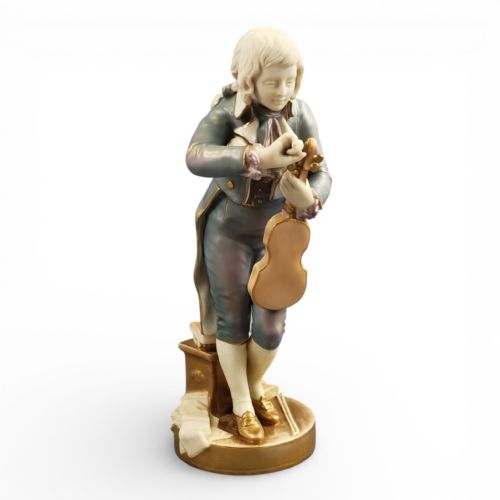
Collectors seeking hadley royal worcester pieces encounter an array of elaborate figures, vases, and candelabra originating primarily from the Victorian and Edwardian periods. The selection frequently includes sculptural figures depicting musicians, water carriers, and regional characters alongside decorative vessels and jardinieres.
Many of these works stem from the creative output of James Hadley, who modelled extensively for the Worcester factory before establishing his own works. Pieces span various revivalist and Orientalist styles characteristic of late nineteenth-century British design.
Materials and Methods
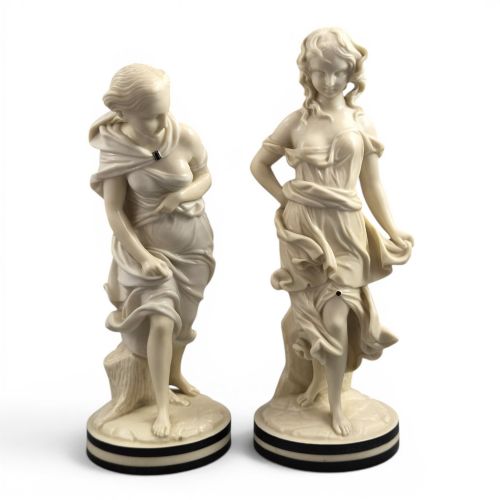
Makers utilised fine porcelain and parian ware as the foundation for these modelled forms, often applying a distinctive blush ivory glaze to achieve a soft, matte surface resembling ivory. This surface provided an ideal receptive ground for delicate floral decoration and subtle tinting.
Artisans incorporated extensive gilding, gold leaf, and enamel work to highlight intricate details on garments and vessels. Specialised techniques such as shot-enamel finishes further enriched the colour palette of exhibition pieces.
Listings feature porcelain, parian ware, and blush ivory glaze across Victorian and Edwardian periods.
Evaluating Craftsmanship
The distinction between standard production items and premier pieces rests upon the complexity of the modelling and the precision of the hand painting. Works produced directly under the oversight of James Hadley or featuring elaborate polychrome and gilt decoration represent the upper tier of this category.
Subtlety in facial expression, crispness of moulding in complex figural groups like the Countries of the World series, and the careful application of shot enamel separate exceptional examples from simpler utilitarian vessels and basic figurines.
James Hadley·Hadley and Sons
The Hadley Royal Worcester Glossary
- Blush Ivory Glaze
- A specialised matte cream-coloured ceramic coating developed by the Worcester factory during the late nineteenth century. It creates a warm, porous-looking background that readily accepts enamel and gilt painting.
- Parian Ware
- A fine-grained, unglazed porcelain resembling white marble, named after Parian marble from the Greek island of Paros. It was frequently utilised for classical figures and sculptural busts.
- Shot Enamel
- An iridescent enamel finish containing metallic oxides that shift in hue depending on the angle of the light. This technique appeared on select exhibition pieces.
- Pot Pourri
- A decorative pierced container designed to hold dried scented plant materials. These vessels often feature elaborate mouldings and hand-painted floral motifs.
Hadley Royal Worcester: Frequently Asked Questions
What is Hadley Royal Worcester?
Hadley royal worcester refers to porcelain and figures designed or modelled by James Hadley for the Royal Worcester factory, as well as wares produced by his subsequent family firm. These pieces date predominantly from the late nineteenth and early twentieth centuries.
The items encompass detailed figural studies of foreign characters, classical maidens, and functional vessels featuring the signature blush ivory ground and delicate enamelling.
How do I identify a James Hadley piece?
Identification relies upon locating specific factory marks, registration numbers, or model numbers associated with the Worcester manufactory alongside the distinct sculptural style of the modeller. Many items explicitly bear the Hadley name or initials.
The presence of the characteristic blush ivory glaze combined with intricate hand-painted detailing provides further indication of origin.
What periods do these ceramics come from?
The available evidence places these objects firmly within the Victorian and Edwardian eras, spanning from the eighteen-seventies through the opening decades of the twentieth century. The height of this production occurred during the late nineteenth century.
Revivalist styles, including eighteenth-century revivals and Victorian Orientalism, strongly mark the aesthetics of these specific decades.
How should I display my porcelain?
These decorative figures and vases require stable placement away from direct sunlight to preserve the integrity of the delicate enamels and gilding. Environmental stability prevents thermal shock to the fine porcelain body.
Displaying them in enclosed cabinets protects the matte blush ivory surfaces from accumulating dust that settles into the porous glaze.