
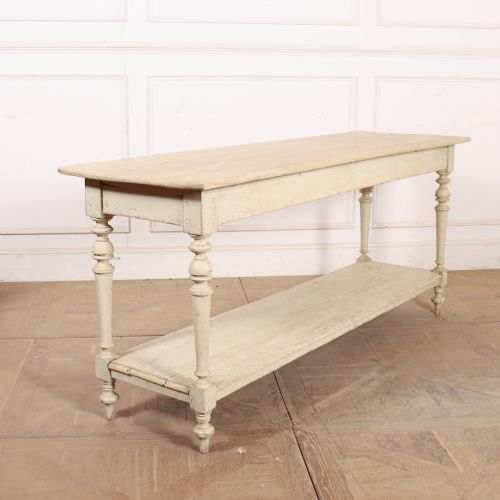


Haberdashery Counter Table
These haberdashery counter table pieces are functional commercial shop fittings designed for display and service, offering deep utility and historic character for modern interiors.
Haberdashery Counter Table
When you search for a haberdashery counter table, you are looking at utilitarian shop fittings originating from the nineteenth and early twentieth centuries. These tables and counters served as the central working surface in drapers, tailors, and general stores where textiles and merchandise were displayed to customers.
The versions you are most likely to meet on this page span the Victorian and Edwardian eras, alongside commercial pieces from the 1930s. They appear in forms such as drapers tables, shop display counters, and glazed cabinets, reflecting their original commercial purpose.
Origins in the evidence range from English and French workshops to American manufacturers. You will encounter pieces featuring timber frames paired with glass display tops, bow ends, and open or enclosed storage solutions.
How they were made
The construction of a haberdashery counter table relies heavily on dense timbers such as mahogany, oak, and pine, often complemented by painted softwood structures. These materials provided the structural rigidity required for heavy daily use in busy commercial environments.
Glass top sections and display cabinets incorporate glazed panels to protect merchandise while maintaining visibility for customers. Metal components, including brass and cast iron, appear in structural framing, display stands, and decorative hardware.
Surface treatments vary from original painted finishes and bleached oak to polished mahogany. Linings such as velvet occasionally feature within display areas to cushion delicate items.
Listings span from 1860 to the 1930s, featuring oak, mahogany, pine, brass, and glass across English, French, and American origins.
What varies in quality
The distinction between a standard commercial table and a top-tier piece lies in the choice of primary timber and the sophistication of its joinery. Superior examples utilise dense hardwoods like mahogany or quarter-sawn oak with robust internal framing designed to withstand decades of heavy use.
Glazing quality and original hardware contribute significantly to the overall merit of a piece. Bevelled glass panes, substantial brass fittings, and intact cast iron mechanisms elevate the standing of counters and display cabinets.
Surface finishes and proportions dictate desirability. Pieces retaining honest patination, whether through original paint or bleached oak treatments, demonstrate better visual coherence than those with compromised surfaces.
Quincy Showcase Works Illinois
The Haberdashery Counter Table Glossary
- Drapers table
- A long, sturdy table traditionally used in fabric shops for measuring and displaying textiles. These tables often feature lower shelves or multiple drawers.
- Shop fitting
- Fixtures and furniture built specifically for commercial retail environments. They prioritise durability, accessibility, and the effective presentation of goods.
- Vitrine
- A glass-sided display cabinet or case designed to protect delicate objects while allowing unobstructed viewing. They range from tabletop display boxes to full-height floor standing units.
- Bow end
- A curved end section on a counter or cabinet, softening the rectangular profile and improving customer flow in a shop. This feature is frequently seen in Edwardian commercial pieces.
Haberdashery Counter Table: Frequently Asked Questions
What is a haberdashery counter table?
A haberdashery counter table is a historic commercial shop fitting used in textile and drapery shops for serving customers and displaying goods. They combine large work surfaces with storage drawers, shelves, or glazed display areas.
These pieces were constructed to endure heavy daily retail use, utilising robust timbers like oak, mahogany, and pine. Today, they function as kitchen islands, sideboards, or display tables in residential and commercial spaces.
How do I date a shop display counter?
Dating a shop display counter involves examining the timber types, construction methods, and hardware present on the piece. Victorian and nineteenth-century examples often feature hand-cut joinery and heavy pine or mahogany framing, whereas 1930s commercial pieces show different manufacturing tolerances.
Makers' plates, cast iron branding, and specific architectural styles like Edwardian bow ends also provide clear chronological markers. Comparing these details against documented manufacturing periods helps establish the age of the fitting.
Can I use a drapers table as a kitchen island?
A drapers table makes an effective kitchen island due to its generous proportions, sturdy timber construction, and practical working height. Many examples include lower shelves or multiple drawers that provide useful storage for kitchen utensils and tableware.
When using one in a kitchen, consider the height of the table and ensure the wooden surface is treated to withstand moisture and daily food preparation. The historic patination adds character and warmth to contemporary kitchen spaces.
What woods were used for shop counters?
Shop counters and display tables were constructed from hard-wearing timbers that could endure constant public contact and heavy merchandise. Mahogany and oak were favoured for high-end retail environments, offering durability and a polished appearance.
Pine and softwood served as structural carcasses or were painted for utilitarian country shop fittings. Bleached oak and French polished surfaces reflect the stylistic preferences of different periods and regional workshops.