





Gustavian Upholstered Stool
A gustavian upholstered stool brings calm Swedish restraint to a room, offering a neat seat shaped by neoclassical balance.
Gustavian Upholstered Stool
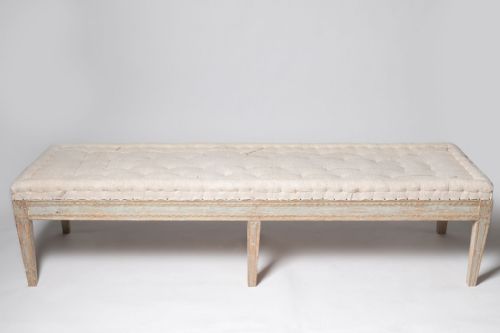
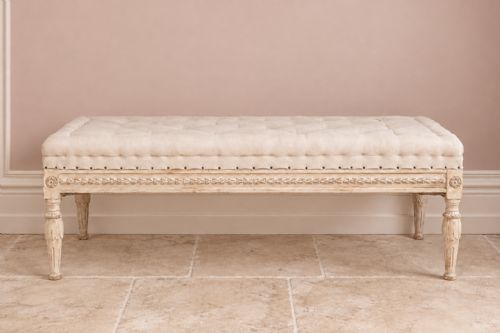
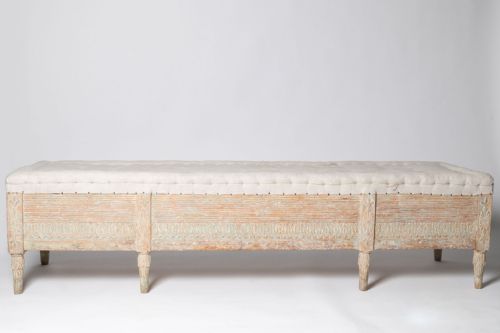
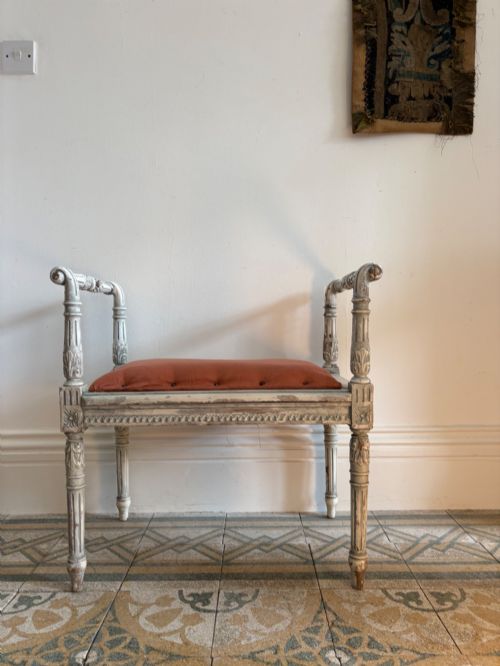
When you search for a gustavian upholstered stool, you encounter seating originating from Sweden across the eighteenth and nineteenth centuries. These pieces combine simple geometric proportions with understated neoclassical carving, reflecting a Scandinavian interpretation of continental European taste.
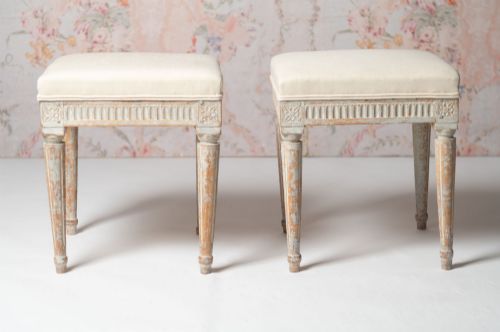
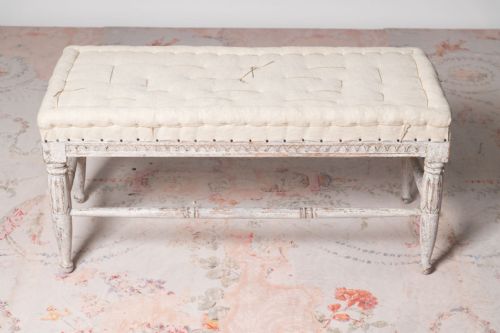
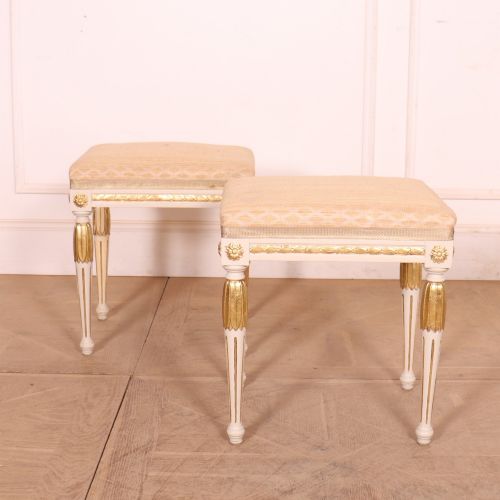
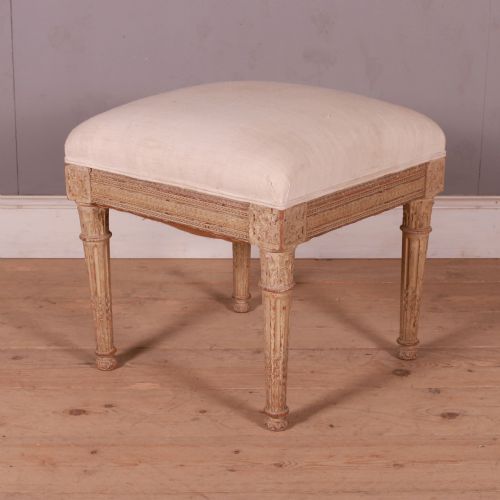
The versions most commonly met on this page take the form of painted wooden frames fitted with upholstered seats. They appear as single low stools, benches, and paired seating options covered in silk, linen, cotton, or plain fabric.
Origins trace directly to Swedish workshops producing painted wood furniture in distinct historical periods. The inventory spans pieces dated to the eighteenth century, the nineteenth century, and specific years such as 1880, 1890, and 1900.
How they were made
Makers shaped these frames from solid wood, often applying white or pale paint finishes to the surface. Some examples incorporate gold leaf highlights to accentuate carved details along the wooden structure.
Upholstery completed the construction, utilising traditional textiles such as silk, linen, and cotton secured over padding. Frames frequently display carved ornamentation typical of the Gustavian and Gustavian Neoclassical styles.
Gustavian Upholstered Stool Retail Price Guide 2026
Typical asking prices for gustavian upholstered stool among the pieces listed under this phrase on Sellingantiques today, from the lower quarter to the upper quarter. They describe what is for sale here now, not the wider market.
Materials recorded across the inventory include painted wood, gold leaf, silk, linen, and cotton.
What varies in quality
The refinement of the wooden carving separates standard framing from superior work. Crisp lines in the neoclassical motifs indicate a higher level of joinery and design execution.
Surface treatment also distinguishes pieces, particularly the preservation or application of original paint and gold leaf. Painted wood that retains its historical character carries greater depth than later refinishing.
The Gustavian Upholstered Stool Glossary
- Gustavian Neoclassical
- A Swedish design style drawing on French and Italian neoclassical forms but executed with simpler lines and lighter proportions. It dominated Swedish furniture making during the late eighteenth and nineteenth centuries.
- Painted wood
- Timber surfaces finished with decorative paint rather than clear polish. This finish defines the light, neutral aesthetic characteristic of Scandinavian interiors.
- Gold leaf
- Extremely thin sheets of beaten gold applied to wooden elements for decoration. It provides subtle metallic contrast against pale painted frames.
- Upholstered seat
- A padded seating surface covered in fabric such as linen, silk, or cotton. It offers comfort while concealing the internal webbing and stuffing.
Gustavian Upholstered Stool: Frequently Asked Questions
What is a gustavian upholstered stool?
A gustavian upholstered stool is a piece of Swedish seating featuring painted wooden construction and a fabric-covered top. These items date from the eighteenth and nineteenth centuries.
They reflect the neoclassical design movement adapted to Scandinavian tastes, balancing clean structural lines with restrained decorative carving.
How were these stools used historically?
These pieces served as portable seating in formal rooms and bedchambers across Swedish homes. Their compact size allowed them to be moved easily where extra seats were needed.
Low variants functioned as footstools or casual perches near larger chairs and benches.
How do I style one in a modern room?
Place a single stool beside a reading chair or utilise a pair as decorative seating at the foot of a bed. Their neutral painted finishes blend smoothly with contemporary and traditional interiors alike.
Allow the exposed painted wood and textile top to stand clear of heavy clutter so the proportions remain visible.
How do I identify the period of a stool?
Dating relies on observing construction methods, timber types, and the style of the carved ornamentation on the frame. Pieces span the eighteenth and nineteenth centuries, including specific years like 1880, 1890, and 1900.
Examining the paint surface and textile choice provides further clues regarding the era of manufacture and subsequent upholstery work.