

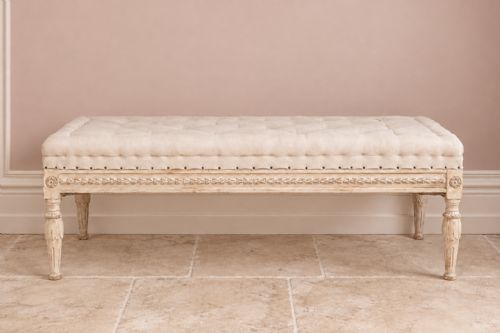
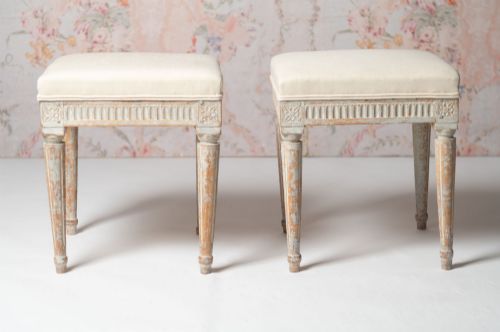
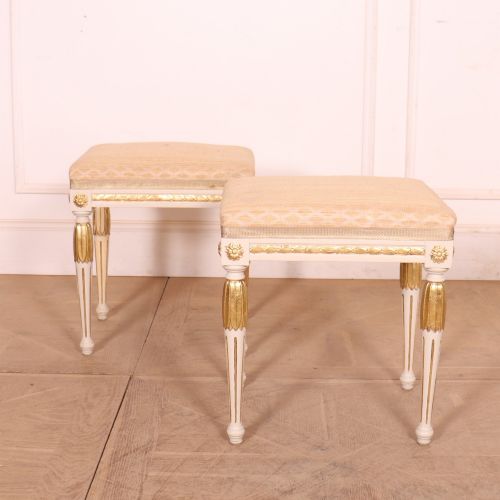


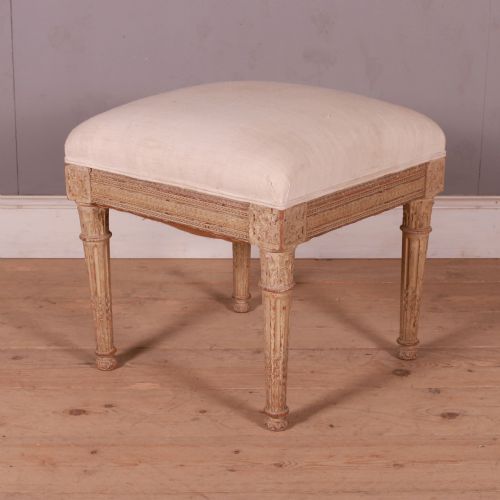


Gustavian Footstool
These Gustavian footstool options bring restrained Swedish elegance to a room, offering low seating or foot rests with classic painted finishes.
Gustavian Footstool
When searching for a gustavian footstool, buyers encounter pieces originating from Sweden across the eighteenth and nineteenth centuries, including items dated to eighteen eighty and eighteen ninety. These seating forms appear singly or as pairs, taking the shape of low stools and ottomans.
The objects reflect the Scandinavian interpretation of neoclassical design, often presenting clean lines and muted proportions. Most examples on offer demonstrate the traditional painted wood finishes characteristic of the regional aesthetic.
How they were made
Cabinetmakers constructed these frames using wood, applying carved details and surface paint to achieve the signature Swedish look. Surviving pieces frequently display painted wood surfaces alongside parcel gilt and gold leaf highlights.
Upholstery completed the pieces, with contemporary listings recording fabric and linen coverings over the wooden foundations.
Gustavian Footstool Retail Price Guide 2026
Typical asking prices for gustavian footstool among the pieces listed under this phrase on Sellingantiques today, from the lower quarter to the upper quarter. They describe what is for sale here now, not the wider market.
Listings span the eighteenth and nineteenth centuries, featuring painted wood, parcel gilt, and fabric upholstery.
What varies in quality
Distinction across these items rests in the crispness of the carved woodwork and the handling of the painted surfaces. Original paint layers hold greater interest than later overpainting, showing the natural wear of age.
The integrity of the underlying wooden frame and the proportion of the carving dictate the standing of an individual piece.
The Gustavian Footstool Glossary
- Gustavian
- The Swedish neoclassical style spanning the late eighteenth and nineteenth centuries, known for restraint and classical symmetry. It draws inspiration from French Louis XVI design but maintains a simpler Nordic character.
- Parcel Gilt
- A technique where small sections of a wooden object are highlighted with gold leaf while the rest remains painted. This adds subtle contrast without overwhelming the piece.
- Painted Wood
- Timber treated with decorative paint finishes, which serve as the primary decorative surface on Scandinavian furniture. White and pale grey hues predominate in this tradition.
- Ottoman
- A low upholstered seat or footstool without arms or a back. In this context, it provides additional low seating or foot support.
Gustavian Footstool: Frequently Asked Questions
What is a gustavian footstool?
A gustavian footstool is a low nineteenth or eighteenth century Swedish seating piece, typically featuring painted wooden construction and classic neoclassical carved details.
These items were designed to serve as functional foot rests or low seats within traditional Scandinavian interiors.
How do I date a gustavian footstool?
Dating relies upon examining the construction methods, the characteristics of the wood, and the nature of the painted finish. Eighteenth century examples show specific joinery traits compared to pieces from eighteen eighty or eighteen ninety.
Correlating the upholstery materials and the style of carving helps establish the likely period of manufacture.
Where were these footstools made?
These pieces originate from Sweden, reflecting the regional interpretation of neoclassical design championed during the reign of King Gustav III and continued through the nineteenth century.
Local workshops produced these items using native timbers and traditional painting techniques.
Are they sold in pairs?
The inventory includes both individual stools and matched pairs originating from nineteenth century Sweden.
Pairs allow for symmetrical placement in a room, such as flanking a fireplace or positioned beneath a console table.