





Guilloche Enamel Box
A guilloche enamel box brings together precise engine-turned metalwork and translucent coloured glass layers to hold small treasures.
What these pieces are
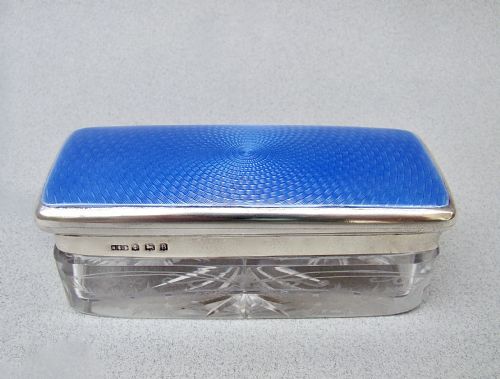
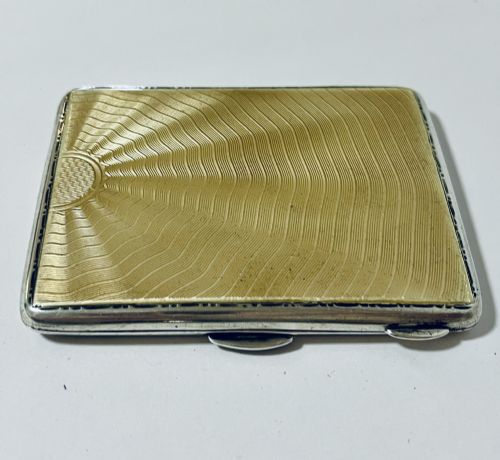
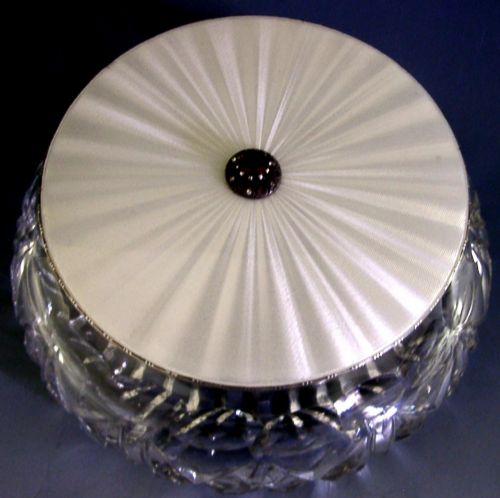
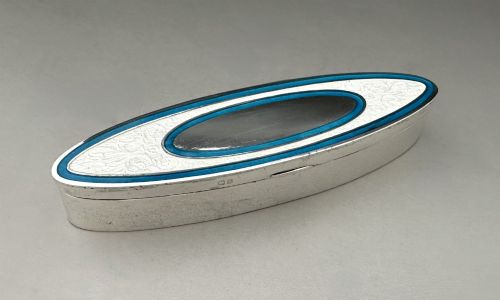
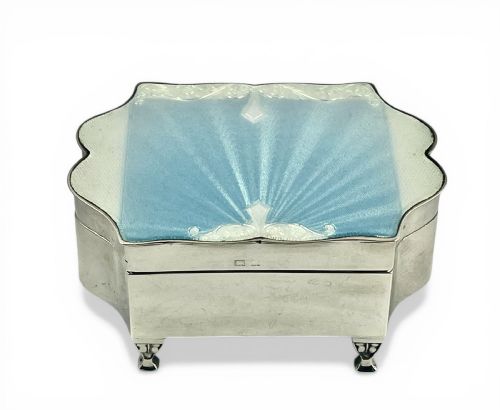
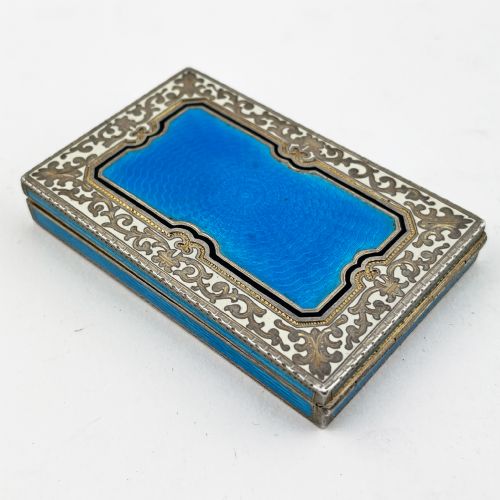
A guilloche enamel box is a small lidded vessel designed to hold pills, trinkets, stamps, or cosmetics, produced across European workshops during the Edwardian era, Art Deco period, and earlier centuries. You will most frequently encounter small pill boxes, dressing table containers, and larger jewellery caskets originating from British assay offices and continental makers.
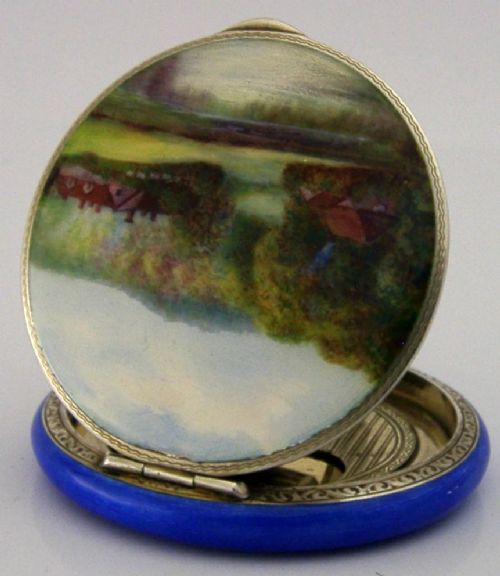
The form spans straightforward circular pill containers to shaped trinket boxes, compacts, and mechanical singing bird boxes. These objects were fashioned for personal use on dressing tables or to be carried in pockets and handbags, combining practical storage with intricate decorative surfaces.
How they were made
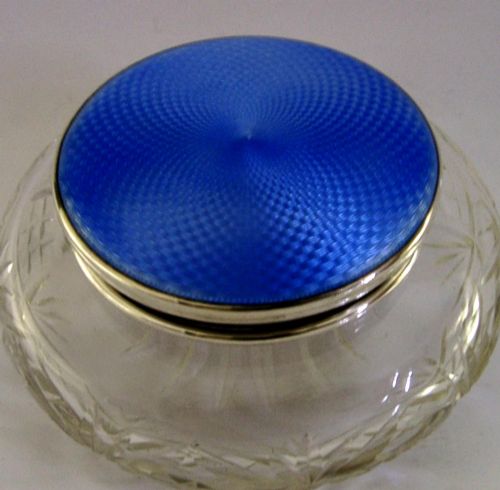
The foundation of each piece relies on sterling silver, gold, gilt metal, or brass, worked by hand or machine to create structural bodies and hinged lids. Metal surfaces receive mechanical engraving beneath translucent glass enamel layers, producing repeating geometric patterns that catch the light.
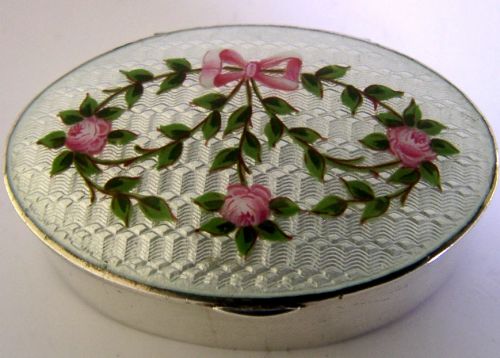
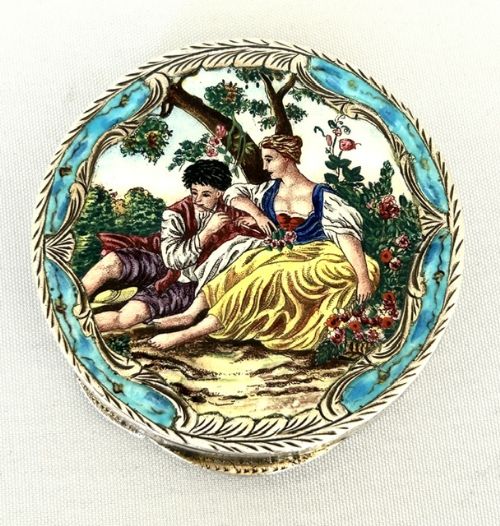
Vitreous enamel powders are applied to the prepared metal base and fired at high temperatures to fuse the coloured glass. Selected examples incorporate supplementary gemstones, marcasite decorations, or hand-painted botanical and scenic details set into the enamel panel.
Retail Price Guide 2026
Typical UK retail prices for guilloche enamel box, calculated from the Sellingantiques database of over a million retail prices indexed since 2003. This retail price guide relies exclusively on Sellingantiques data; no external sources or auction records are used, so the figures do not describe the wider market.
What varies in quality
The distinction between standard production and superior craftsmanship rests in the crispness of the underlying engine-turned pattern and the depth of the translucent enamel layer. Precision in the mechanical engraving dictates how light reflects across the geometric design beneath the glass.
Hinged closures, sturdy gauge metals, and the clarity of maker marks or import stamps indicate higher workshop standards. Pieces featuring detailed botanical hand-painting or precious metal mounts demonstrate elevated execution compared to simpler monotone versions.
Saunders & Shepherd·Levi & Salaman·Cohen & Charles·Steinhart & Co·Deakin & Francis·Turner & Simpson·F B Reynolds·Henry Clifford Davis·David Andersen·Lawrence Emanuel·Elkington & Co·James Fenton
The Guilloche Enamel Box Glossary
- Guilloche
- A decorative technique where a mechanical lathe engraves precise, intricate geometric patterns into a metal substrate before enamelling.
- Vitreous Enamel
- A material made by fusing powdered glass to a metal substrate through firing, creating a durable and glossy coloured coating.
- Vinaigrette
- A small hinged container holding a sponge soaked in aromatic vinegar, historically carried for medicinal or freshening purposes.
- Assay Mark
- Official stamps struck on precious metals to certify the standard of purity and the location and year of testing.
Frequently Asked Questions
What were guilloche enamel boxes used for?
These containers served functional roles on dressing tables and in pockets, holding small items such as powder, pills, stamps, and trinkets.
Finer examples functioned as luxury personal accessories or specialised pieces like singing bird boxes and vinaigrettes for aromatic vinegars.
How do I date a silver enamel box?
Dating relies heavily on British hallmark stamps, which record specific assay office symbols and date letters for the year of manufacture.
Stylistic shifts, such as Edwardian floral motifs or geometric Art Deco lines, help determine the period for continental pieces lacking standard British marks.
How should I clean and care for them?
Maintenance requires gentle dusting with a soft cloth to protect the vulnerable glass enamel surfaces from scratching or impact.
Harsh metal polishes and chemical dips must be kept away from the enamel panels, as abrasive treatments damage the vitreous coating.
How can I tell Art Deco from Edwardian pieces?
Edwardian boxes typically display flowing organic motifs, floral garlands, and softer pastel or blue enamel shades influenced by Rococo revival and Neoclassical styles.
Art Deco versions favour rigid geometric symmetry, striking colour contrasts like pink or orange, and streamlined forms characteristic of the interwar decades.