

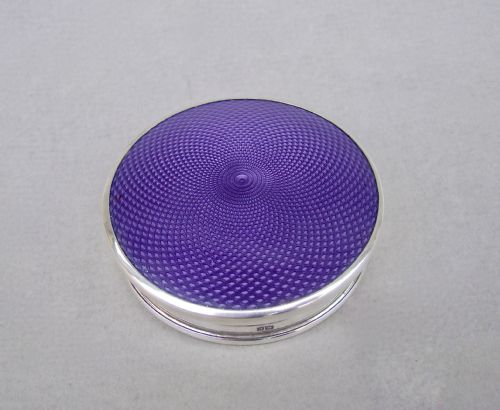


Antique Powder Compact
An antique powder compact is a tactile portable mirror and powder case, bringing mid-century glamour and intricate enamelwork straight to the dressing table.
Antique Powder Compact
An antique powder compact is a portable vanity item designed for face powder, commonly housing a mirror and a sift compartment. When searching this phrase, collectors encounter pocket-sized accessories meant for daily touch-ups during the early twentieth century.
The pieces on this page span several decades, featuring strong representation from the Art Deco era alongside Edwardian, Victorian-influenced Rococo Revival, and mid-century designs. Formats range from simple metal cases to combination compacts with integrated lipsticks.
Makers produced these vanity items in diverse shapes, including round boxes, mesh purses, and rectangular vanity cases. Alongside sterling silver and gold constructions, collectors find specialised powder boxes and trinket boxes serving similar dressing table functions.
Materials and Manufacturing Techniques
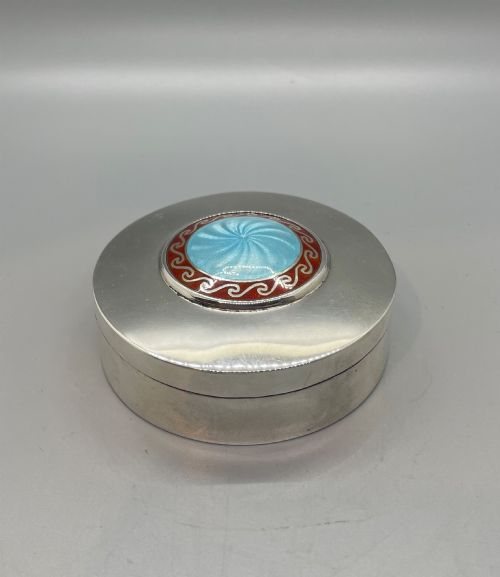
Silversmiths and manufacturers utilised sterling silver, 800 silver, yellow gold, chrome, and brass as foundational structural metals. Many items combine engine-turned silver bases with delicate hinges and catches designed for everyday pocket wear.
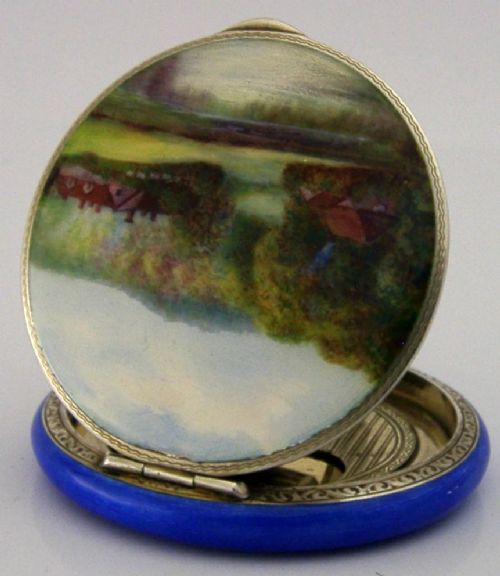
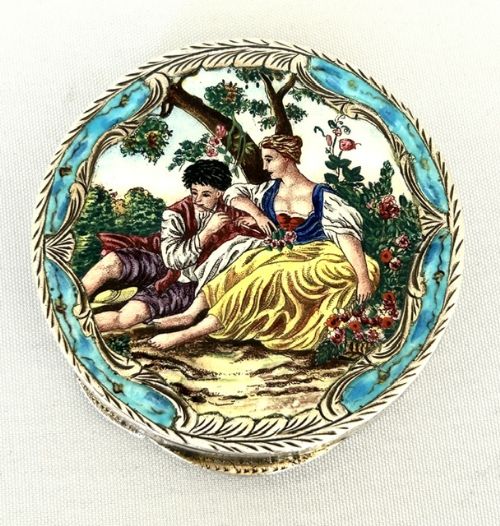
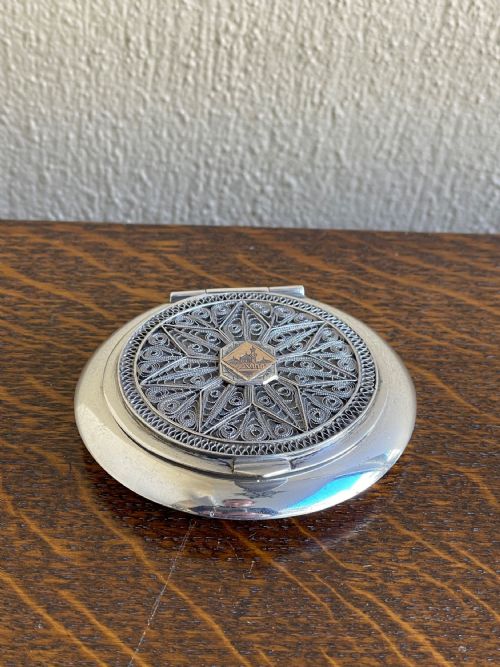
Enamelwork forms a central decorative technique, particularly guilloche enamel featuring machine-engraved geometric patterns beneath translucent coloured glaze. Artisans also applied hand-painted miniature scenes, filigree silver wirework, and precious gemstones such as diamonds and rubies.
Many compacts retain faint traces of scented face powder, preserving the subtle fragrance of a dressing table from a century ago.
Distinctions in Quality and Execution
Makers known for high luxury jewellery and horology, such as Cartier and Van Cleef & Arpels, employed precious metals and gemstones that elevate certain compacts into miniature artworks. Simpler stamped chrome and brass examples from mass producers reflect functional utility rather than bespoke craftsmanship.
Henry Matthews·Elkington And Co·Van Cleef And Arpels·Cartier·Richard Hudnut·Houbigant
The Antique Powder Compact Glossary
- Guilloche
- A decorative technique where a mechanical lathe engraves precise geometric patterns into metal before enamel is applied. This method creates shimmering light effects beneath translucent coloured glass.
- Engine-turned
- A method of surface decoration using a specialised lathe to cut intricate, repetitive patterns into metal. It provides a tactile texture that resists fingerprints.
- Vitreous enamel
- A material made by fusing powdered glass to a substrate by firing, usually at high temperatures. It produces a smooth, durable, and glossy coloured surface.
- Combination compact
- A vanity case designed to hold multiple cosmetic items simultaneously, such as face powder, rouge, and a lipstick holder. These multifunctional pieces were especially popular during the Art Deco period.
- Filigree
- An ornate form of delicate metalwork made with fine wire, usually silver or gold, soldered together in openwork motifs. It gives compact lids a lace-like appearance.
Antique Powder Compact: Frequently Asked Questions
How were powder compacts used?
Women carried powder compacts in handbags or evening purses for discreet touch-ups of facial makeup while away from home. The interior typically contained a small mirror, a powder sifter or pad, and sometimes a separate well for rouge.
Combination pieces also integrated lipstick holders or coin compartments to minimise the number of items needed for an evening out. The latch mechanisms kept the cosmetic powder securely contained during travel.
How do I date a compact?
Dating an antique compact relies heavily on hallmarks stamped into the metal, maker marks, and stylistic indicators such as Art Deco geometry or Edwardian motifs. Silver items often carry assay office marks and date letters that pinpoint the exact year of manufacture.
Stylistic cues, including the use of chrome, Bakelite, or specific enamel colours, help narrow down pieces lacking formal hallmarks. Surviving advertisements and retailer signatures also provide reliable chronological markers.
How should I care for antique enamel?
Antique enamel requires gentle handling to prevent chipping or scratching of the vitreous glass surface. Clean pieces using a soft, dry microfibre cloth rather than harsh chemical polishes that can damage the metal and enamel bonds.
Store compacts away from direct sunlight and extreme temperature fluctuations to protect both the enamel colours and the original mirror adhesives. Avoid immersing pieces with vintage suede linings or delicate interior paper components in water.