

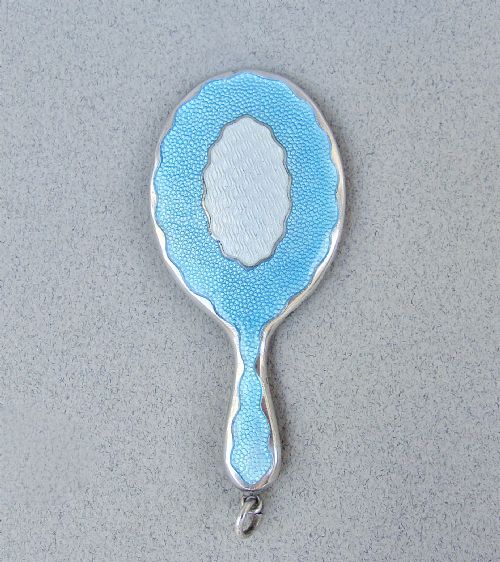


Blue Enamel Compact
A blue enamel compact brings together bright machinery and precise metallurgy, offering a functional piece of portable glamour from the early twentieth century.
Blue Enamel Compact
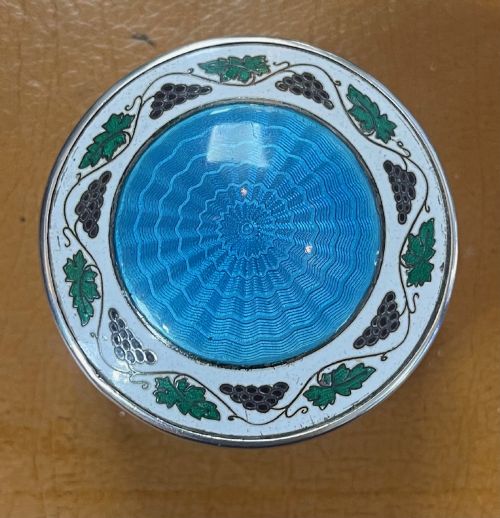
A blue enamel compact is a pocket-sized accessory designed for cosmetics, most frequently encountered in the geometric styles of the 1920 and 1930 decades. These items combine the practical utility of a mirror and powder container with decorative metalwork and coloured glass coatings.
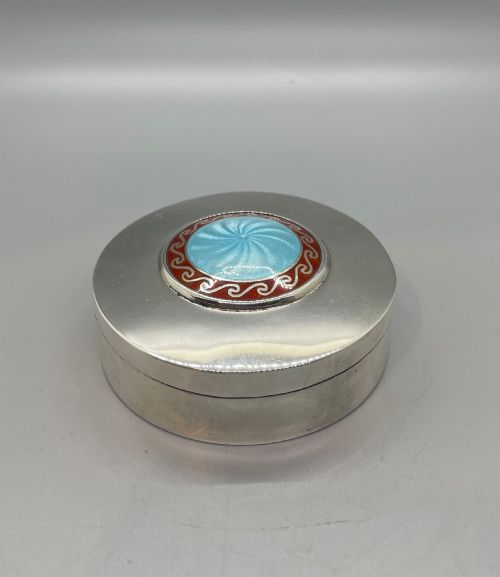
The versions most commonly met on this page span the Art Deco period, often pairing sterling silver or chrome with vitreous enamel surfaces. Alongside traditional hinged powder compacts, related vanity items such as miniature purse mirrors and mesh bags with enamel details appear within the selection.
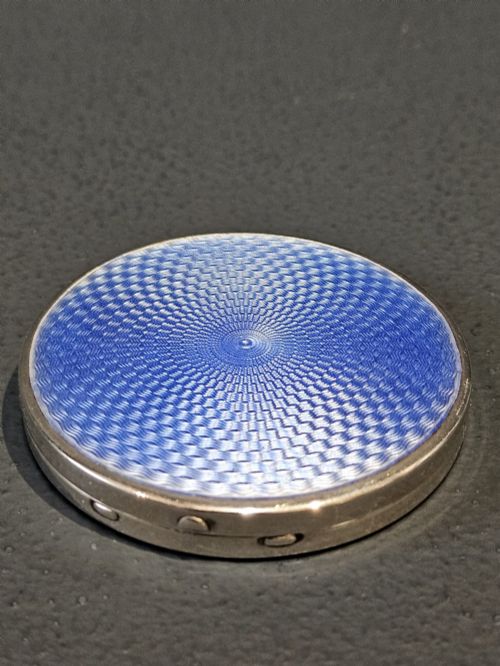
Origins stretch from British assay offices in Birmingham to American makers, reflecting widespread international production during the interwar years. Collectors find variations ranging from plain metallic finishes to complex guilloche engine-turning beneath translucent blue coatings.
Materials and construction
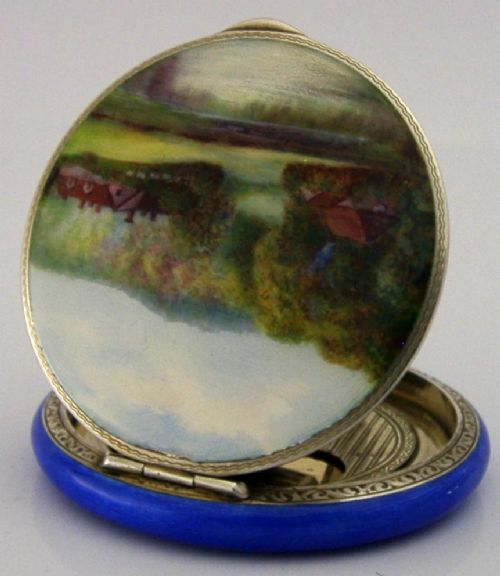
The foundation of these pieces relies on metals such as sterling silver, chrome, and base metal, frequently shaped into circular or rectangular geometries. Interiors often incorporate functional elements like glass mirrors, suede linings, and metal mesh components.
Surfaces are finished using vitreous enamel, a material fused to metal under high heat to create a smooth, glossy coating. Many examples feature guilloche technique, where mechanical lathes etch intricate geometric patterns into the underlying metal before the translucent blue enamel is applied.
Blue Enamel Compact Retail Price Guide 2026
Typical asking prices for blue enamel compact among the pieces listed under this phrase on Sellingantiques today, from the lower quarter to the upper quarter. They describe what is for sale here now, not the wider market.
Assessing quality and craftsmanship
The distinction between tiers of quality rests largely upon the complexity of the metalwork and the precision of the enamel application. Pieces featuring fine guilloche engine-turning beneath clear blue glass enamel demand greater technical skill than simple painted or plain metal finishes.
Maker attribution and assay hallmarks also influence the standing of a compact, with pieces bearing clear Birmingham sterling silver stamps demonstrating documented provenance. The crispness of the hinge action, the integrity of the internal mirror, and the preservation of the delicate enamel surface further differentiate superior examples.
Henry Williamson·Henry Matthews·Henry Perkins and Sons·Broadway and Co·Horton and Allday·Evans
The Blue Enamel Compact Glossary
- Guilloche
- A decorative engraving technique where a mechanical lathe cuts a precise, repetitive pattern into metal. This patterned base shines through translucent enamel to create shimmering visual depth.
- Vitreous enamel
- A material made by fusing powdered glass to a metallic substrate at high temperatures. The resulting glossy coating provides durable colour and a smooth surface.
- Sterling silver
- An alloy of silver containing ninety-two point five percent pure silver and seven point five percent other metals, typically copper. Items made from this standard often carry Birmingham assay office hallmarks.
- Mesh
- A flexible fabric constructed from interlocking metal rings or links. It frequently forms the body of compacts and purses from the period.
Blue Enamel Compact: Frequently Asked Questions
What is a blue enamel compact?
A blue enamel compact is a portable vanity case used for powder or makeup, featuring a coloured glass coating fused to a metal base.
These accessories were essential everyday items for women during the early twentieth century, combining utility with decorative art.
How do I date a compact?
Dating relies on hallmarks stamped into the metal, maker marks, and stylistic indicators such as Art Deco geometric forms.
Birmingham assay office stamps and specific manufacturer signatures provide the most reliable chronological markers for British pieces.
What materials are used?
Common materials include sterling silver, chrome, glass mirrors, suede linings, and vitreous enamel.
The exterior coloured sections consist of powdered glass fired onto engraved metal substrates like silver or base metal.
How were they used?
They were carried in handbags or evening purses for quick cosmetic touch-ups throughout the day and evening.
The interior typically housed a small mirror and a compartment for loose or pressed face powder.