




Vintage Powder Case
A vintage powder case is a pocket companion for cosmetics, prized for the intricate metalwork and enamel that defined personal grooming across the decades.
Vintage Powder Case
A vintage powder case typically presents as a compact, vanity case, or combination compact designed to hold cosmetics. Collectors searching this phrase encounter examples spanning the nineteenth century through the mid-twentieth century.
The twentieth-century pieces predominantly reflect the geometric lines of the Art Deco style, frequently executed in chrome, silver, and enamel. Earlier Victorian and Edwardian iterations draw upon traditional motifs in silver and brass.
These accessories often take the form of small round or square boxes, sometimes paired with lipsticks or mirrors. They served as essential pocket items for women attending social events in the 1920s and 1930s.
Materials and Construction
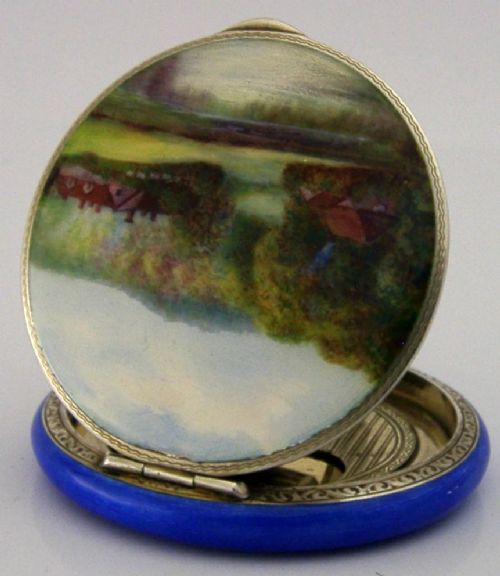
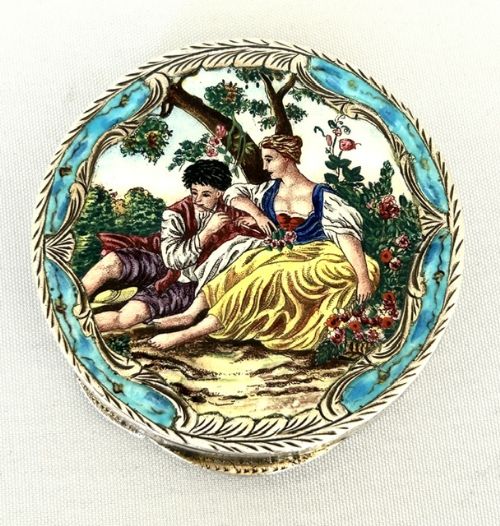
The construction of a vintage powder case relies heavily on metals such as sterling silver, brass, chrome, and gold, shaped into hinged boxes. Enamel work, particularly guilloche patterns and hand-painted scenic details, provides decorative colour across the lids.
Techniques such as engine turning create textured geometric patterns on the metal surfaces. Interior elements often incorporate velvet, suede linings, and fitted mirrors to complete the vanity function.
The documented periods span from the nineteenth century through the Art Deco era of the 1930s and 1940s.
Distinctions in Craftsmanship
The distinction between standard production items and premier examples rests on the complexity of the metalwork and the reputation of the maker. Pieces bearing traceable hallmarks from established workshops or luxury houses command greater attention.
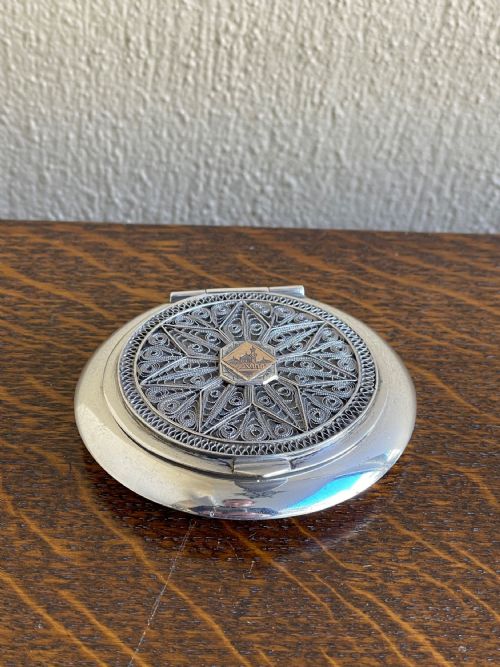
The preservation of fragile elements like guilloche enamel and interior mirror glass dictates the overall standard of a piece. Intricate filigree work and hand-painted details denote a higher grade of manufacture than plain metal finishes.
Henry Matthews·Henry Perkins And Sons·Richard Hudnut·Giuliano Spinelli·Van Cleef And Arpels·Cartier·Houbigant
The Vintage Powder Case Glossary
- Guilloche enamel
- A decorative technique involving precise, intricate mechanical patterns engraved beneath translucent enamel. This method was widely utilised on silver cases during the early twentieth century.
- Filigree
- Delicate openwork ornamentation formed from twisted threads of metal, commonly seen on silver items. It creates a lace-like visual effect across the lid.
- Engine turned
- A method of mechanical engraving that produces precise geometric patterns on metal surfaces. This finish reduces glare and adds texture to the exterior.
- Combination compact
- A multi-functional vanity case designed to hold powder alongside other items such as lipstick or coins. These pieces represent a more complex manufacturing standard.
- Silver-gilt
- Silver that has been coated with a thin layer of gold on the surface. This treatment provides a warm metallic tone to the interior or exterior of the box.
Vintage Powder Case: Frequently Asked Questions
What is a vintage powder case?
A vintage powder case is a small portable container used by women during the nineteenth and twentieth centuries to hold face powder for touch-ups. They were designed to fit neatly into a handbag or evening purse.
These pieces range from simple metal boxes to elaborate vanity accessories featuring mirrors, powder sifts, and integrated lipsticks.
How do I date a powder case?
Dating relies on hallmarks, maker marks, and stylistic indicators such as Art Deco geometric forms or Victorian decorative motifs. Materials like chrome point to the twentieth century, while specific silver hallmarks provide exact years.
Examining the internal construction and clasp design also helps determine the manufacturing era.
What materials were used?
Makers utilised a variety of metals including sterling silver, gold, brass, steel, and chrome. Decorative elements frequently incorporated coloured enamel, velvet, and suede.
Precious stones such as diamonds and rubies occasionally adorned luxury items produced by prominent jewellers.
How were they used?
Women carried these cases to social gatherings for discreet cosmetic adjustments throughout the evening. The interior typically housed a mirror and a small powder puff.
Combination versions allowed the owner to transport cosmetics and small essentials in a single enclosure.