
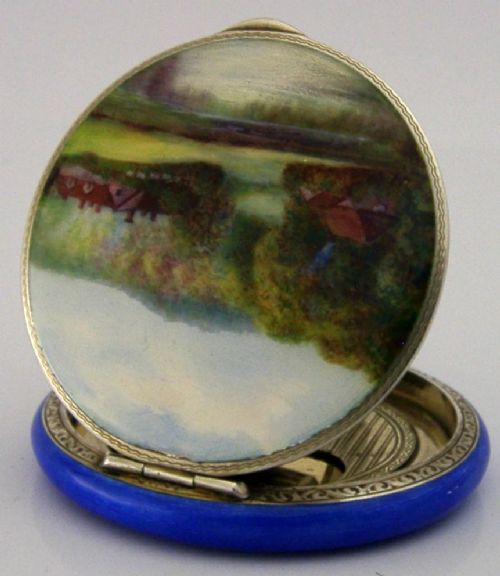
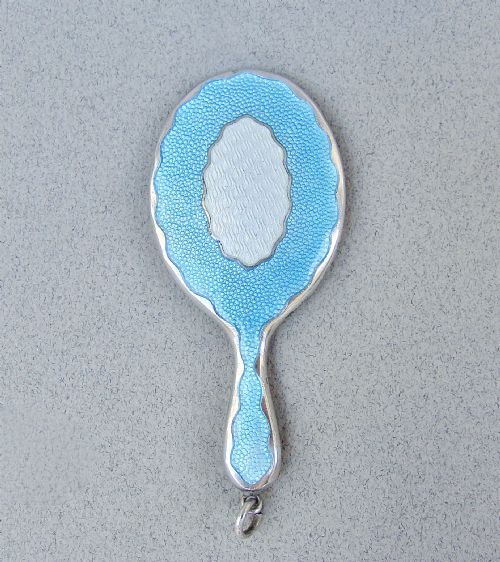


Art Deco Enamel Mirror
These art deco enamel mirror pieces combine polished sterling silver or chrome frames with vibrant coloured vitreous surfaces.
Art Deco Enamel Mirror
An art deco enamel mirror selection comprises portable vanities, hand-held glasses, and compact cases produced primarily during the 1920s and 1930s. Buyers frequently encounter small purse mirrors, folding compacts, and larger dressing table glasses manufactured across these decades.
The objects stem from silversmiths and makers working in Birmingham, London, and continental centres like Czechoslovakia. These functional accessories served daily grooming needs while reflecting the geometric tastes of the interwar period.
Materials and Technique
Craftsmen utilised sterling silver, silver-gilt, chrome, and brass to form the structural mounts and protective cases. Glass forms the reflective plates, fitted neatly behind bezels or held by metal clasps.
Vitreous enamel provides the colourful exterior decoration, frequently applied over a machine-turned guilloche pattern to create radiating geometric textures beneath translucent coloured glazes.
Materials appearing across the items include sterling silver, brass, chrome, and brightly coloured vitreous enamel.
Distinctions in Quality
Quality rests upon the precision of the guilloche engine-turning beneath the enamel layer and the clarity of the translucent coloured glazes. Superior examples display complex engraved patterns that catch the light evenly across the surface.
The weight and gauge of the sterling silver or silver-gilt mounts further separate standard production items from more substantial maker-signed vanity pieces. Crisp maker marks and clear assay stamps confirm the standard of the precious metals utilised.
Henry Williamson·Henry Matthews·Richard Hudnut·Houbigant·Harrison And Hipwood·Hasset And Harper·Asprey·Alexander Clark·William Neale·Charles Green
The Art Deco Enamel Mirror Glossary
- Guilloche
- A decorative technique where a mechanical lathe engraves precise geometric patterns into a metal substrate before translucent enamel is applied. This creates shimmering reflective depth beneath the coloured glass surface.
- Vitreous Enamel
- A material made by fusing powdered glass to a metallic base at high temperatures. It provides a durable, glossy coloured coating resistant to everyday wear.
- Silver-Gilt
- Sterling silver that has been coated with a thin layer of gold. This treatment adds a warm metallic tone to the interior or exterior of compacts and mirror frames.
- Powder Compact
- A small case fitted with a mirror and a compartment for face powder. These items frequently feature decorated enamel lids and internal powder sifters.
Art Deco Enamel Mirror: Frequently Asked Questions
What metals were used?
Makers constructed the frames primarily from sterling silver, brass, chrome, and gilt metal. Many pieces carry silver assay marks indicating Birmingham or London origins.
Softer metals like brass and base alloys often received a chrome or silver-plated finish to imitate solid silver while providing a durable protective exterior for daily use.
How do I date a piece?
Assay office hallmarks stamped onto silver mounts provide exact year letters and city symbols for British items. Stylistic clues such as mesh linings and geometric motifs also point towards the 1920s and 1930s.
Maker marks help cross-reference active working periods of silversmiths and manufacturing firms recorded in hallmarking registers.
Were these used daily?
Women carried these compacts and folding purse mirrors inside handbags for quick touch-ups throughout the day. Hand-held and dressing table glasses remained stationary on domestic vanity surfaces.
Many surviving compacts retain internal suede linings, powder residue, or original puffs, showing they were active personal accessories during the interwar period.
What is guilloche enamel?
Guilloche is an intricate mechanical engraving method that carves repeating lines into a metal disc. Applying coloured vitreous enamel over this textured surface allows light to bounce through the translucent glaze.
This technique produces a distinctive shimmering appearance that shifts as the object moves in the light.