



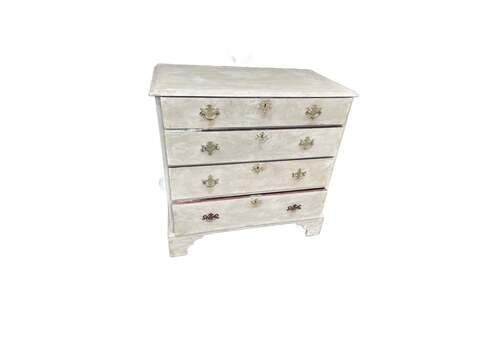


Grey Wooden Chest Drawers
These grey wooden chest drawers bring muted elegance to a room, offering practical storage through painted pine, cherrywood, and elm surfaces.
Grey Wooden Chest Drawers
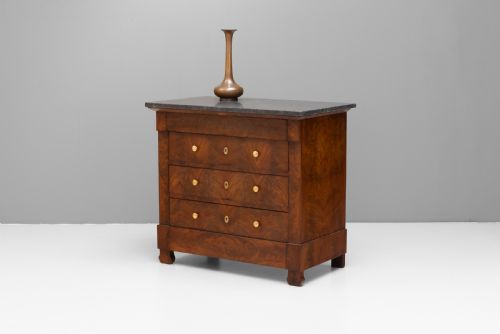
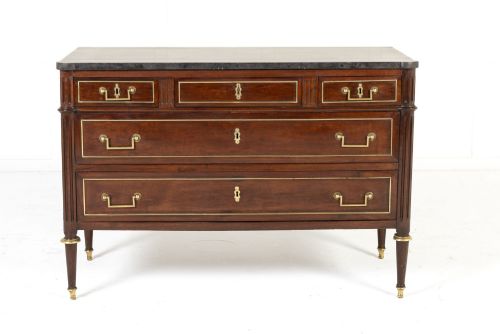
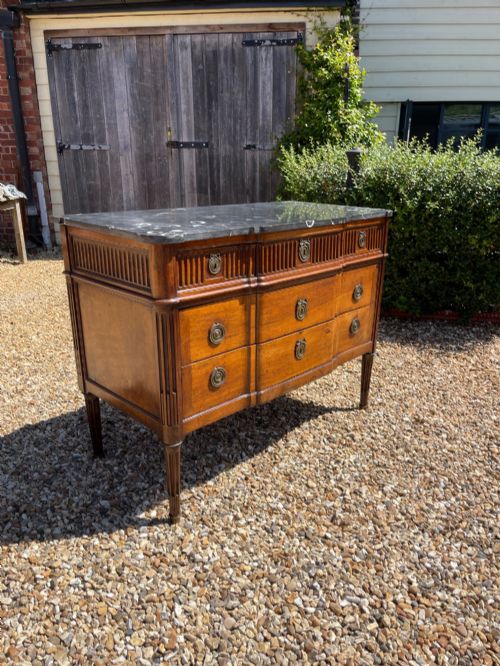
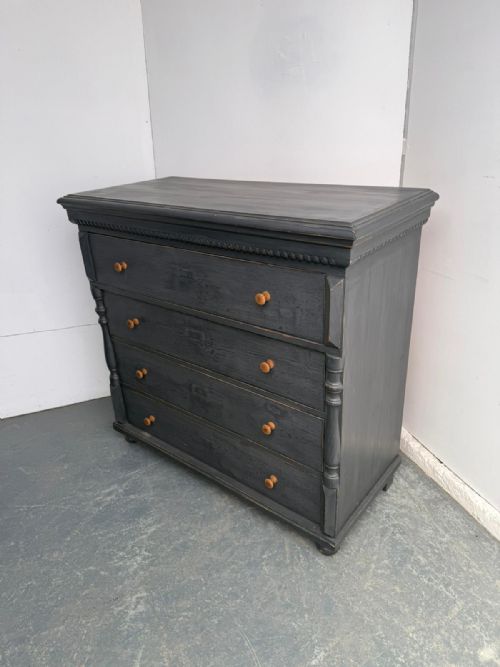
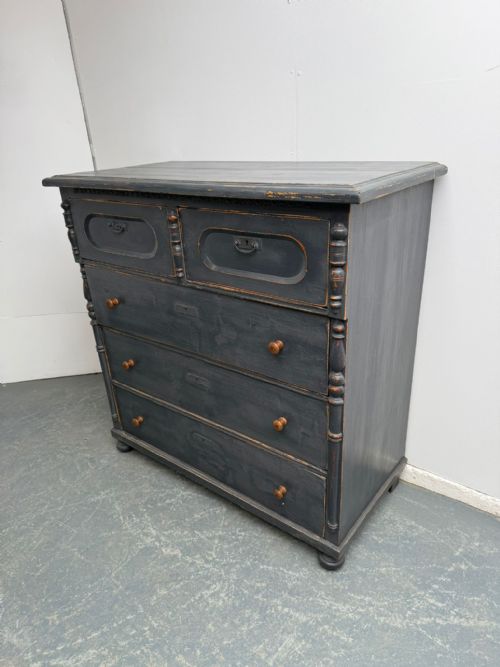
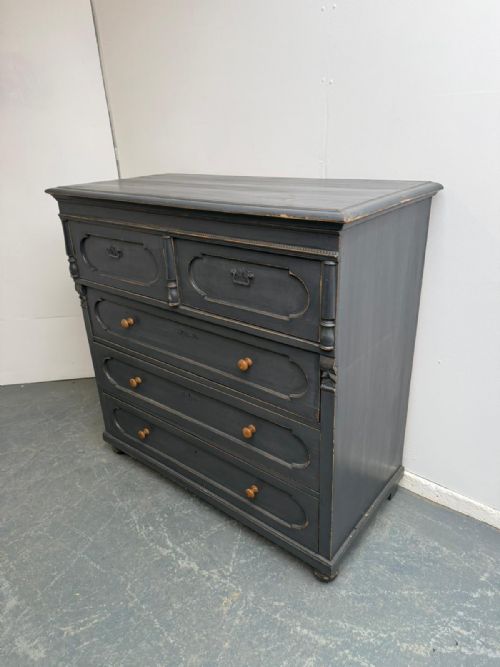
Grey wooden chest drawers span various eras from the eighteenth century through to the early twentieth century, taking the form of commodes, sideboards, and traditional multi-drawer chests. A buyer searching this phrase encounters continental European examples, notably Swedish Gustavian pieces and French commodes, alongside sturdy British pine and ash designs.
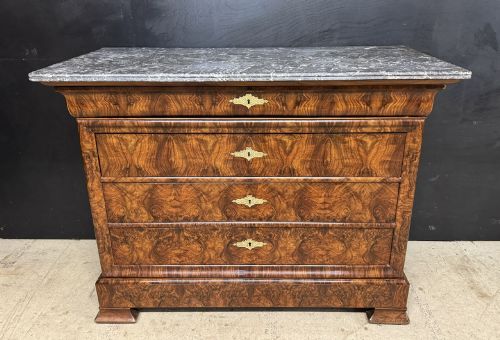
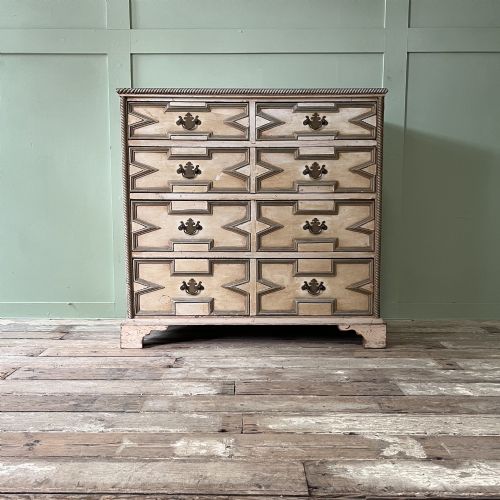
The aesthetic leans heavily on painted finishes in soft grey hues, often applied to antique timbers such as pine, walnut, and cherrywood. Pieces range from grand marble-topped continental commodes to substantial Victorian five-drawer storage units built for domestic utility.
How they were made
Cabinet makers utilised solid woods like pine, ash, cherrywood, and elm as the structural foundation for these chests, frequently pairing them with heavy marble slabs on top. Surfaces were then finished with traditional paint layers or left as polished wood, sometimes enhanced with parquetry work.
Hardware played a functional and decorative role, incorporating brass handles and key escutcheons that anchored the drawer fronts. Construction techniques varied from regional dovetailing in British workshops to elaborate curved bombe forms on continental commodes.
Grey Wooden Chest Drawers Retail Price Guide 2026
Typical asking prices for grey wooden chest drawers among the pieces listed under this phrase on Sellingantiques today, from the lower quarter to the upper quarter. They describe what is for sale here now, not the wider market.
Current listings feature pieces spanning the eighteenth, nineteenth, and early twentieth centuries, incorporating materials such as pine, marble, brass, and painted wood.
What varies in quality
The integrity of the underlying timber and the crispness of the carving or drawer construction set standard pieces apart from finer examples. Heavy marble tops and intricate parquetry denote higher status continental commodes.
The authenticity and subtlety of the painted finish determine visual success, distinguishing period painted surfaces from later redecorations. Maker attribution, such as pieces bearing the mark of Edwards and Roberts, elevates provenance.
Sir Clough Williams-Ellis·Edwards and Roberts·Hartman Luggage Co.
The Grey Wooden Chest Drawers Glossary
- Commode
- A low cabinet or chest of drawers, often referencing continental European styles with decorative finishes.
- Gustavian
- A Swedish neoclassical style characterised by restrained classical detailing and pale, muted paintwork.
- Bombe
- A swelling, convex shape typical of continental drawer fronts, popular in eighteenth-century cabinet making.
- Parquetry
- Geometric wood mosaic work used for decorative surface patterns on tabletops and drawer fronts.
Grey Wooden Chest Drawers: Frequently Asked Questions
How do I style a grey chest of drawers?
These pieces act as a neutral anchor in a room, blending easily with both contemporary and traditional interiors. Their muted tones allow them to sit comfortably in bedrooms, hallways, or living spaces.
Pair them with simple accessories to let the painted wood grain or marble top remain the focus. The soft grey palette complements metallic accents and natural textiles.
Where were these painted chests made?
The selection includes pieces originating from British workshops alongside continental examples from Sweden, France, and the Netherlands. Each region brought distinct proportions and decorative treatments to the form.
Swedish pieces often feature neoclassical Gustavian lines, while French and Dutch examples frequently incorporate serpentine fronts and marble surfaces.
Are these chests made of solid wood?
Construction relies primarily on traditional timbers such as pine, ash, elm, walnut, and cherrywood. Cabinet makers built these units to withstand daily domestic use.
Many examples feature painted pine carcases, while higher-end continental commodes utilise dense hardwoods beneath marble slabs and parquetry.
What is the difference between a commode and a chest?
While both provide drawer storage, the term commode generally describes continental European pieces with a decorative focus, often topped with marble. Standard chests of drawers tend to be taller, utility-driven British or continental formats.
Both forms served similar storage functions in period homes, varying mainly in regional terminology and decorative elaboration.