



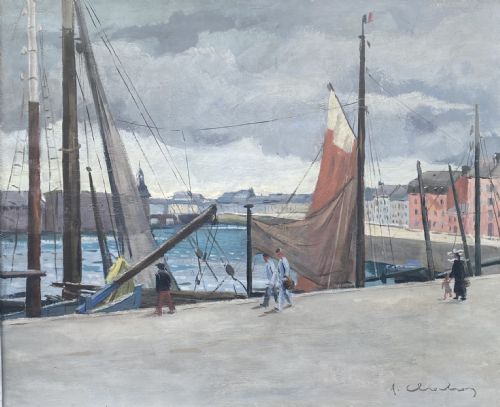

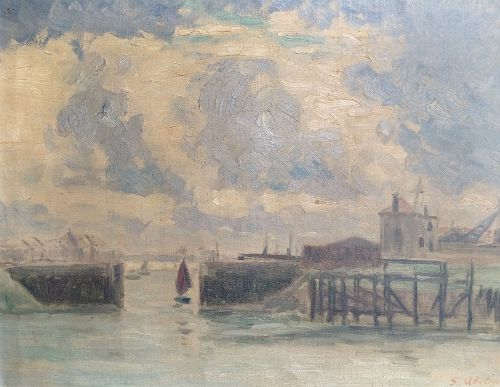


Grey Sky Maritime Scene
Grey sky maritime scene works describe harbours, shipping lanes, and coastal views rendered in subdued palettes.
Grey Sky Maritime Scene
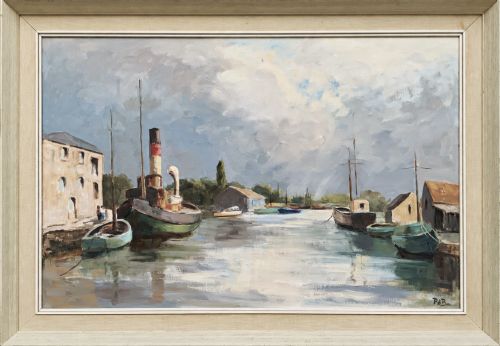
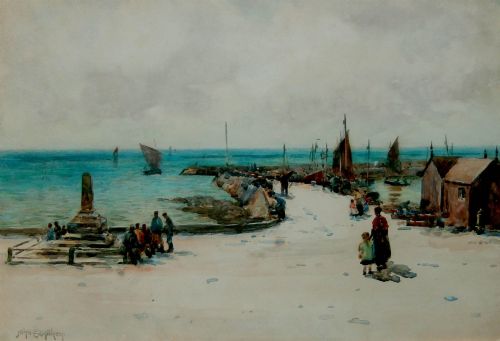
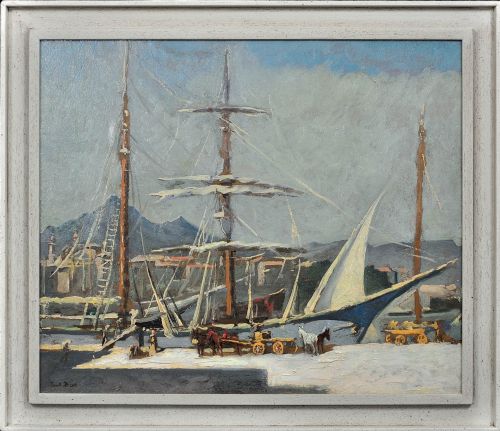
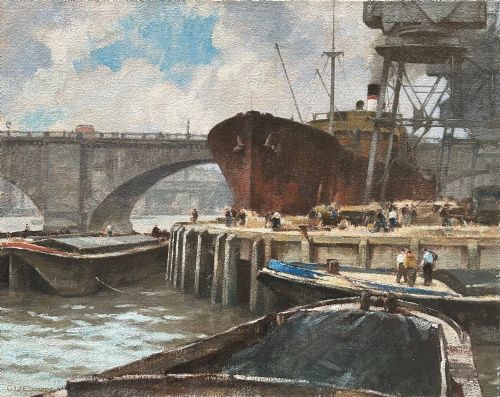
A grey sky maritime scene captures coastal waters, harbours, and shipping under overcast or muted daylight. Buyers searching this phrase look for atmospheric watercolours and oil paintings depicting vessels, quaysides, and open seas.
The selections available range from early nineteenth-century depictions of shipping to mid-century impressionist watercolours. Common subjects include beached fishing boats, northern sea havens, and bustling harbour scenes across Britain and Europe.
Works span styles from Georgian realism through British impressionism to twentieth-century modernism. These pieces bring coastal topography and maritime industry into domestic interiors through painterly observation.
Materials and technique
Artists executed these works primarily using oil paint on canvas and watercolour on paper. Painters applied pigments with brushwork ranging from tight academic precision to loose impressionistic strokes.
Many works retain their original wood frames, which often complement the maritime subject matter. The interplay between canvas support and oil pigment allows for textured depictions of choppy water and heavy skies.
Grey Sky Maritime Scene Retail Price Guide 2026
Typical asking prices for grey sky maritime scene among the pieces listed under this phrase on Sellingantiques today, from the lower quarter to the upper quarter. They describe what is for sale here now, not the wider market.
Several artists clearly braved chilly northern winds to capture choppy harbour waters without freezing their watercolours to the easel.
Distinguishing quality in maritime art
Quality rests in the handling of light and atmosphere, particularly how the artist renders heavy overcast skies and reflective water. Stronger works demonstrate confident brush control and a convincing sense of scale between vessels and their environment.
Provenance and attribution elevate certain pieces, especially those signed by recognised practitioners of British and European impressionism. The integrity of the original surface and the sympathetic pairing with period wood framing also influence the standing of an individual work.
Peggy de Brett·John E Aitken·Paul Bret·Cyril Walduck Edwards·George Hamilton Constantine·Owen Bowen·Thomas Bush Hardy
The Grey Sky Maritime Scene Glossary
- Watercolour
- A painting method where fine pigment is suspended in water-soluble binder applied to paper. This medium allows for transparent washes suited to misty coastal atmospheres.
- Oil on canvas
- A traditional painting technique utilising pigments bound in drying oils stretched across a woven fabric support. This combination permits deep tonal variation and thick impasto texture.
- British Impressionism
- A late nineteenth and early twentieth-century painting movement focusing on everyday subject matter and visible brushstrokes. Artists in this tradition prioritized natural light effects.
- Provincial realism
- A twentieth-century artistic approach depicting local landscapes and working environments with straightforward observation. These works document regional harbours and canals without romantic embellishment.
Grey Sky Maritime Scene: Frequently Asked Questions
What periods do these maritime scenes cover?
The selections span from the early nineteenth century through the 1960s. Painters recorded changing coastal industries and shipping vessels across distinct historical decades.
Represented eras include Georgian depictions alongside mid-century impressionist interpretations of European and British ports.
How should I care for a canvas maritime painting?
Protect oil paintings on canvas from direct sunlight and extreme humidity fluctuations to prevent paint cracking. Keep the original wood frames clean using a dry, soft cloth.
Avoid hanging works above active heat sources that might dry out the wooden stretcher bars and canvas support.
How do I distinguish between an oil painting and a watercolour?
Oil paintings display a textured surface with visible brush marks or impasto on canvas. The pigment sits on top of the weave and possesses a variable sheen.
Watercolours present a flat, transparent finish directly on paper where the texture of the sheet remains visible beneath thin washes of colour.