





Framed Coastal Landscape Artwork
Framed coastal landscape artwork captures the shifting light of the sea and shore, bringing maritime history and open air onto the wall.
Framed Coastal Landscape Artwork
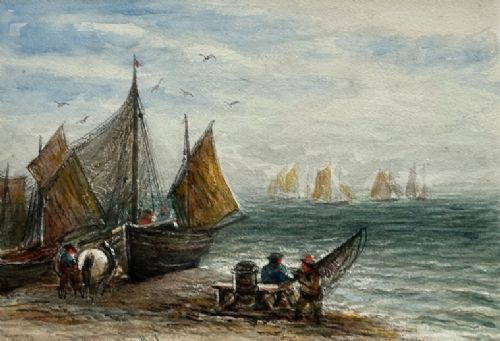
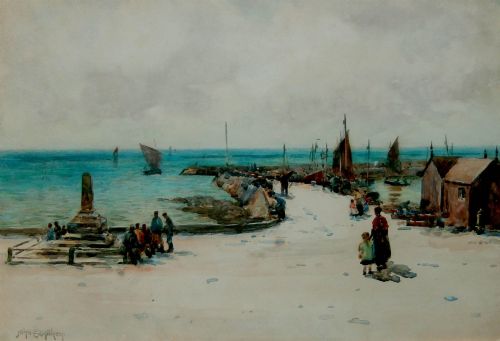
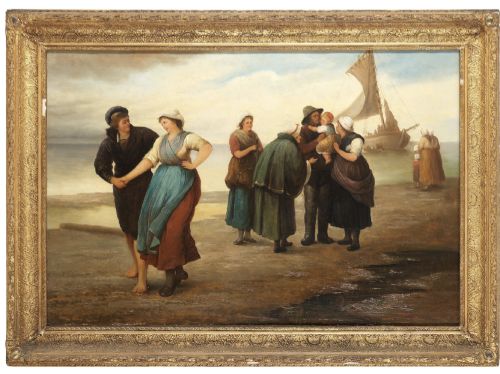
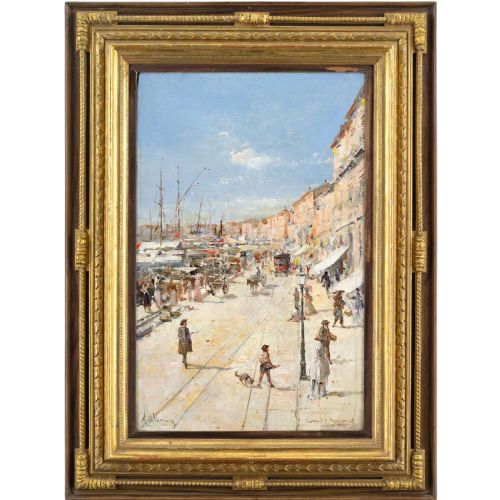
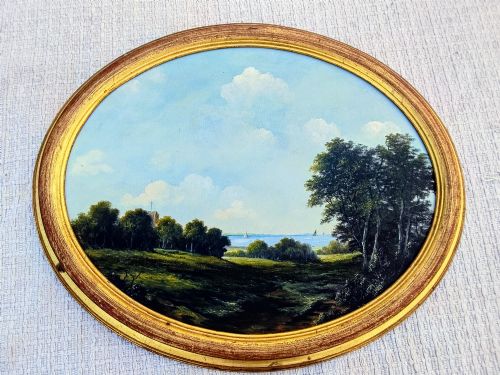
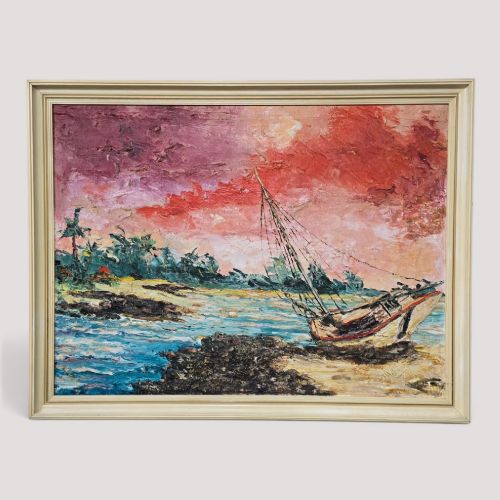
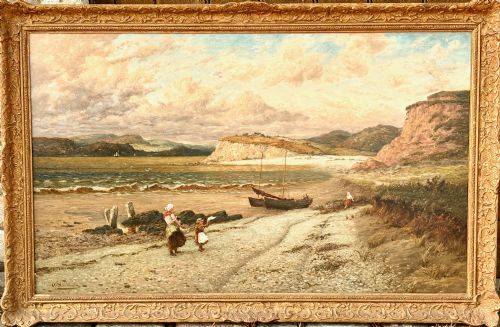
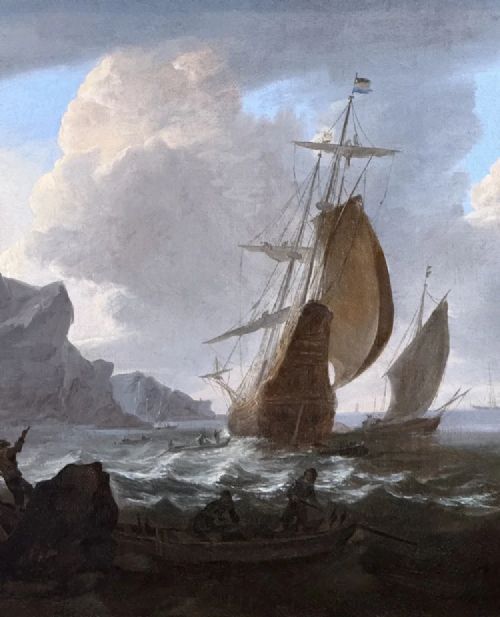
When you search for framed coastal landscape artwork, you are looking at paintings that record harbours, open seas, fishing boats, and shorelines across several centuries. These pieces range from detailed nineteenth century watercolours to mid-century oil paintings executed en plein air.
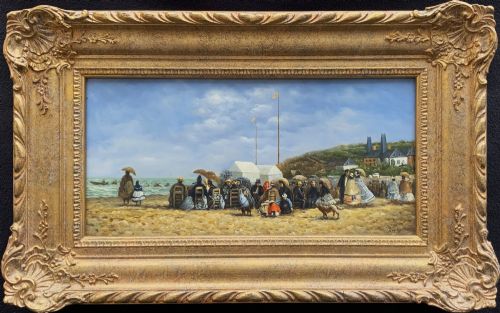
The most common examples on this page are oil paintings on canvas and board, alongside traditional paper watercolours. Many arrive within period wood and gilt wood frames that complement the maritime subject matter.
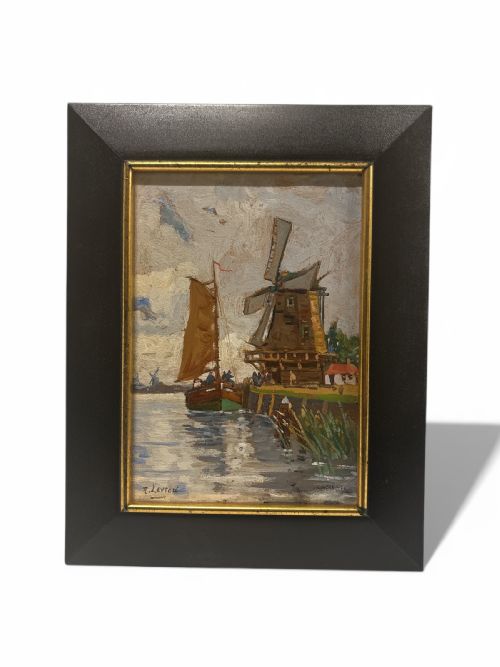
Subjects span British and continental coasts, featuring locations from St Ives and Cornwall to Mediterranean harbours and Dutch waters. The selection moves through Victorian maritime scenes into Edwardian and modern British interpretations.
Materials and Methods
Artists painted these coastal views using oil paint and watercolour applied to canvas, wood board, or heavy paper. Pigments were worked with brushes to capture the texture of rough water, sandy beaches, and atmospheric skies.
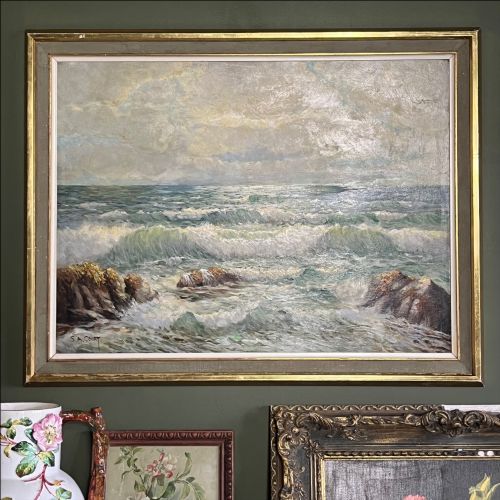
Many works were completed en plein air directly on location to catch transient weather and changing light along the shore. Once finished, the pictures were housed in wood frames, frequently finished with gilt ornamentation to accent the composition.
Object types recorded include marine oil paintings, harbour watercolours, and oval sea views.
Differentiating Quality
Quality in these coastal works rests on the artist's command of light, atmosphere, and movement within the marine environment. Stronger examples demonstrate confident brushwork that conveys the weight of the sea and the expanse of the sky without overworking the surface.
The relationship between the painting and its original frame also influences the piece. A well-preserved period gilt wood frame that suits the scale and palette of the artwork elevates the entire object.
James Orrock·Clifford Hanney·Sidney A Court·William Banks Fortescue·Augusto Alberici·Bonaventura Peeters·Clive Browne·Peter Brannan·Paul Bret·Bernard Benedict Hemy·Thomas Creswick·Donald McIntyre·Charles Euphraisie Kuasseg·John Wilson Carmichael·Abraham Cooper·Carlo Ferranti·John Moore of Ipswich·William Matthison·William Henry Williamson
The Framed Coastal Landscape Artwork Glossary
- En plein air
- Painting outdoors to capture direct natural light and atmospheric conditions. This method was widely utilised by nineteenth and twentieth century landscape artists.
- Gilt wood
- Wood coated with a thin layer of gold leaf or metallic paint. It is commonly found on traditional frames surrounding nineteenth century oil paintings.
- Watercolour
- A paint consisting of water-soluble pigments suspended in a water-based solution, typically applied to paper. It produces translucent washes well suited to coastal light.
- Maritime
- Pertaining to the sea, ships, and coastal navigation. This term describes the primary subject matter of many harbour and sea view paintings.
Framed Coastal Landscape Artwork: Frequently Asked Questions
How do I date a coastal oil painting?
Dating relies on stylistic clues, stretcher construction, and framing materials. Victorian works often display heavier gilt frames and traditional academic brushwork.
Later twentieth century pieces lean towards looser modern British or impressionist application. Artist signatures and biographical dates also help narrow the period.
Where should I hang a marine painting?
These works suit spaces with good indirect light that allows the oil or watercolour pigments to be seen clearly. Avoid hanging them in direct sunlight to protect the paper or canvas from fading.
Pairing the frame tone with existing room furniture helps integrate the piece into the interior.
What is the difference between oil and watercolour coastal art?
Oil paintings utilise heavy pigments on canvas or board, offering rich texture and deep colour saturation. They have a robust surface that was traditionally protected by heavy wood frames.
Watercolours use translucent washes on paper, resulting in a lighter appearance that often requires glass for protection.
How do I care for antique framed art?
Keep the artwork away from damp environments and extreme temperature fluctuations to protect the canvas, board, or paper base. Dust the frame gently with a dry cloth without using liquid cleaners.
Ensure the hanging wire and wall fixings remain secure to support the weight of the wood and gilt frame.