



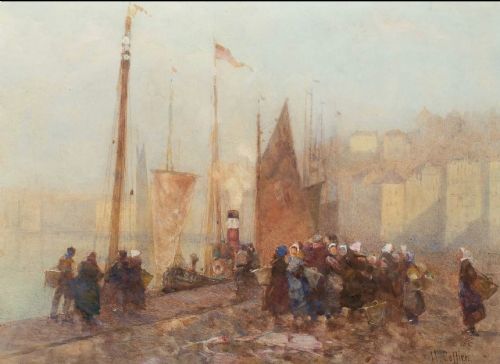
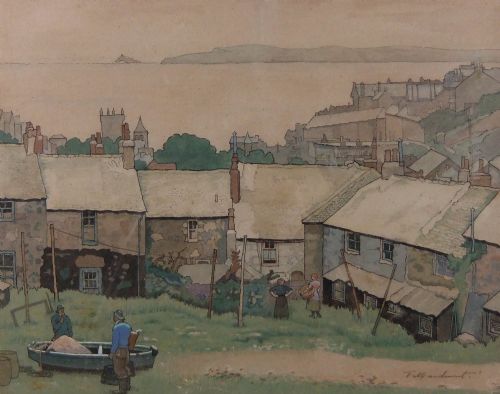
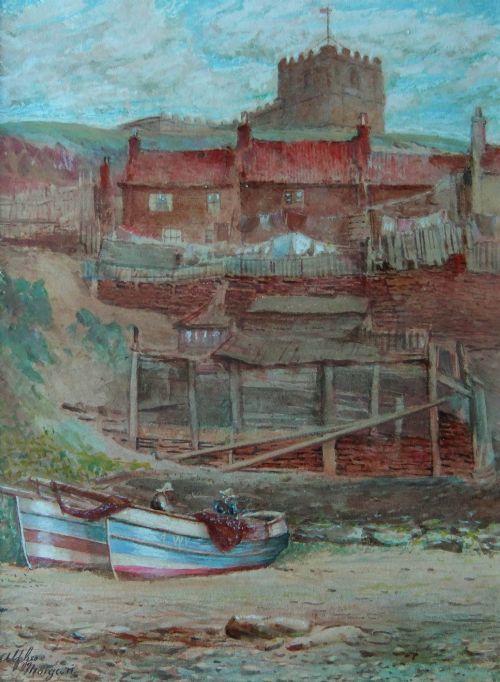
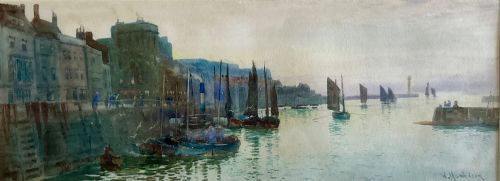
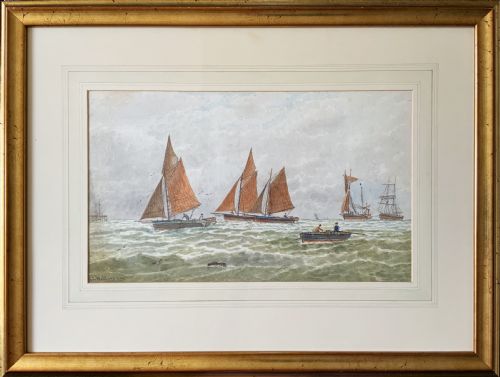
Original Maritime Watercolour
Original maritime watercolour paintings capture coastal life and shipping scenes across the nineteenth and twentieth centuries.
Original Maritime Watercolour
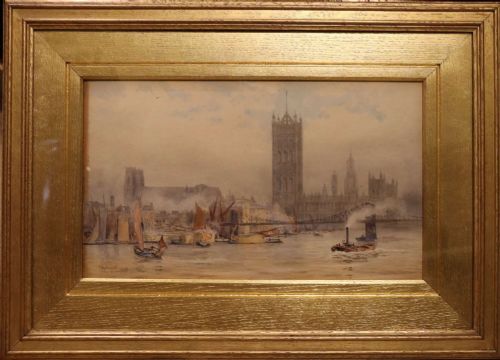
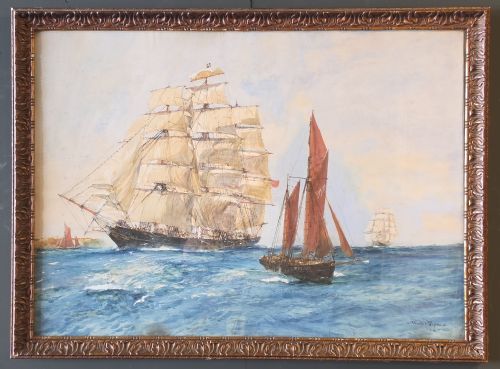
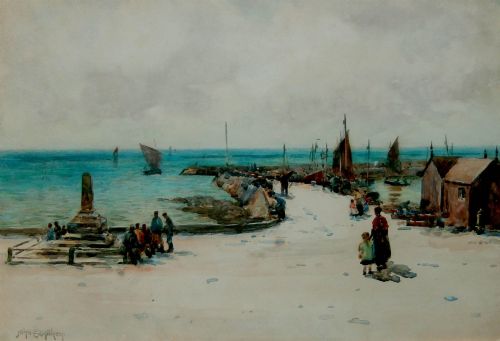
An original maritime watercolour captures ships, harbours and coastal landscapes directly on paper through the hands of a period artist. These works span the Victorian era, Edwardian period and mid-twentieth century, recording British coastal scenes from Cornwall to Yorkshire.
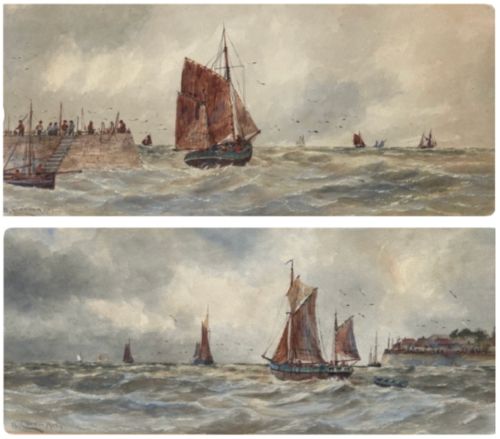
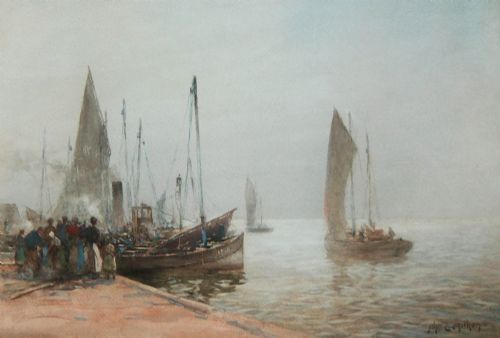
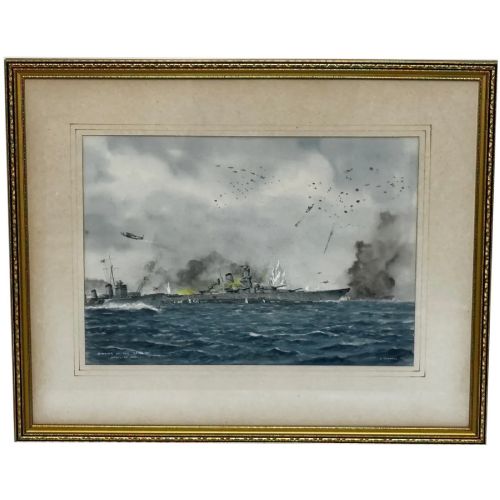
Buyers encounter framed artworks depicting fishing boats, racing yachts and naval vessels executed in traditional washes. The selection ranges from nineteenth-century coastal sketches to mid-century harbour views.
Most pieces document specific locations such as Whitby, St Ives and Scarborough alongside open sea and shipping lanes. Works appear as single paintings or framed drawings ready for display.
Materials and techniques
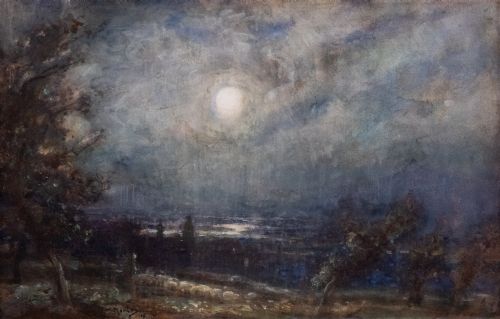
Artists applied watercolour pigment and ink onto paper sheets, often utilising glass and wood frames for protection and display. The technique relies on translucent washes of paint to build atmospheric skies, turbulent seas and detailed rigging on shipping vessels.
Makers employed ink for initial outlines and fine details before layering water-soluble pigments to capture changing coastal light. Finished works were frequently mounted and secured beneath glass within gilt wood or simple timber frames.
The archive records British Impressionist marine art alongside traditional Victorian coastal watercolours from various regional schools.
Variations in quality
Quality rests upon the artist's command of atmospheric light, accurate maritime architecture and the preservation of the paper surface. Superior works demonstrate confident brushwork in rendering sea movement, vessel rigging and coastal topography.
The strength of the composition and the vibrancy of the surviving pigment separate accomplished professional works from simpler sketches. Condition remains vital, with well-preserved paper and minimal fading distinguishing the finest examples.
James Orrock·William Cannon·James E Aitken·Charles Edward Dixon·Thomas William Morley·Hector Caffieri·William Matthison·George Stanfield Walters·Frank Kelsey·Henry Barlow Carter·Thomas Bush Hardy·Edward Seago
The Original Maritime Watercolour Glossary
- Watercolour pigment
- Finely ground colour particles mixed with a binder for use with water on paper.
- Works on paper
- A classification encompassing drawings, waterpaintings and prints executed on paper substrates.
- Gilt wood
- Timber framing treated with gold leaf or a gold-coloured finish to adorn the artwork.
- Seascape
- A painting or drawing depicting the sea, coastal views or maritime shipping.
Original Maritime Watercolour: Frequently Asked Questions
How should I frame an antique maritime watercolour?
Protect the paper from direct sunlight and moisture by using acid-free mounts and conservation-grade glass. This prevents the watercolour pigments from fading and safeguards the paper support over time.
Ensure there is a small gap between the glass and the painting surface to avoid condensation damage. Traditional wood or gilt frames complement the period aesthetic of these works.
How do I identify the date of a watercolour?
Examine the signature, artist dates, paper watermarks and framing style for chronological clues. Many nineteenth and early twentieth-century works carry inscriptions or dates directly on the front or verso.
Subject matter such as types of shipping vessels, clothing styles and depicted coastal infrastructure also help narrow down the decade of creation.
Where were most British marine watercolours painted?
Artists frequently worked along active fishing ports and trading hubs around the British coastline. Popular locations included Yorkshire harbours like Whitby and Scarborough, and Cornish inlets such as St Ives and Looe.
Riverside shipping on the Thames and the Humber also provided rich subject matter for Victorian and Edwardian painters.
What is the difference between a sketch and a finished painting?
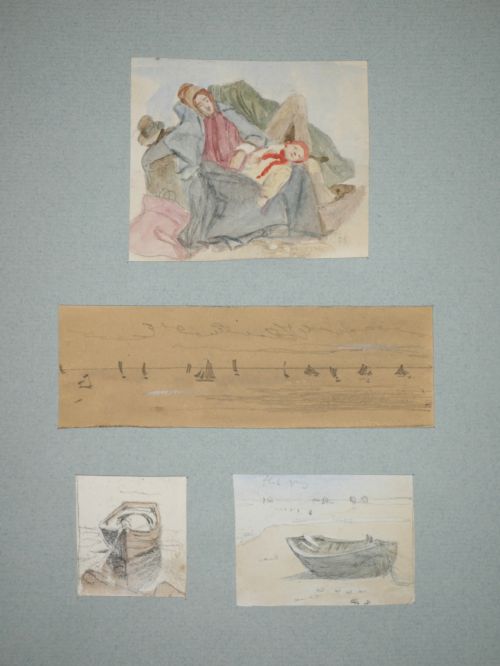
A sketch typically serves as a rapid study recording light, weather or vessel positioning directly from life. These pieces often show looser brushwork and pencil guidelines beneath the pigment.
Finished paintings display greater compositional planning, refined detail in the rigging and architecture, and a more complete tonal range across the paper.