

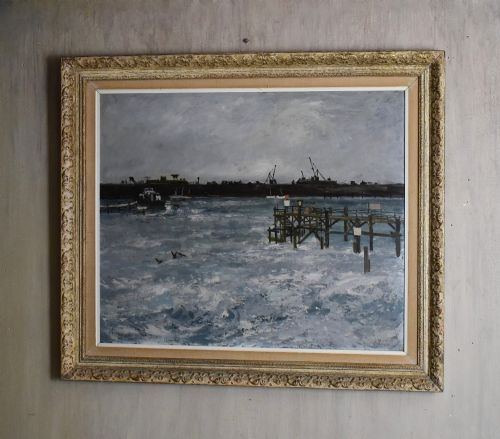
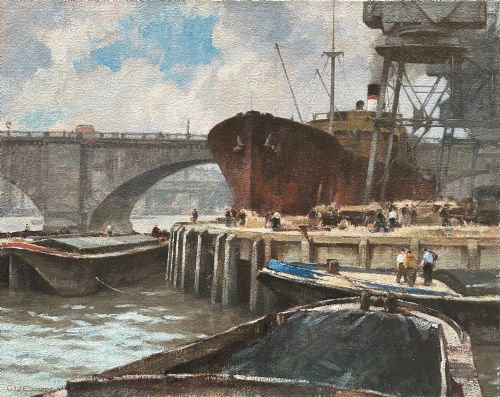
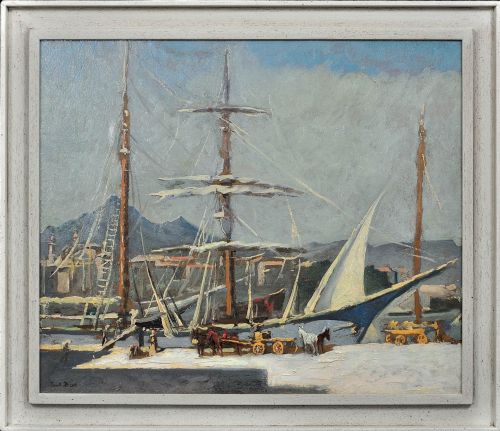
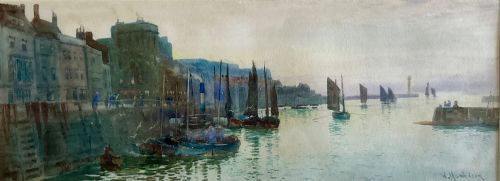


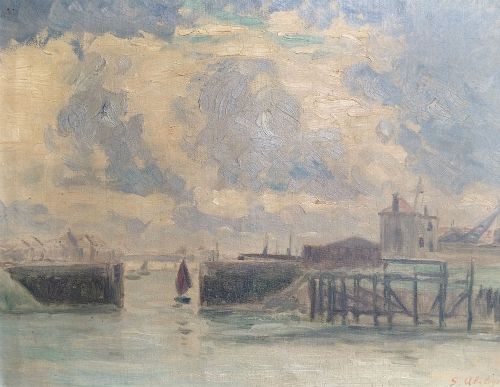


Blue Grey Maritime Artwork
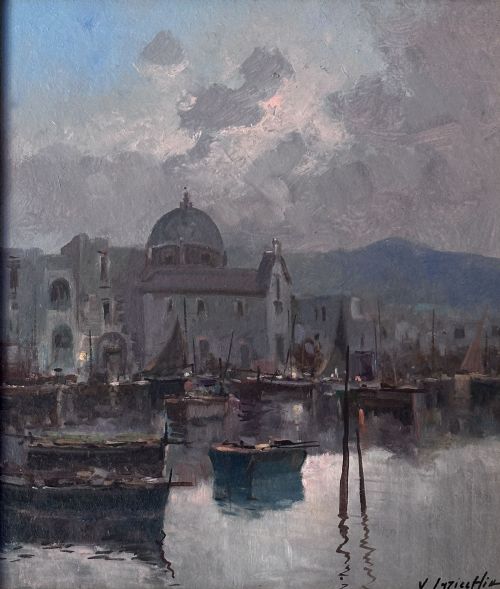
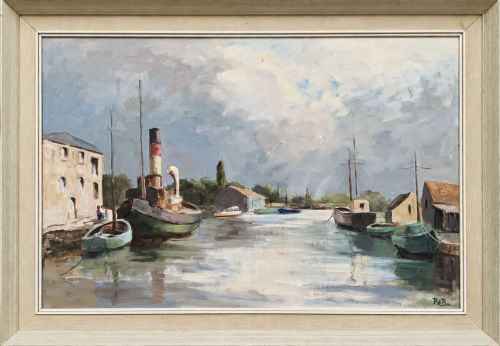
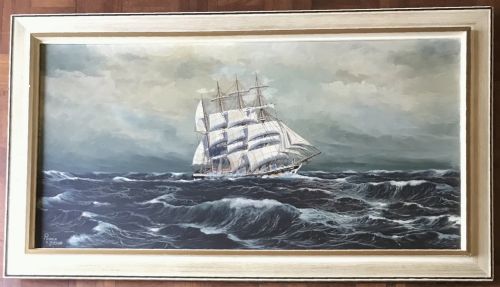
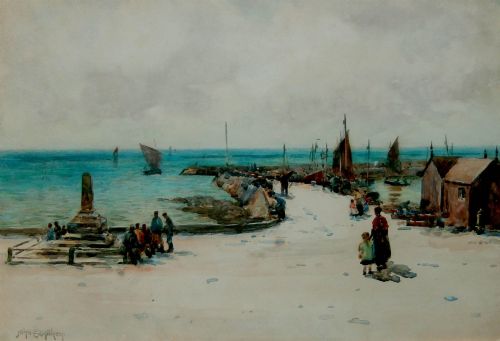
These blue grey maritime artwork pieces capture coastal scenes and shipping lanes through traditional watercolours and oil paintings.
Blue Grey Maritime Artwork
A blue grey maritime artwork focuses primarily on seascapes, harbours, and coastal scenes rendered through paintings. The visual palette leans heavily into atmospheric tones of grey, blue, and muted earth colours.
Most examples found here originate from the Victorian period through to the mid twentieth century. Common subjects include sailing ships, fishing drifters, and busy ports across Britain and Europe.
Buyers encounter works executed on paper, canvas, and wooden panels, spanning watercolours and oil paintings. The selection reflects various regional schools such as British Impressionism and local artistic groups.
Materials and techniques
Artists primarily utilised oil paint on canvas or wooden supports, alongside watercolour pigment applied directly to paper. These mediums allowed creators to build atmospheric layers suitable for shifting weather and water conditions.
Framed watercolours often incorporate protective glass layers, while oil paintings rely on the stable surface of stretched canvas. Painters worked either in studio settings using preparatory sketches or directly outdoors in plein air environments.
Blue Grey Maritime Artwork Retail Price Guide 2026
Typical asking prices for blue grey maritime artwork among the pieces listed under this phrase on Sellingantiques today, from the lower quarter to the upper quarter. They describe what is for sale here now, not the wider market.
Several artists braved stormy northern seas just to paint local fishing boats returning to Yorkshire piers with their daily catch.
Factors in quality
The strength of a blue grey maritime artwork rests in the handling of light, atmosphere, and movement within the water or sky. Superior pieces demonstrate confident brushwork that captures the specific weight of stormy seas or quiet harbours.
Condition plays a role, particularly regarding the preservation of paper against foxing and the stability of canvas and pigment over time. Pieces by established regional artists or those with documented exhibition histories tend to show greater technical execution.
Peggy de Brett·Peter Brannan·Edward Seago·Frank H. Mason·Vincenzo D’Esposito
The Blue Grey Maritime Artwork Glossary
- Watercolour pigment
- A colour medium ground with water-soluble binders, frequently applied to paper in thin, translucent washes to create coastal skies.
- Oil on canvas
- Pigment mixed with drying oils such as linseed, spread across a woven fabric stretched over a wooden frame.
- Plein air
- The practice of painting outdoors to capture direct natural light and atmospheric conditions on the spot.
- Seascape
- A work of fine art depicting the sea, ships, or coastal views.
- British Impressionism
- A late nineteenth and early twentieth century painting style focusing on everyday scenes and loose brushwork.
Blue Grey Maritime Artwork: Frequently Asked Questions
What periods do these artworks cover?
The pieces span from the nineteenth century through the Victorian era and into the mid twentieth century. Artists worked across several decades, reflecting changing stylistic approaches.
Most items date from the late Victorian period up to the nineteen sixties, showing diverse regional movements.
How should I hang watercolour paintings?
Watercolours on paper require protection from direct sunlight to prevent the pigment from fading over time. Glazing with conservation glass helps shield the delicate surface.
Keep them away from damp walls and fluctuating temperatures to preserve both the paper and the original frame.
What is the difference between oil and watercolour marine works?
Oil paintings utilise heavy pigments bound in oil on canvas or wood, offering rich textures and deep tones. They are generally more robust against environmental changes.
Watercolours use transparent washes on paper, creating lighter, more luminous atmospheric effects that require glass protection.
Where were these coastal scenes painted?
Locations range from British ports in Yorkshire and Devon to European harbours in Italy, France, and Belgium. Artists frequently travelled to working fishing towns.
Many paintings record specific harbours, piers, and shipping lanes that were active during the nineteenth and twentieth centuries.