





Grey Painted Wooden Commode
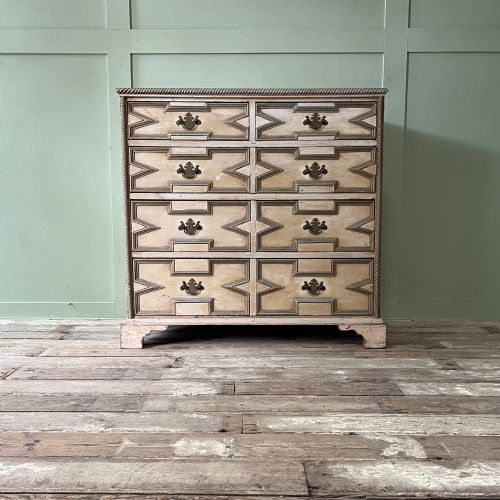
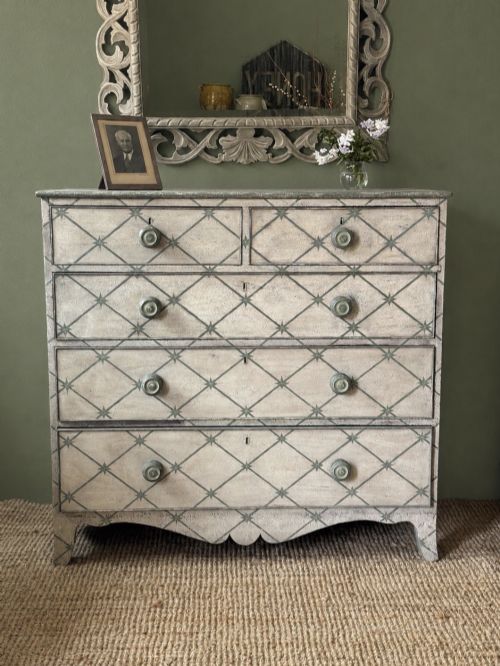
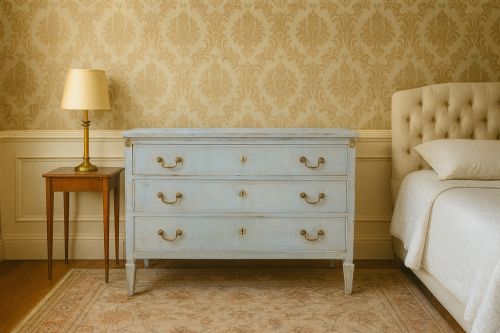
A grey painted wooden commode brings quiet elegance and practical storage to a room, drawing on centuries of European craft traditions.
Grey Painted Wooden Commode
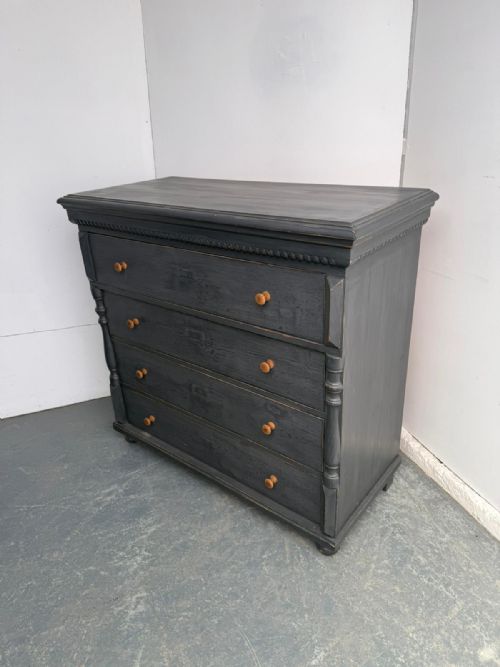
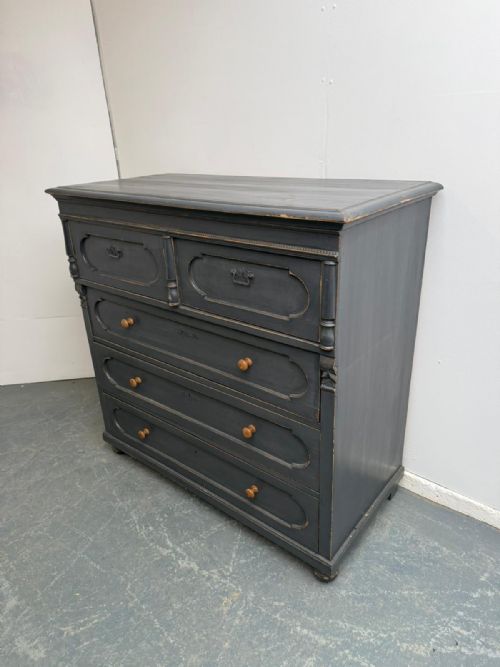
Buyers will most frequently encounter 19th-century and Victorian examples alongside continental pieces influenced by Scandinavian and French provincial styles. These range from substantial five-drawer pine chests to smaller two-drawer commodes and serpentine or bombe forms.
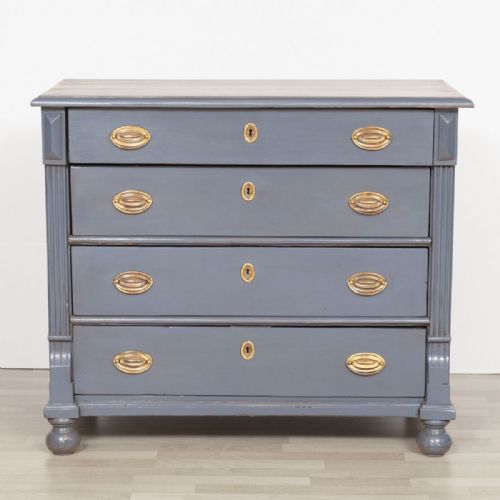
The finish defines the aesthetic, with original and later grey paint applications applied to pine, ash, and other solid woods. Brass hardware often complements the painted surfaces, while structural forms vary from simple country chests to ornate revival pieces.
How they were made
Construction relies heavily on solid timbers such as pine and ash, providing sturdy carcases for frequent domestic use. Carpenters utilised traditional joinery methods to build drawers and frames that withstand generations of opening and closing.
Surface treatments combine layered paintwork over wood, sometimes enhanced by hand-decoration or historic redecoration. Metal elements like brass handles and keyplates are integrated into the drawer fronts to secure and accent the piece.
Several pieces require two drawers to hold their secrets, while others stretch confidently to five.
What varies in quality
The distinction between items rests upon the integrity of the original construction and the character of the painted surface. Untouched period surfaces and regional proportions command greater interest among collectors seeking authentic domestic history.
Subtleties in carved detailing, such as serpentine or bombe shaping, separate standard utility furniture from sophisticated cabinet making. The harmony between the timber carcase and its grey pigment finish ultimately determines the visual balance of the commode.
Sir Clough Williams-Ellis·Edwards and Roberts
The Grey Painted Wooden Commode Glossary
- Commode
- A low chest of drawers or cabinet, typically originating from French furniture traditions. It serves as both a decorative focal point and practical bedside or room storage.
- Gustavian
- The Swedish interpretation of neoclassical design, characterised by restrained ornamentation and pale painted finishes. This style emerged during the late 18th century.
- Bombe
- A swelling, convex contour on the front and sides of a piece of furniture. This curved profile requires advanced carpentry skills to execute successfully.
- Serpentine
- A furniture front shaped with a central convex curve flanked by concave curves. It creates a fluid, undulating line across the drawer faces.
- Baroque Revival
- A 19th-century historicist style that imitates the dramatic curves and ornamentation of the 17th-century baroque period. Makers reinterpreted these theatrical forms for Victorian interiors.
Grey Painted Wooden Commode: Frequently Asked Questions
What rooms suit a grey painted commode?
These chests function well in bedrooms, hallways, or living spaces where surface storage and a muted colour palette are desired.
Their neutral tone allows them to integrate easily with both traditional and contemporary interior schemes.
How do I care for painted wood furniture?
Dust regularly with a soft, dry cloth and avoid placing the timber in direct sunlight or near heat sources.
Protect the painted surface from excessive moisture by using coasters and mats on the top boards.
What is the difference between a commode and a chest of drawers?
While both provide drawer storage, the term commode often denotes a shorter, more decorative French or continental cabinet.
Standard chests of drawers tend to be taller and were traditionally designed for general bedroom garment storage.
How can I identify a continental piece?
Continental commodes often display characteristic regional design traits such as Gustavian neoclassical lines or Dutch bombe curves.
Construction details and softwood varieties typical of Scandinavian or French workshops also point to their origin.