



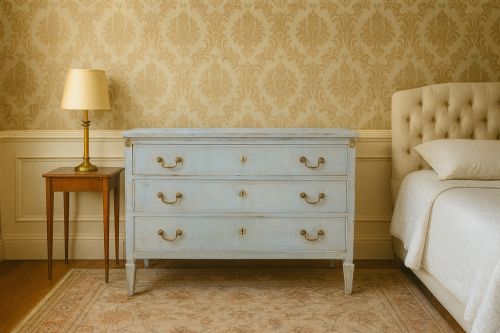


Swedish Gustavian Style Chest
A swedish gustavian style chest brings restrained neoclassical elegance to a room through pale painted surfaces and understated carved detail.
Swedish Gustavian Style Chest
When you search for a swedish gustavian style chest, you encounter a refined category of storage furniture rooted in the eighteenth and nineteenth centuries. These pieces translate continental neoclassical restraint into cooler northern proportions, balancing utility with decorative grace.
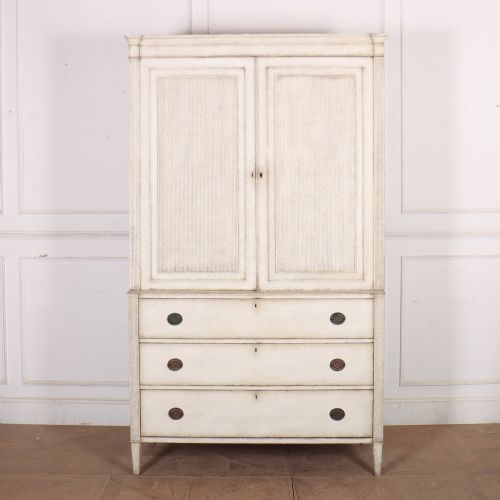
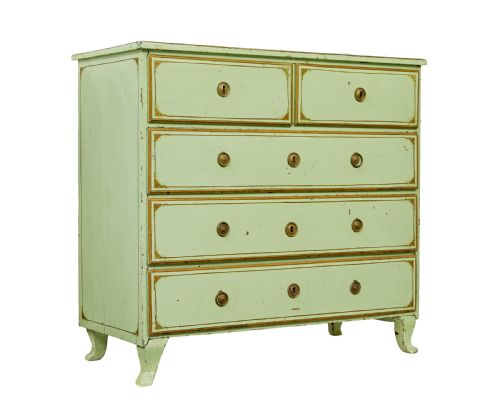
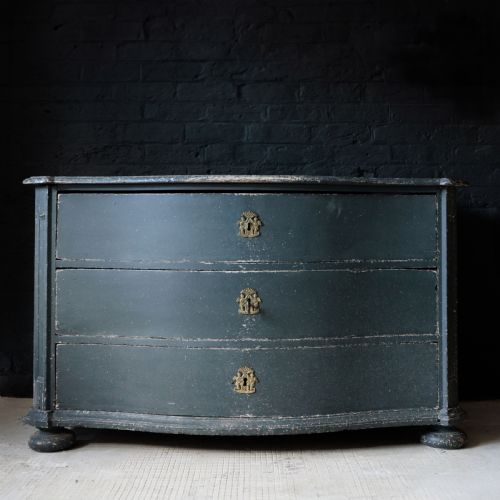
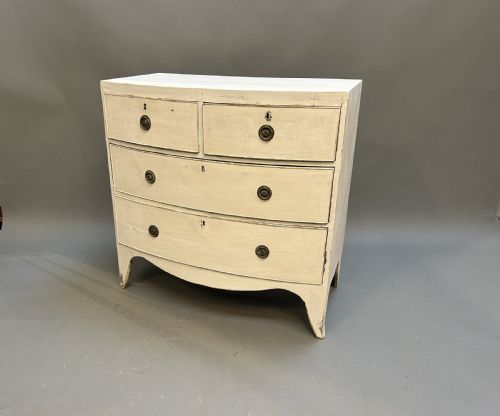
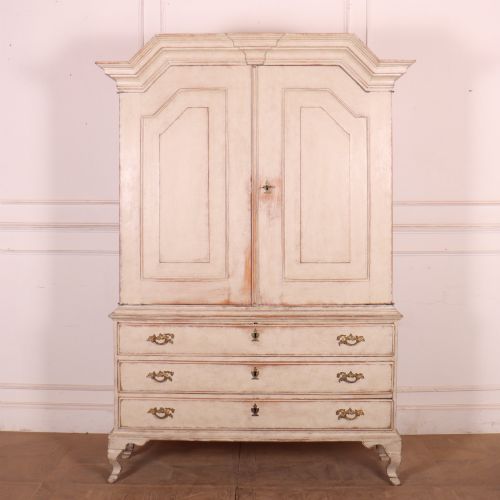
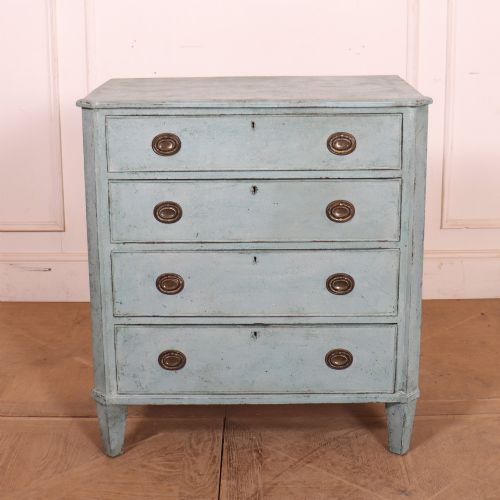
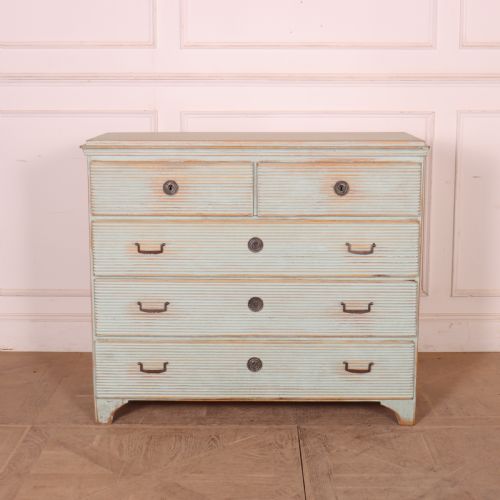
The most frequent examples on this page are painted pine or birch chests of drawers and commodes, often featuring serpentine fronts or fluted drawer details. Alongside these standard drawer forms, you will occasionally find linen cupboards, desks, and coffers carrying the same restrained aesthetic.
Originating primarily from the eighteenth and nineteenth centuries, these items span periods from the seventeen-fifties through the late eighteen-eighties. They draw heavily on Gustavian, Scandinavian country, and Baroque revival traditions, maintaining a lighter visual footprint than their heavier continental counterparts.
Materials and technique
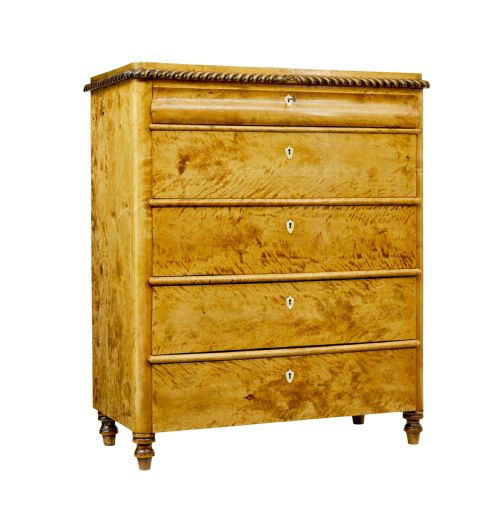
Carpenters relied primarily on native timbers such as pine, birch, and oak, occasionally incorporating finer woods like satin birch for specific surfaces. Iron and brass provided structural reinforcement and hardware, while timber surfaces were frequently finished with hand-applied paint or faux marble tops.
Construction techniques balanced sturdy carcasing with delicate decorative application, including hand-carving and fluted drawer fronts. Surfaces received layered paint treatments in muted tones, achieving the characteristic pale palette associated with Scandinavian neoclassical furniture.
Some nineteenth-century chests arrived with faux marble tops, proving that northern carpenters enjoyed a clever illusion just as much as anyone else.
What separates the top of the range
Quality reveals itself in the harmony of proportions, the crispness of carved fluting, and the integrity of the timber beneath the painted skin. Superior examples display balanced serpentine fronts and sophisticated surface patination that reflect thoughtful proportion and skilled joinery.
The handling of the painted finish dictates much of the visual success, where subtle brushwork and harmonious colour choices elevate a functional storage piece into an accomplished work of design. Finer hardware choices, such as period-appropriate brass handles and hinges, further distinguish the upper tier of these items.
The Swedish Gustavian Style Chest Glossary
- Commode
- A low chest of drawers or cabinet, typically originating from the eighteenth or nineteenth century. These pieces often feature decorative serpentine fronts and painted wooden surfaces.
- Gustavian
- The Swedish neoclassical style spanning the late eighteenth century, characterised by restrained carving, symmetry, and pale painted finishes. It draws inspiration from French Louis XVI design interpreted through a northern lens.
- Serpentine
- A furniture front curving outward at the ends and inward in the middle, creating a gentle wave shape. This contour requires precise carpentry and adds considerable elegance to commodes and chests.
- Caddy top
- A raised, moulded tabletop profile that sits above the primary carcass of a chest of drawers. This upper edge provides a neat, finished boundary to the piece.
- Escritoire
- A writing desk featuring a sloping front or fall-front panel that conceals small drawers and pigeonholes. These items combine practical desk space with integrated drawer storage.
Swedish Gustavian Style Chest: Frequently Asked Questions
What rooms suit a Gustavian chest?
These chests work well in bedrooms, hallways, and living spaces where their pale painted finishes help brighten the interior. Their restrained neoclassical proportions allow them to sit comfortably against neutral walls without dominating the room.
Because they offer deep drawer storage behind a decorative facade, they function effectively as both practical furniture and quiet focal points in domestic settings.
How do I care for painted wood?
Dust the surfaces regularly with a soft, dry cloth to prevent dirt accumulation on the painted finish. Avoid using harsh chemical cleaners or abrasive pads that can strip the historic paint layers and timber patination.
Keep the chest away from direct heat sources and dramatic humidity swings to prevent the pine or birch carcass from warping or cracking over time.
Are these pieces from the eighteenth century?
The inventory spans multiple eras, including pieces built in the eighteenth century alongside numerous nineteenth-century interpretations and revival works. Earlier examples from the seventeen-fifties and seventeen-seventies represent the height of the original Gustavian period.
Later nineteenth-century pieces often adopt these same Scandinavian country and neoclassical motifs, continuing the design tradition well into the Victorian era.
What is the difference between pine and birch?
Pine is a softer, lighter softwood that carpenters frequently used for painted chests, offering a smooth surface that accepted layered paint finishes readily. It tends to be lighter in weight and formed the backbone of Scandinavian country furniture.
Birch is a denser hardwood with a tighter grain and greater weight, often polished or finished to highlight its natural figure. It provides a sturdier structure used frequently in mid-nineteenth-century case furniture.