
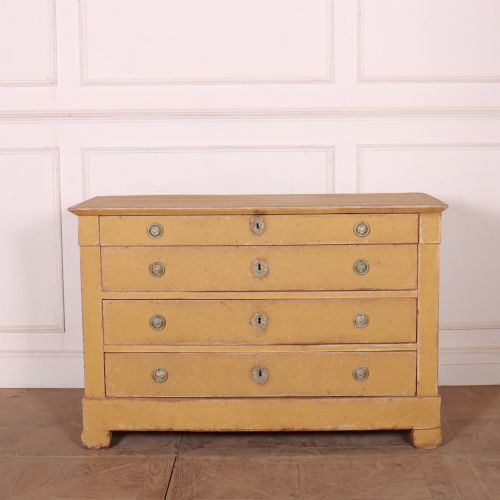
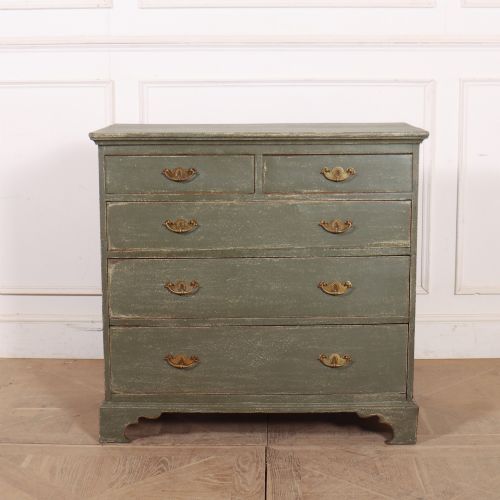
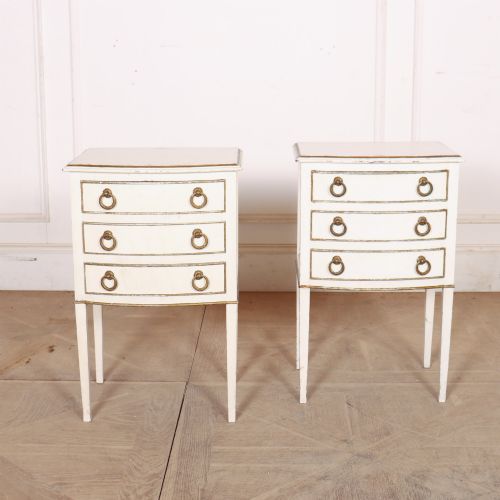

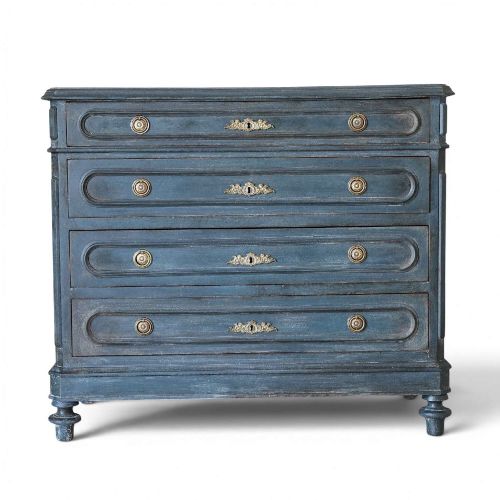
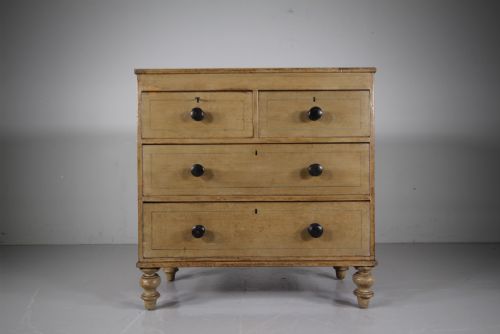
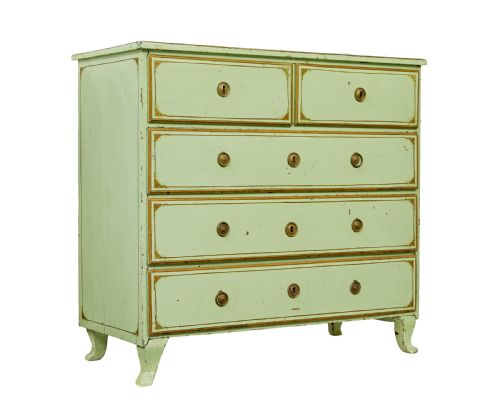
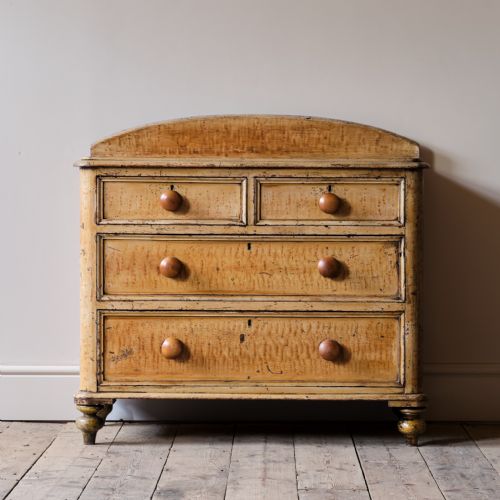
Painted Commode Chest
A painted commode chest provides practical storage whilst bringing decorative surface colour and regional character into a room.
Painted Commode Chest
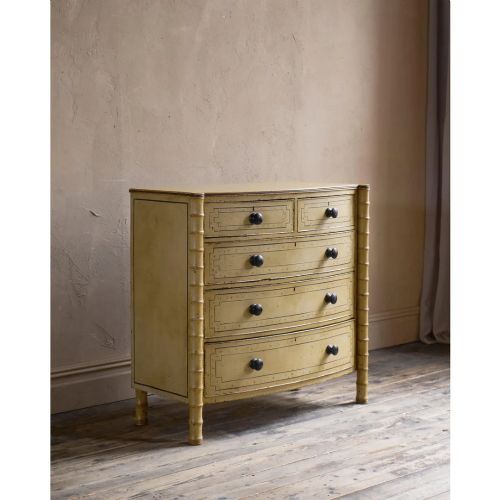
When searching for a painted commode chest, buyers encounter a diverse selection ranging from robust pine country furniture to ornate continental pieces influenced by French and Swedish design. The category spans functional bedroom chests, serpentine fronted commodes, bedside tables, and miniature apprentice pieces built across the eighteenth, nineteenth, and early twentieth centuries.
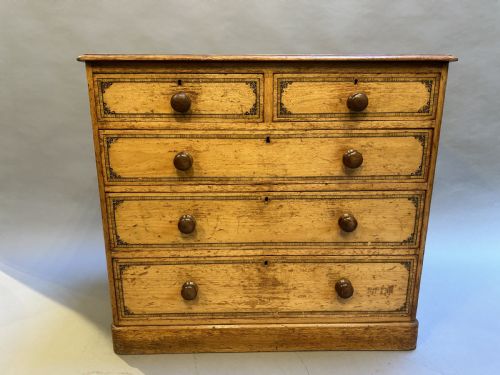
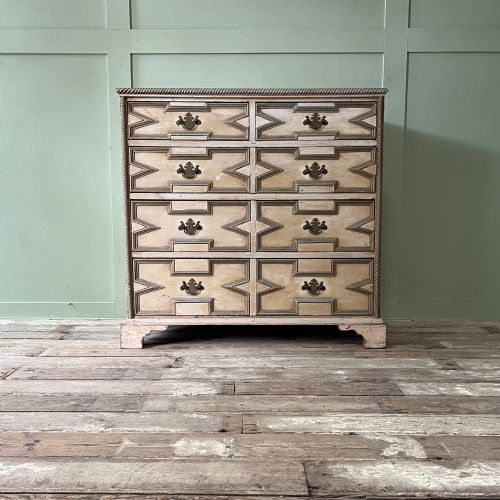
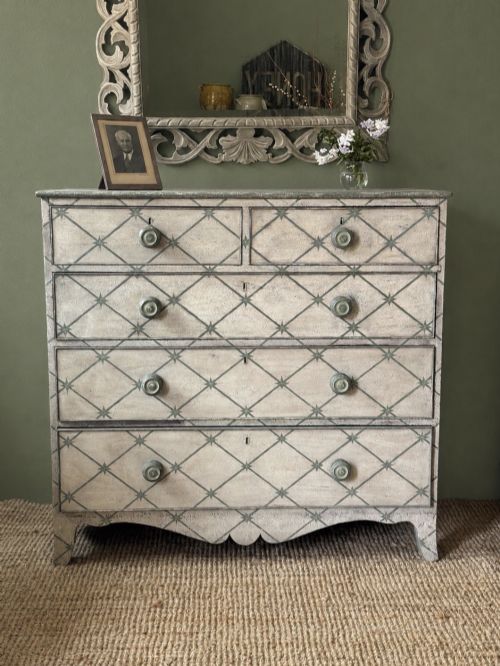
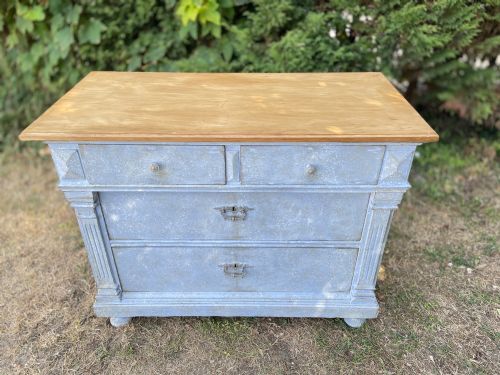
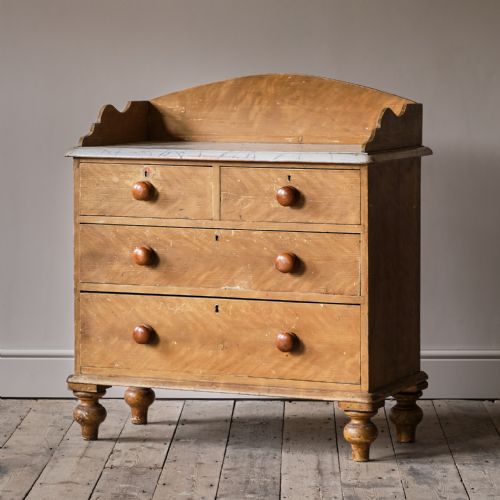
The version most commonly met on this page is the nineteenth century pine chest of drawers, often found in its original painted finish, scumble, or stencilled decoration. Alongside these vernacular English and Hungarian examples appear sophisticated French and Swedish commodes displaying curved serpentine profiles and neoclassical styling.
How they were made
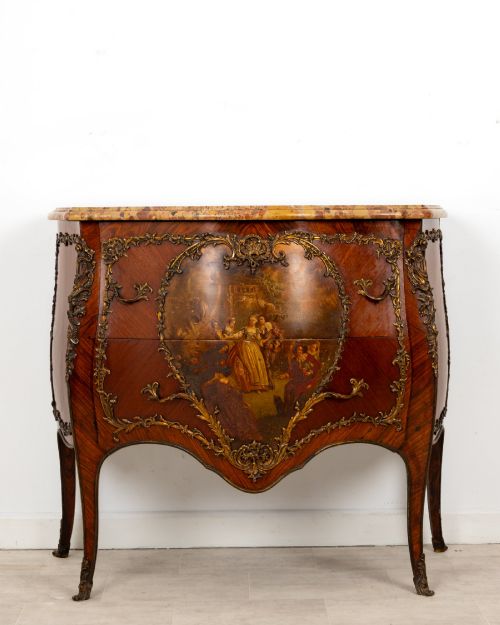
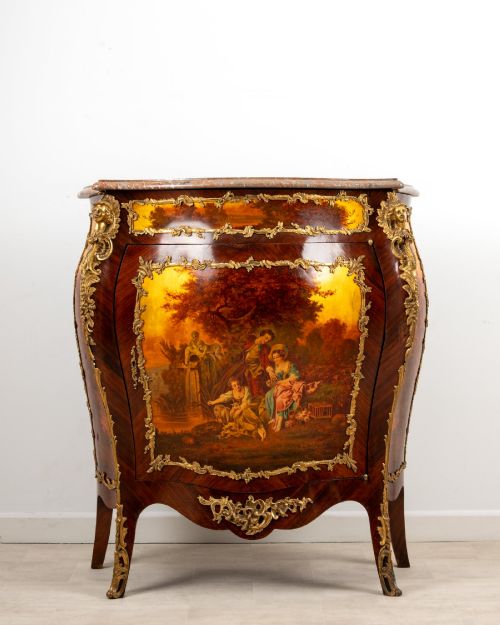
Makers constructed these carcasses primarily from solid timber such as pine, oak, and kingwood, frequently shaping drawer fronts and bodies into serpentine or bombe contours. Surfaces received layers of paint, stencilling, or specialised finishes like Vernis Martin before being sealed.
Many continental and high-status examples incorporated contrasting decorative elements including marble tops, ceramic fittings, and cast metal mounts in brass, ormolu, and gilt-bronze. Joinery techniques relied on traditional drawer construction, sometimes enhanced with carved detailing or applied mouldings.
Listings feature pieces utilising pine, paint, brass, marble, and ceramic across periods from the eighteenth century to the early twentieth century.
What varies in quality
Quality rests significantly on the integrity of the surface decoration and whether the paint layers remain original to the piece or represent later overpainting. Pieces retaining authentic period scumble, stencilling, or hand-painted details carry greater decorative and historical interest.
Structural finesse also separates standard utility furniture from finer workshop output, evident in the handling of curved serpentine drawer fronts, the inclusion of integral marble slabs, and the quality of associated metal mounts or brass hardware.
Sir Clough Williams-Ellis·Edwards and Roberts
The Painted Commode Chest Glossary
- Serpentine
- A shape featuring a double-curved front that undulates outward at the centre and inward at the sides, common in finer commodes.
- Bombé
- A swelling, bulging outward profile characteristic of continental furniture styles, particularly eighteenth and nineteenth century commodes.
- Scumble
- A translucent layer of dark glaze brushed over a lighter base coat to create mottled or textured decorative paint effects on wood.
- Ormolu
- Gilded bronze mounts and decorative hardware applied to cabinetry, frequently found on French revival pieces.
- Vernis Martin
- A type of decorative lacquer finish imitating Asian japanning, developed in France and utilised on elite eighteenth and nineteenth century commodes.
Painted Commode Chest: Frequently Asked Questions
What is a commode chest?
A commode chest is a low cabinet or chest of drawers designed for domestic storage, combining utility with decorative presence.
Historically used in bedrooms and living spaces, these pieces varied from simple country pine to grand reception room furniture.
How do I identify original paint?
Original paint surfaces show natural wear, stable craquelure, and integration with the underlying timber appropriate to the period.
Examining corners, drawer interiors, and hidden surfaces helps reveal whether the decorative finish matches the age of the carcass.
Where were these chests made?
These pieces originated across Britain, France, Sweden, Germany, and Italy, reflecting distinct regional cabinetmaking traditions.
English and Hungarian examples often utilise pine, while French and Swedish pieces frequently display sophisticated serpentine shapes and neoclassical painted motifs.
How do I care for a painted surface?
Maintenance involves keeping pieces away from direct sunlight and maintaining stable room humidity to protect the timber and paint layers.
Cleaning requires only a dry or barely damp soft cloth, avoiding harsh modern chemical polishes that can degrade historic finishes.