

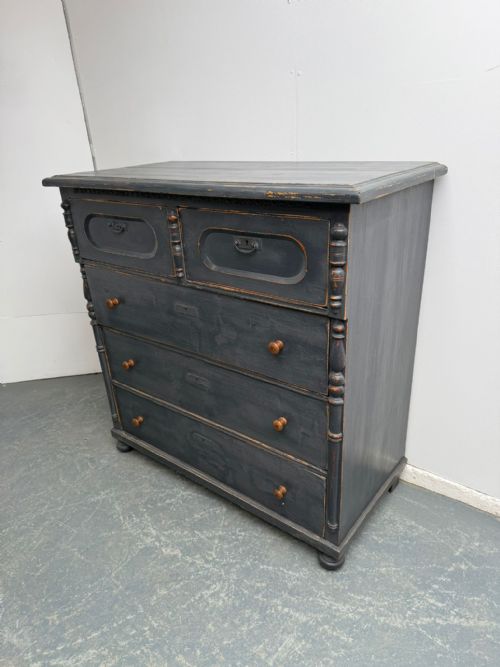
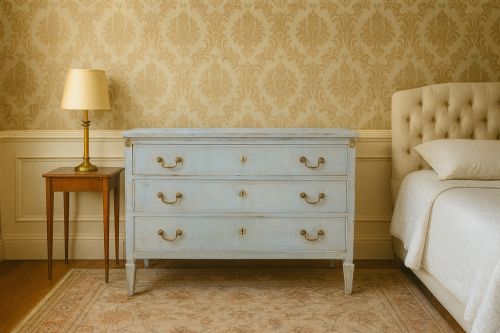

Antique Painted Bureau Chest
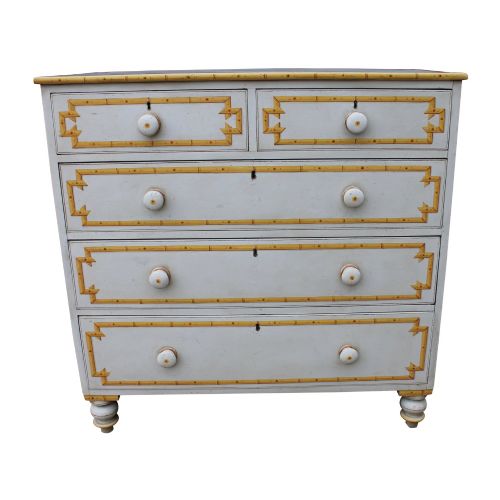
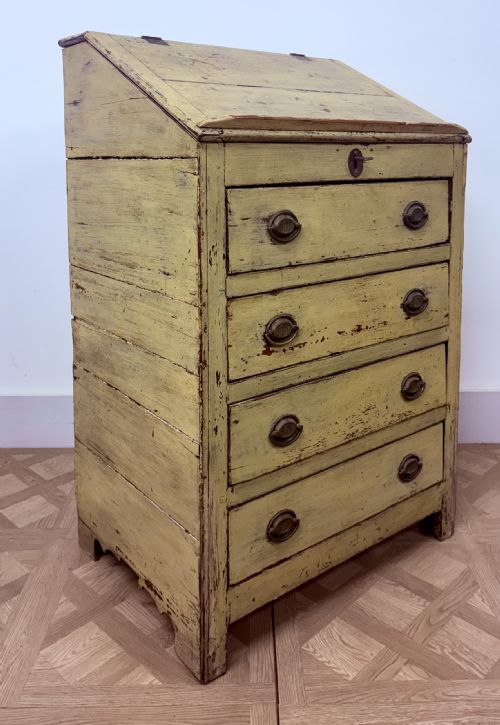
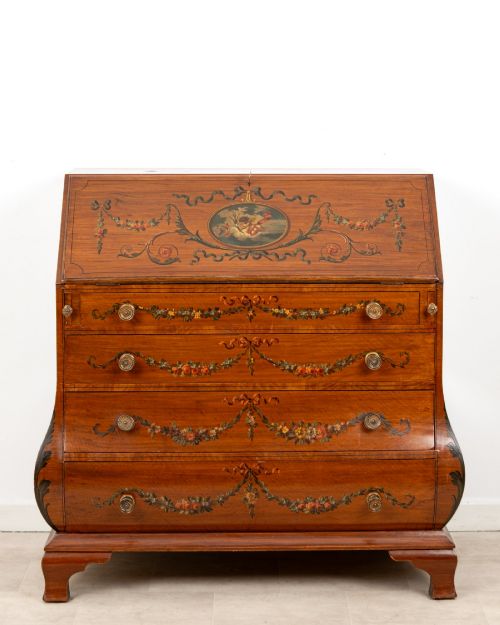
An antique painted bureau chest combines a writing surface with drawer storage, offering domestic utility dressed in period colour and decorative brushwork.
Antique Painted Bureau Chest
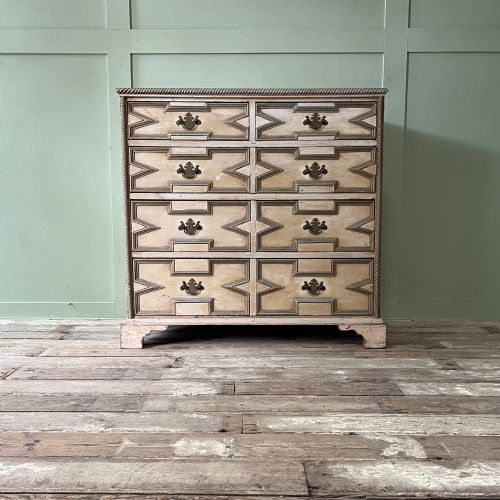
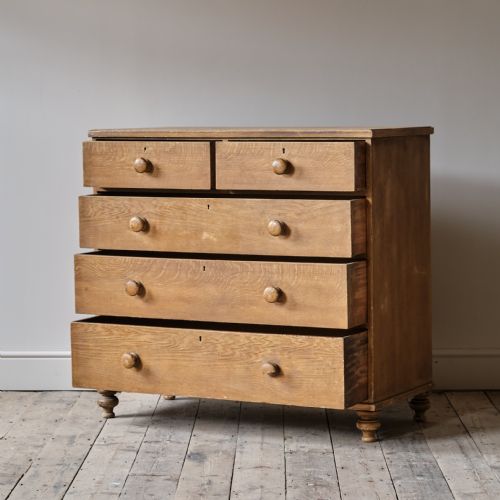
When you search for an antique painted bureau chest, you encounter a crossover of storage forms, from drop-front desks to drawer units fitted with writing slopes. The examples on this page span the eighteenth and nineteenth centuries, taking in Georgian, Victorian, and Edwardian eras alongside continental pieces from Sweden and France.
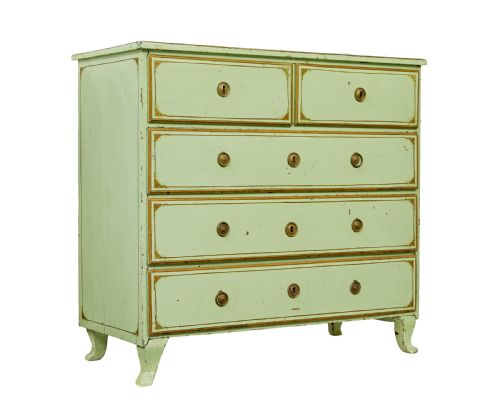
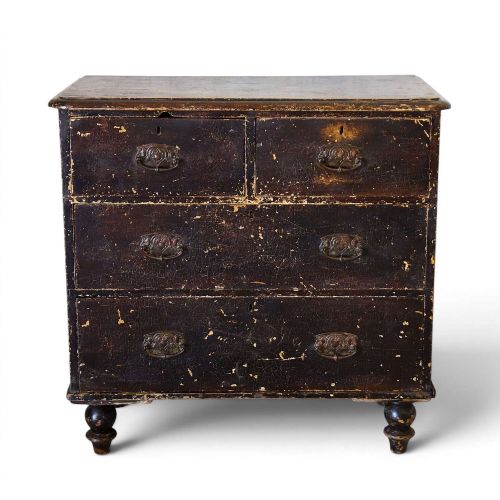
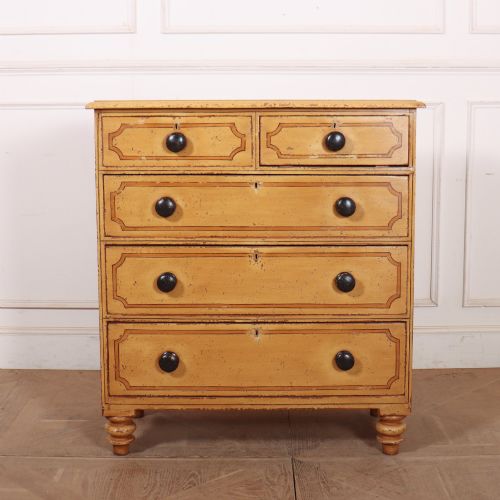
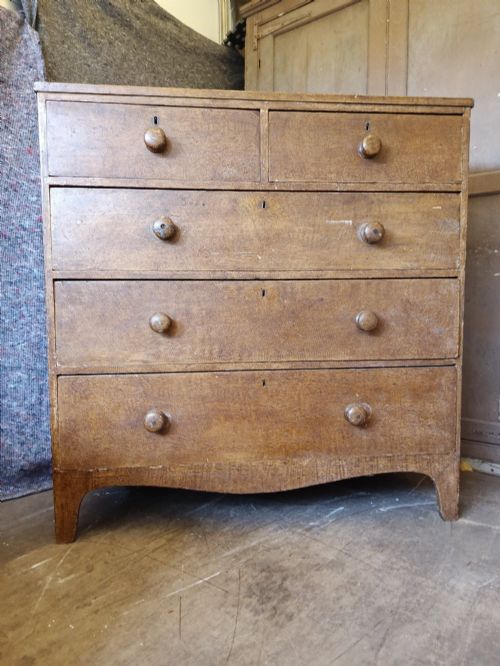
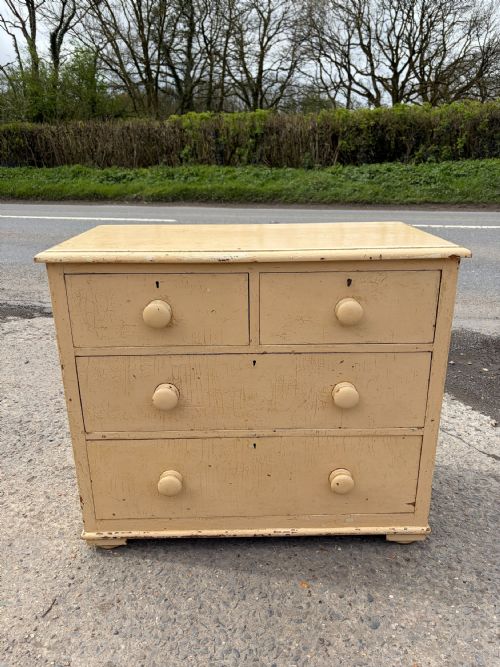
The most common forms you meet are pine chests of drawers finished in original paint, alongside satinwood bureaux and taller secretaire formats. Regional expressions range from English country workshops to Scandinavian Gustavian and Baroque revival commissions.
Makers recorded in these listings include individual visionaries such as Sir Clough Williams-Ellis, whose Edwardian painted work sits alongside provincial English and Swedish pieces. These forms bridge the gap between heavy storage furniture and lighter, decorative writing pieces.
Materials and construction methods
Pine and satinwood provide the primary timber carcases for these pieces, often combined with secondary woods such as birch. Iron and brass hardware - including handles, escutcheons, and hinges - secure the drawers and writing flaps.
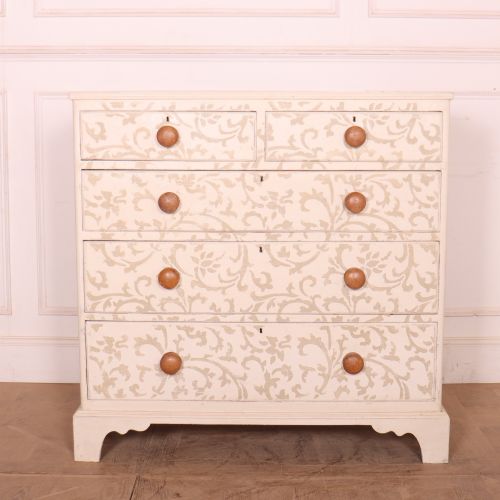
Surface treatments rely heavily on original paint, brown scumble, and stencilled decoration applied over wood. Craftsmen built these items using traditional dovetail joints for drawers and panel construction for carcases, retaining the tool marks of provincial and metropolitan workshops.
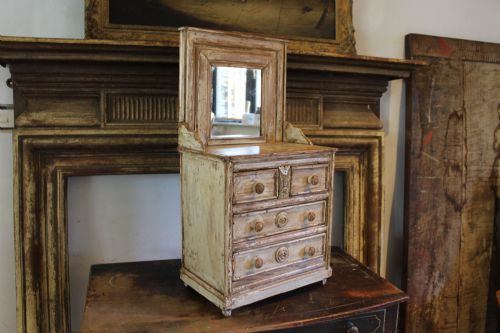
Regional variants include English country pieces, Swedish Gustavian commodes, and French apprentice miniatures.
Assessing quality in painted writing furniture
The integrity of the surface decoration defines the upper tier of these pieces, distinguishing untouched original paint schemes from later overpainting. Finely executed brushwork, whether botanical satinwood motifs or Gustavian neoclassical panels, elevates a piece above standard utilitarian storage.
Constructional refinement also separates standard output from superior examples, visible in the snug fit of fall-front desks, neat internal pigeonholes, and well-balanced proportions. The distinction rests on how harmoniously the decorative painted skin integrates with the underlying cabinetwork.
Sir Clough Williams Ellis
The Antique Painted Bureau Chest Glossary
- Bureau chest
- A dual-purpose form combining a chest of drawers with an integrated writing compartment, often featuring a fall-front flap or sliding slope.
- Scumble
- A translucent or semi-opaque layer of pigmented paint dragged over a lighter base colour to simulate wood grain or create textured depth.
- Gustavian
- The Swedish neoclassical style spanning the late eighteenth and early nineteenth centuries, characterised by restrained carving, pale paint, and classical symmetry.
- Secretaire tallboy
- A tall, multi-drawer chest incorporating a dedicated writing drawer with a drop-front mechanism concealing internal pigeonholes and small drawers.
- Satinwood
- A hard, yellow-toned timber prized for its lustrous grain, frequently utilised in fine Edwardian and Georgian desks for decorative veneer and solid construction.
Antique Painted Bureau Chest: Frequently Asked Questions
What is an antique painted bureau chest?
It is a piece of storage furniture that incorporates a writing surface, finished with decorative paintwork from periods such as the Georgian, Victorian, or Edwardian eras.
These items range from compact pine writing desks to larger chests with fall-front compartments.
Are these pieces in original paint?
Many listings preserve their original paint surfaces, scumble glazes, or stencilled decoration applied decades or centuries ago.
Examining the paint layers under natural light reveals wear patterns and patination consistent with age.
How were bureau chests used originally?
They served as domestic workstations for correspondence and household administration while housing clothing or documents in the drawers below.
The drop-front or internal slope provided a stable writing surface that could be closed to conceal papers.