
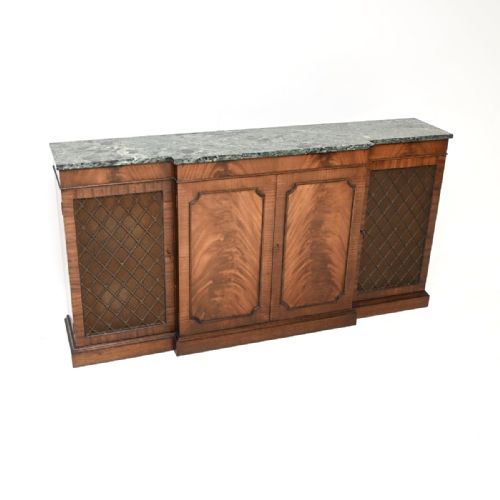
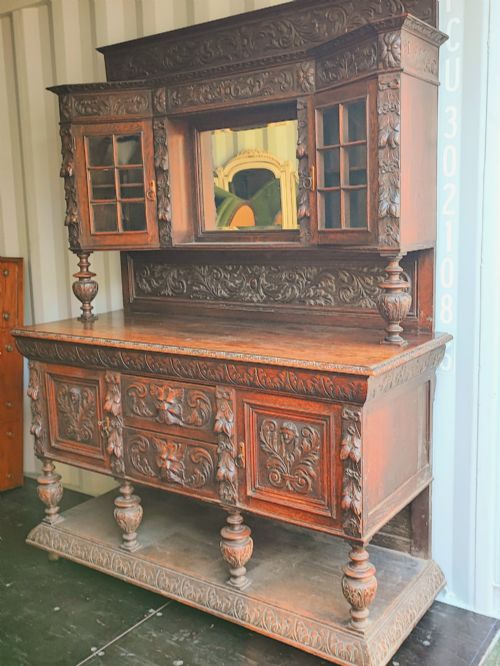


Green Wooden Sideboard
These green wooden sideboard pieces bring painted surface and storage together, offering useful utility for everyday rooms.
Green Wooden Sideboard
A green wooden sideboard bridges storage and surface utility across domestic spaces, drawing from forms such as dresser bases, serving tables, and cupboards. Buyers searching for a green wooden sideboard encounter pieces spanning the 18th century, 19th century, and Victorian periods.
The selection on this page leans heavily toward English and French country house traditions, alongside rustic farmhouse and provincial styles. Pieces range from painted kitchen cupboards to potboard serving tables and shop counters.
Construction relies primarily on pine and oak, often finished with original or hand-applied paintwork. Brass and iron hardware frequently complement the timber frames.
Materials and construction methods
Makers utilised solid timbers like pine and oak for the main carcase, panelling, and shelves of these storage items. Surfaces were frequently treated with paint finishes, ranging from early layered schemes to simpler painted applications.
Metal elements such as brass and iron appear in handles, hinges, and decorative mounts. Structural joinery relies on traditional methods suited to heavy utility furniture.
Listings span the 18th century to the Victorian era, utilising pine, oak, and painted surfaces across country house styles.
Distinctions in quality and finish
Quality rests upon the integrity of the timber frame and the survival of original painted surfaces. Pieces showing authentic wear through decades of use retain greater character than later, unsympathetic treatments.
Proportion and scale distinguish finer country house examples from more utilitarian workshop output. Detail in panel work and the integration of hardware indicate the maker's hand.
The Green Wooden Sideboard Glossary
- Dresser base
- A low storage unit with drawers or cupboards beneath a flat top. These pieces originated in kitchens for food preparation and storage.
- Potboard
- An open slatted lower shelf fitted beneath a serving table or dresser base. It was traditionally used to store pots and heavy kitchenware.
- Chiffonier
- A compact sideboard or cabinet featuring shelves or a low gallery back. This form gained popularity during the Regency period.
- Shop counter
- A heavy commercial table or cabinet utilised in retail spaces for serving customers. They often feature sturdy timber construction and ample under-counter storage.
- Panelling
- Fitted wooden boards joined within a frame to form doors or sides. This technique adds structural stability and decorative depth.
Green Wooden Sideboard: Frequently Asked Questions
How are these sideboards used today?
These pieces serve as practical storage units in dining rooms, hallways, and kitchens. Their flat tops provide display space while cupboards and drawers house tableware or linens.
They also function well in living areas as media stands or general storage consoles, bringing traditional character to modern interiors.
Are the paint finishes original?
Many items feature historic paint layers applied during the 18th or 19th centuries. Evaluating the surface requires looking at wear patterns and the interaction between the paint and underlying timber.
Some pieces have received later decorative treatments while retaining their historic wooden structure.
What is a potboard shelf?
A potboard is a lower open shelf fixed between the legs of a serving table or dresser base. It provides sturdy horizontal storage close to the floor.
In period kitchens, this platform held heavy ceramic pots and metal vessels out of the way of work surfaces.
How do I date an 19th century piece?
Dating relies on observing construction methods, timber selection, and hardware styles. Hand-cut joints and original fixings offer clear chronological clues.
Secondary woods used in drawer construction and the style of the painted finish also help narrow the period.