


Green Victorian Water Pitcher
These green victorian water pitcher examples combine nineteenth-century utility with rich colour, offering a striking display piece for any room.
Green Victorian Water Pitcher
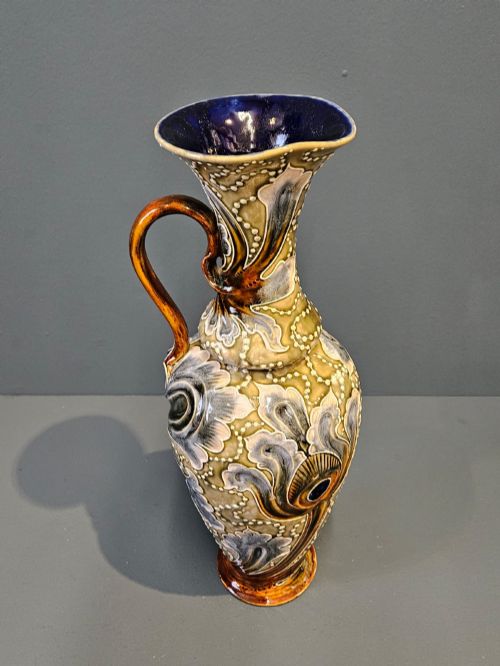
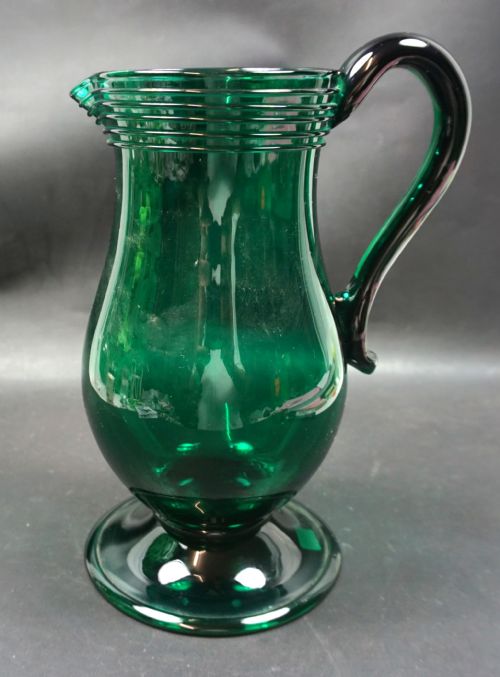
A green victorian water pitcher serves as both a practical vessel and a decorative highlight, drawing on forms from the Victorian and Edwardian eras. Buyers searching for a green victorian water pitcher will encounter items ranging from large earthenware ewers to glass jugs intended for wash sets or display.
The pieces on this page span the nineteenth and early twentieth centuries, including works from the eighteen-sixties through to nineteen-ten. Forms include decorative ewers, jugs with folded feet, and complete jug and bowl sets.
Makers and potteries represented in these listings include Doulton Lambeth, George Jones, Ridgway, and Royal Worcester. Tonalities range from deep green glass to light sage earthenware and majolica.
How they were made
Pottery items utilise earthenware, stoneware, and parian bodies, often finished with coloured glaze or majolica techniques. Stoneware pieces benefit from durable salt-glaze finishes that provide both texture and waterproofing.
Glass alternatives rely on free-blown or moulded green glass, occasionally enhanced with enamel painting, gold leaf detailing, and applied trail rims. Mary Gregory style items feature characteristic white enamel painting depicting figures or foliage against the green glass.
Listings span the Victorian and Edwardian periods, utilising materials from salt-glaze ceramic and majolica to enamel-painted green glass.
What varies in quality
Quality rests upon the crispness of moulding and the depth of the glaze or enamel work. Finer ceramic pieces display sharp relief work, such as bullrush and lily motifs, while superior glass shows careful hand-finishing on folded feet and trail rims.
The reputation of the pottery or maker also shapes the distinction between standard utilitarian wares and high-end decorative commissions. Works originating from established factories like Doulton Lambeth or George Jones demonstrate superior control over the firing and glazing processes.
Doulton Lambeth·George Jones·Ridgway·Royal Worcester
The Green Victorian Water Pitcher Glossary
- Ewer
- A large jug with a wide spout and a looped handle, traditionally used for holding water alongside a matching basin.
- Majolica
- A type of earthenware glazed with opaque tin enamel and brightly coloured lead glazes, popular during the Victorian period for botanical designs.
- Parian
- A fine white ceramic developed to resemble marble, which can also be tinted in delicate shades like light sage green.
- Salt-Glaze
- A ceramic finish achieved by throwing common salt into the kiln during high-temperature firing, creating a distinctive pitted texture.
- Trail Rim
- A decorative glass feature created by applying a thin molten thread of glass around the lip of a jug.
Green Victorian Water Pitcher: Frequently Asked Questions
What were green victorian water pitchers used for?
These vessels served practical purposes in bedchambers and dining rooms, holding water for washing or serving at the table. Many formed part of larger wash sets paired with matching basins.
Over time, their decorative qualities took precedence, leading to display on sideboards and mantelpieces rather than daily use in bedrooms.
How do I date a green victorian water pitcher?
Dating relies on stylistic clues, factory marks stamped or moulded on the base, and the specific material used. Victorian pieces often feature heavy ornamentation or rich majolica glazes, while Edwardian examples tend towards lighter tones.
Comparing the manufacturing technique and decorative motifs with recorded pieces from makers like Doulton Lambeth or George Jones narrows down the decade of production.
Are these pitchers safe to hold water?
While ceramic and glass pitchers were originally designed to hold liquids, antique pieces are best treated as decorative items. Hairline fractures or historical repairs can compromise their integrity under the weight of water.
Displaying them empty preserves the material and avoids any potential damage to the glaze, enamel, or gilding.
How should I clean my antique pitcher?
Dusting with a dry, soft cloth is the safest method for maintaining glazed ceramics and decorated glass. Avoid harsh chemical cleaners or immersion in water, which can damage enamel painted details and gold leaf.
If moisture is necessary, use a damp cloth followed immediately by thorough drying with a lint-free towel.