



Victorian Mary Gregory Glassware
Victorian Mary Gregory glassware brings together rich coloured glass and painted enamel children in pastoral scenes that catch the eye.
Victorian Mary Gregory Glassware
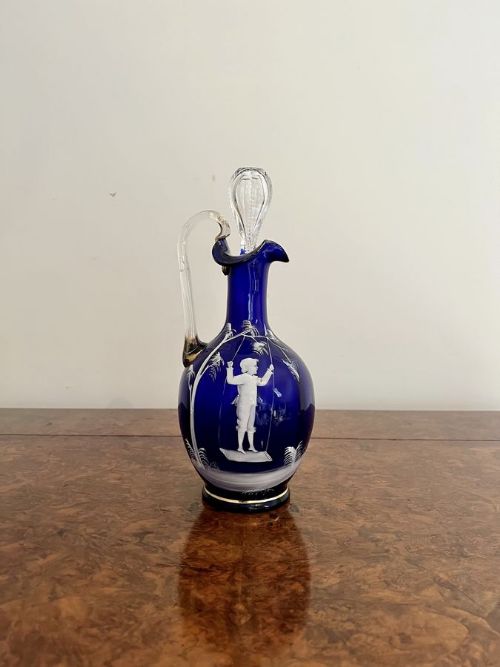
Victorian Mary Gregory glassware comprises decorative items such as vases, ewers, decanters, jars and covers, and dressing table sets made during the nineteenth century. These pieces combine vibrant coloured glass backgrounds with contrasting enamel decoration.
The most common examples on this page are vases and ewers, alongside dressing table sets and decanters. The pieces typically date from the mid to late nineteenth century, spanning decades from eighteen sixty through to nineteen hundred.
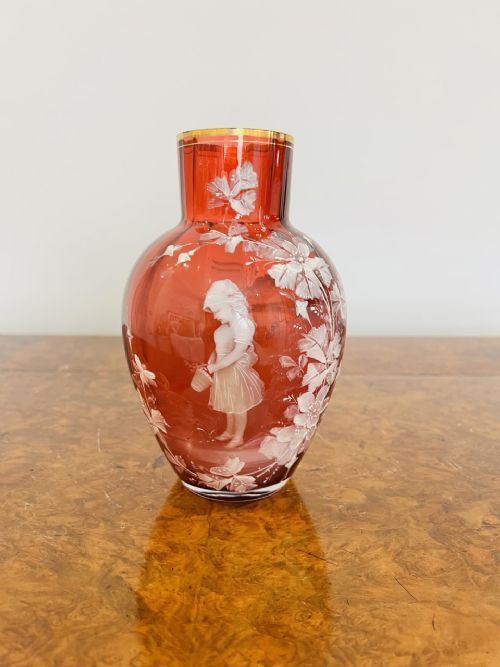
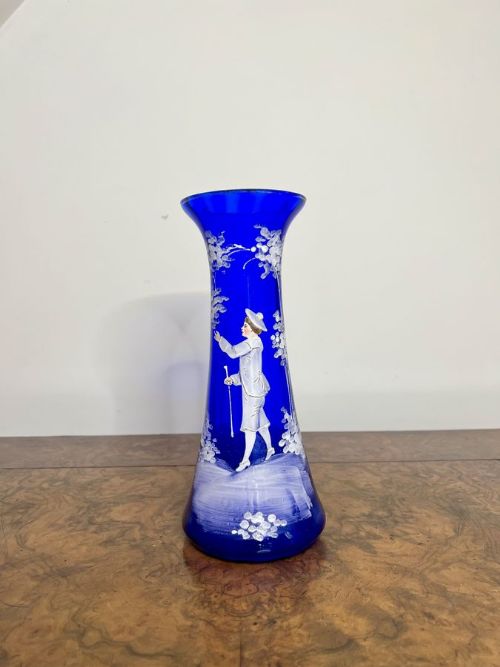
Buyers encounter distinct glass colours including cranberry, blue, green, and black glass. Each object carries the characteristic hand-painted white enamel motif associated with the style.
Materials and manufacture
The foundation of these items is coloured glass, shaped into vessels such as vases, ewers, and decanters using traditional glassblowing and forming techniques. Artisans utilised specific hues like cranberry glass, emerald green glass, and blue glass.
Decoration relies upon white enamel paint applied by hand to depict figures and foliage against the dark or vibrant glass body. Some examples incorporate additional detailing in gold leaf to highlight the rims and decorative borders.
The documented dates span from eighteen sixty to nineteen hundred within the Victorian period.
Assessing quality and craftsmanship
Quality in these pieces rests upon the crispness and detail of the white enamel painting applied to the glass surface. Finer examples display carefully rendered figures with clean outlines, while lesser pieces show hurried brushwork.
The depth and consistency of the coloured glass ground, whether cranberry, blue, or green, also separates standard items from finer productions. Additional applications of gold leaf add another layer of distinction to the best examples.
The Victorian Mary Gregory Glassware Glossary
- Enamel paint
- An opaque paint fused to the glass surface through firing. This medium forms the white silhouettes of children and foliage characteristic of the glassware.
- Cranberry glass
- A rich pinkish-red glass created by adding gold chloride to the molten batch. It serves as a popular background colour for these decorated pieces.
- Ewer
- A large jug with a wide spout and handled body used historically for holding water. In this glassware, ewers function as decorative display items.
- Gold leaf
- Beat gold applied in thin sheets to accentuate details on the glass. It frequently frames the painted enamel scenes or rims the edges of vessels.
Victorian Mary Gregory Glassware: Frequently Asked Questions
What colours do these pieces come in?
The glassware appears in several distinct shades including cranberry, blue, green, and black glass. Each colour provides a strong background for the white enamel painting.
Cranberry and blue are particularly common among surviving vases and ewers from the period.
How are the enamel figures applied?
The figures are hand-painted using white enamel directly onto the surface of the coloured glass vessel. Artisans often added delicate details to define the clothing and hair of the children.
Gold leaf accents sometimes accompany the white enamel decoration on higher quality items.
What types of items were made?
Makers produced a variety of decorative and functional forms including vases, ewers, decanters, and jars with covers. Dressing table sets also appear among surviving nineteenth-century examples.
Vases remain the most frequent form encountered by collectors today.
How do I date these items?
Pieces generally date from the Victorian era, spanning the mid to late nineteenth century up to nineteen hundred. Specific years assigned to items range from eighteen sixty through to nineteen hundred.
Examining the style of the glass form and the crispness of the enamel painting helps establish the period of manufacture.