
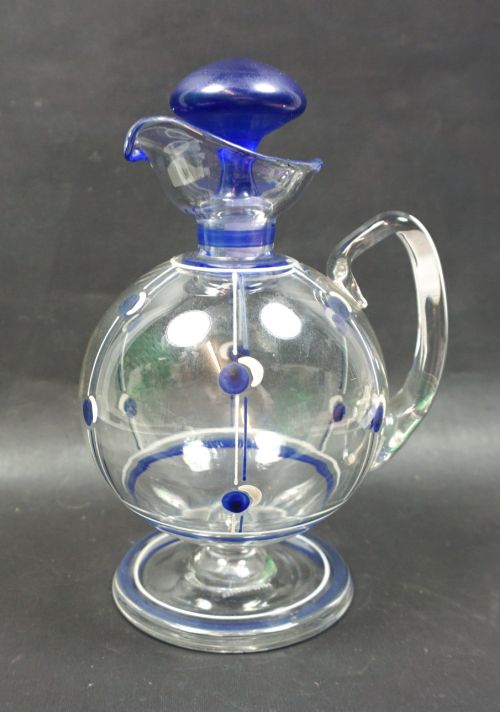


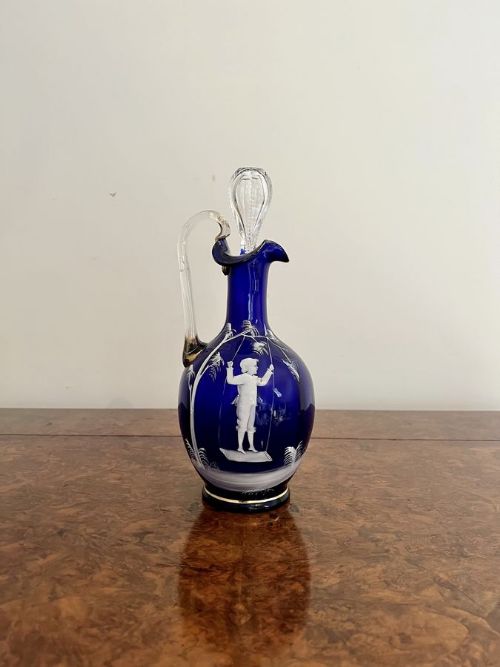


Antique Enamelled Glass Jug
These antique enamelled glass jugs bring brilliant colour and hand-painted detail to any table, offering centuries of decorative glasswork for daily use or display.
Antique Enamelled Glass Jug
An antique enamelled glass jug combines traditional vessel forms with colourful surface decoration, appearing across styles from Georgian Bristol blue creamers to Victorian wine jugs and Art Deco Czech glassware. Buyers searching for an antique enamelled glass jug will encounter various functional forms including pitchers, ewers, decanters, and water jugs.
The selection ranges widely across decades and aesthetic movements, taking in Victorian pieces featuring green or cranberry glass alongside Art Deco crystal vessels from Czechoslovakia. Production spans the Georgian era through to the early twentieth century, incorporating distinct periods such as Victorian, Art Nouveau, and 1930s modernist design.
Vessels take several distinct forms depending on their original purpose, from small cream jugs to large water ewers and decanters complete with original stoppers. Most examples rely on hand-painted enamel decoration, sometimes augmented with gold leaf or detailed figural scenes.
How they were made
Makers utilised clear glass, crystal, and coloured bases such as emerald, cranberry, and Bristol blue glass to form the body of each vessel. Artisans shaped these materials using traditional glassblowing and moulding techniques before applying surface ornamentation.
Decoration relied on the application of enamel paints, often fixed by firing, alongside the selective use of gold leaf for detailing and borders. Some sophisticated pieces incorporated cameo glass techniques or detailed figurative painting, such as the white enamel silhouettes associated with Mary Gregory designs.
Materials recorded across the inventory include cranberry glass, crystal, cameo glass, gold leaf, and enamel.
What varies in quality
The refinement of the hand-painted enamelwork distinguishes standard production from finer work, particularly where intricate flora, landscapes, or figural subjects are concerned. Precision in brushwork and the skillful integration of gold leaf indicate the hand of a more accomplished artisan.
The choice of base material also defines the tier of a piece, with heavy crystal, deep-toned cranberry, and rich emerald glass commanding attention alongside clear glass decorated with precise blue enamel. Completeness adds further distinction, especially when original components such as matching stoppers survive intact with the jug.
Daum
The Antique Enamelled Glass Jug Glossary
- Enamel
- Opaque or translucent glass-based paint applied to the surface of a glass vessel and fired to fuse with the body. This technique allows for vibrant, lasting multi-coloured designs.
- Ewer
- A large jug with a wide spout and a looped handle, traditionally used for holding water or wine at the table. Many Victorian examples served decorative as well as functional purposes.
- Cameo glass
- A luxury glass technique involving at least two layers of contrasting coloured glass, carved or acid-etched to create a raised design. It requires immense skill from the glassblower and carver.
- Bristol blue
- A deep cobalt blue glass historically produced in the West of England, particularly popular during the Georgian period for tableware and serving pieces. It provides a striking contrast to white enamel decoration.
Antique Enamelled Glass Jug: Frequently Asked Questions
What is an antique enamelled glass jug?
These vessels are decorative and functional pitchers, ewers, or decanters made from glass and embellished with painted enamel designs. They encompass various periods from Georgian tablewares to twentieth-century glassware.
Craftsmen applied coloured enamel to clear or tinted glass bodies, creating lasting pictorial or abstract motifs.
How do I date an antique glass jug?
Dating relies on stylistic clues, manufacturing techniques, and the characteristic colours associated with specific periods like the Georgian era, Victorian times, or Art Deco design.
Form and decorative motifs, such as landscapes or specific figural painting styles, further help place a piece within its historical decade.
Were these jugs used for serving wine?
Many examples served practical roles at the table, functioning as wine jugs, water pitchers, or creamers depending on their size and capacity.
Larger ewers and decanters held beverages for guests, while smaller pieces accommodated cream or water for individual table settings.
What colours are common in these jugs?
Colours vary significantly across eras, ranging from the deep Bristol blue of the Georgian period to vibrant Victorian cranberry and emerald green glass.
Art Deco examples often utilise clear crystal or specialised glass bodies paired with contrasting blue or multi-coloured enamel decoration.