



Green Porcelain Urns
Green porcelain urns bring striking ceramic colour and classical form to a room, spanning English factories, continental works and Asian kilns.
Green Porcelain Urns
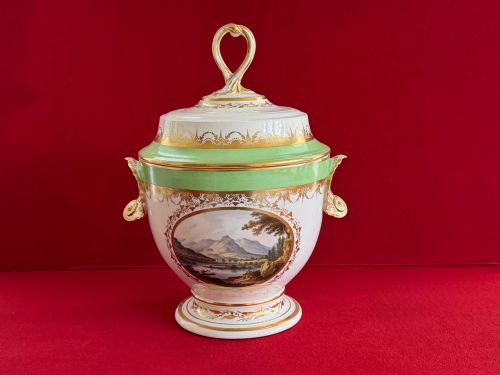
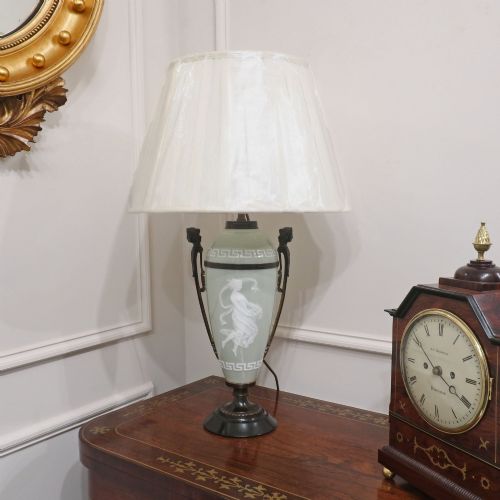
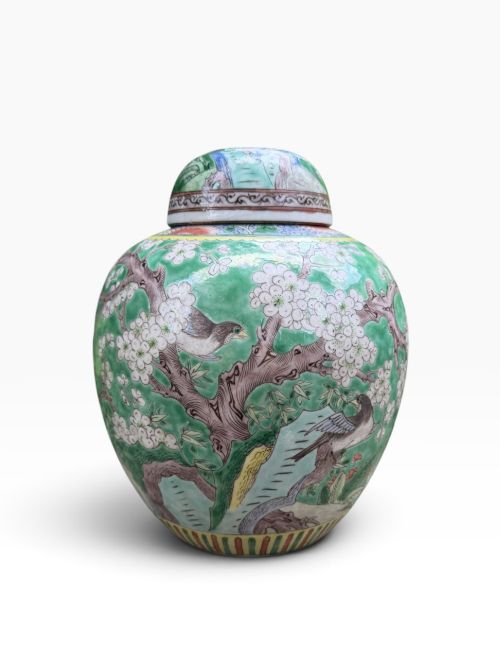
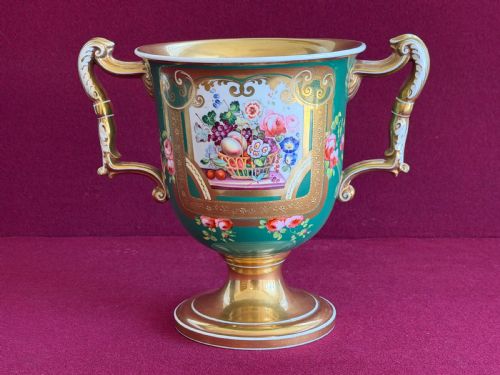
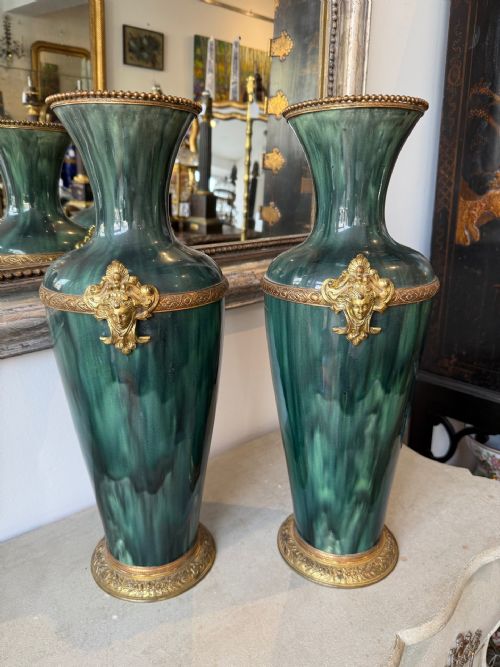
When you search for green porcelain urns, you encounter a diverse range of decorative ceramic vessels spanning multiple centuries and origins. The selection on this page includes English country house pieces, French neoclassical lamps, Chinese export ginger jars, and Japanese Satsuma works.
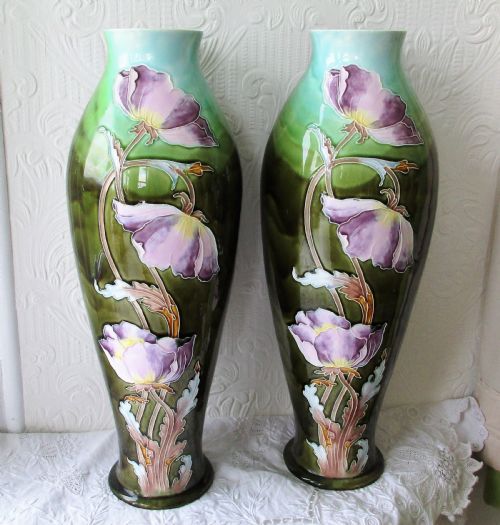
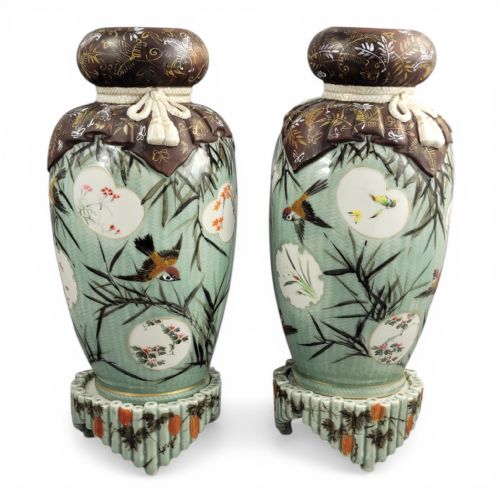
The most frequent examples on this page date from the nineteenth century, encompassing Victorian interpretations, Regency creations, and Qing dynasty porcelain. Forms extend from lidded urns and ginger jars to converted table lamps and monumental pairs resting on original porcelain stands.
Makers and regional styles represented here cross European and Asian traditions, utilising glazes from mottled green to celadon. Buyers encounter both hand-painted topographical scenes and restrained monochrome surfaces shaped by diverse cultural aesthetics.
Materials and production methods
Potters shaped these vessels using ceramic clay bodies finished with specialised glazes, enamel pigments, and metallic highlights. Gold leaf and gilding frequently accent the green surfaces, defining rims, handles, and painted cartouches.
Techniques range from wheel-throwing and mould-pressing to intricate hand-painting executed by named artists and factory workshops. Firing methods produced varied glaze effects, from deep celadon depths to vibrant enamel palettes and mottled colour variations.
Listings feature 19th Century, Regency, and Victorian periods alongside materials including porcelain, enamel, gold leaf, and glaze.
Evaluating craftsmanship and condition
Quality in these pieces rests upon the crispness of the porcelain moulding, the refinement of the glaze application, and the skill of the hand-painting. Superior examples display balanced proportions, clean firing surfaces, and securely adhered gilding or enamel work.
The distinction between standard production and top-tier execution appears in the detail of artist signatures, original matching stands, and the preservation of delicate decorative elements like handles and covers over time.
George Robertson·H and R Daniel·Makuzu Kozan·Kato Sanhei·Samuel Alcock and Co·Royal Vienna·Royal Winton·Flight Barr and Barr·Royal Dux Bohemia·Alexandra Porcelain Works·Royal Worcester·Mason Ironstone
The Green Porcelain Urns Glossary
- Celadon
- A transparent green glaze applied to porcelain, originating in East Asia and mimicking jade. It develops subtle crackle patterns and varying tonal depths during firing.
- Famille Verte
- A Chinese porcelain palette dominated by green enamel colours, introduced during the Qing dynasty. It often incorporates iron red, yellow, and blue alongside the dominant green washes.
- Pate Sur Pate
- A French ceramic technique where raised white porcelain relief designs are built up layer by layer on a contrasting coloured ground. This creates a cameo-like effect on the finished vessel.
- Ginger Jar
- A broad-shouldered ceramic storage vessel with a fitted cover, originally designed for spices and preserved ginger. Later periods adapted these forms purely for decorative display.
- Pot Pourri
- A lidded jar or vase pierced with small holes to release the scent of dried flowers and spices held within. These items combine functional ventilation with ornamental ceramic design.
Green Porcelain Urns: Frequently Asked Questions
Are these urns waterproof?
Many antique porcelain urns and vases were created purely for ornamental display rather than holding water and fresh flowers. Glaze interiors can sometimes have hairline fractures from age that make them unsuitable for liquids.
Utilise internal glass liners if you wish to use them for floral arrangements without risking moisture damage to the antique ceramic body.
How do I date a porcelain urn?
Dating relies on examining base marks, factory stamps, stylistic cues, and the specific characteristics of the glaze and enamel colours. Regency and Victorian pieces often show distinct moulding styles compared to earlier Qing dynasty ceramics.
Compare the base markings and artist signatures against known factory production periods to narrow down the decade of manufacture.
What is the difference between an urn and a ginger jar?
Urns typically feature pedestal bases, handles, and classical forms derived from stone funeral or decorative vessels. Ginger jars have rounded, ovoid bodies with flat bases and short necks designed for fitted dome covers.
Both serve similar decorative purposes today, but their historical origins and silhouette proportions remain distinct.