
Antique Mantle Vases
Antique mantle vases bring colour, height and symmetry to a chimney piece, offering ornamental porcelain, glass and bronze designed to catch the firelight.
Antique Mantle Vases
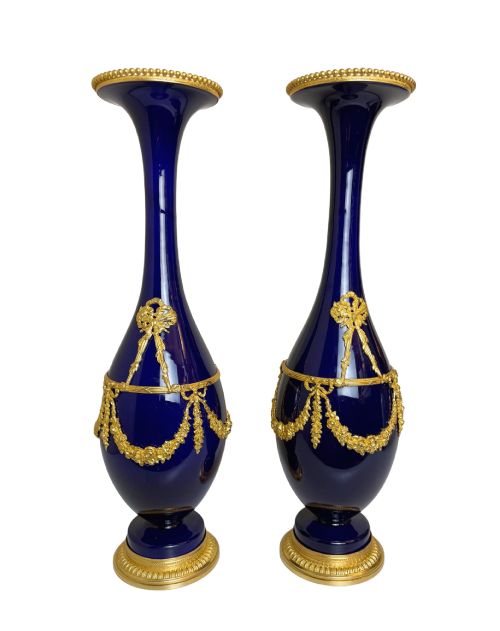
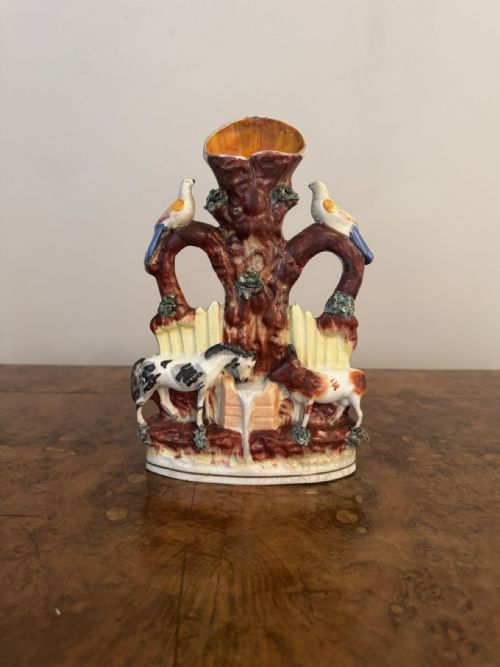
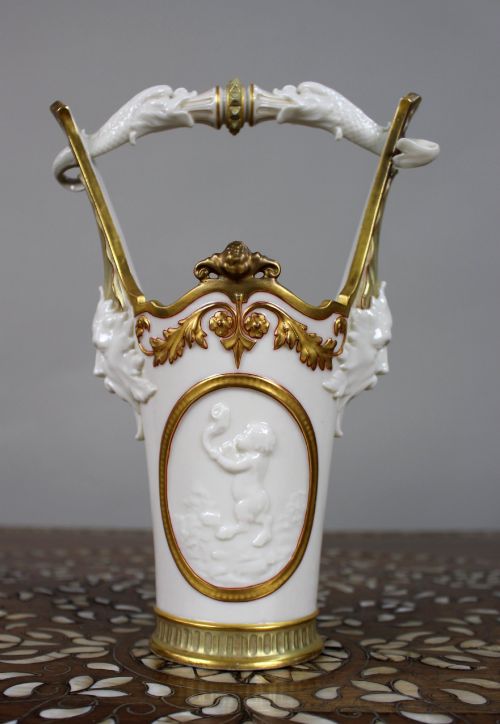
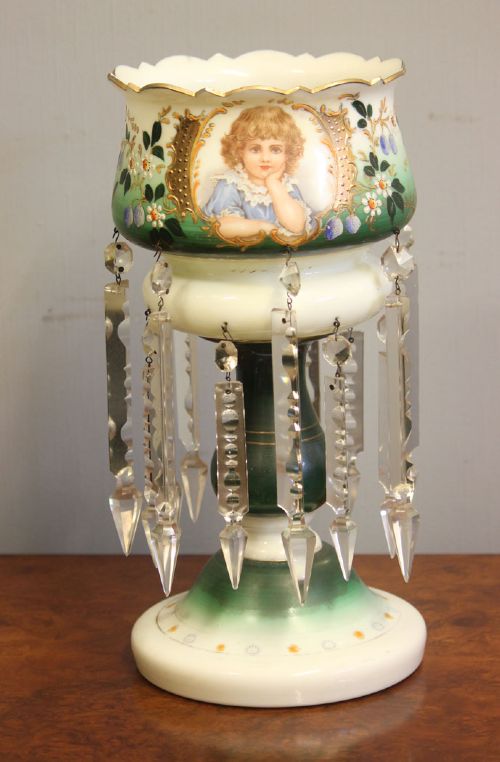
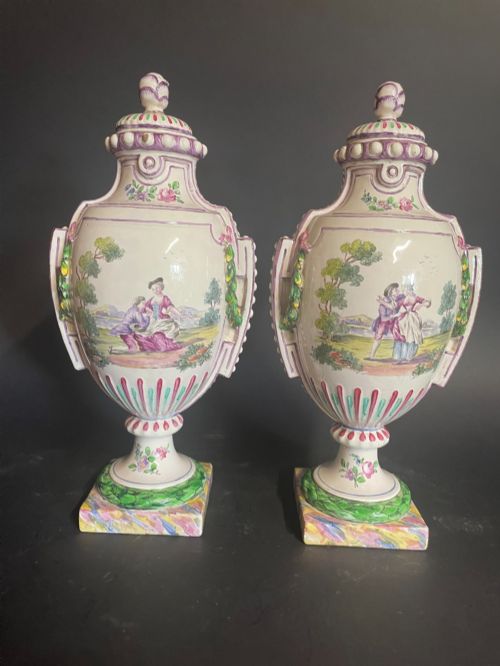
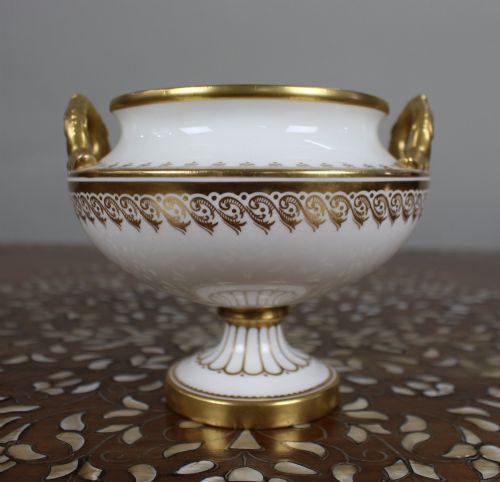
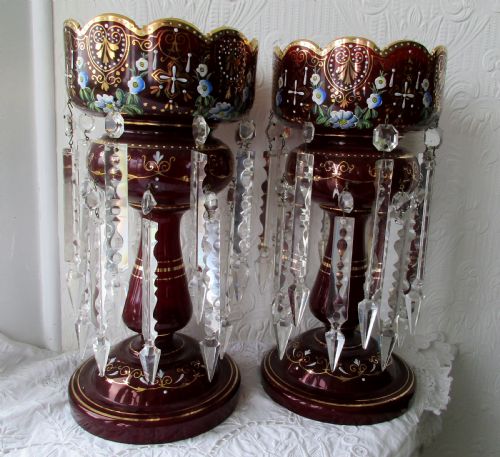
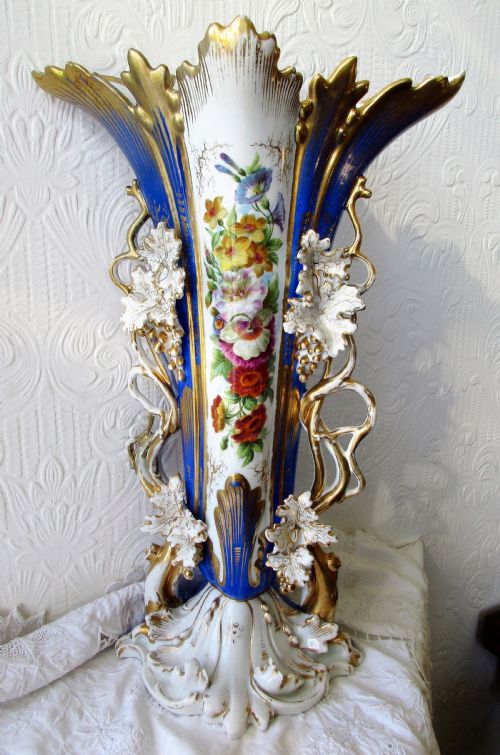
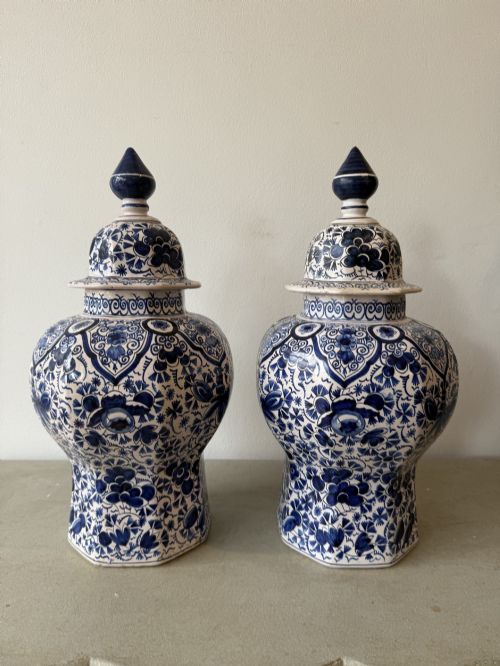
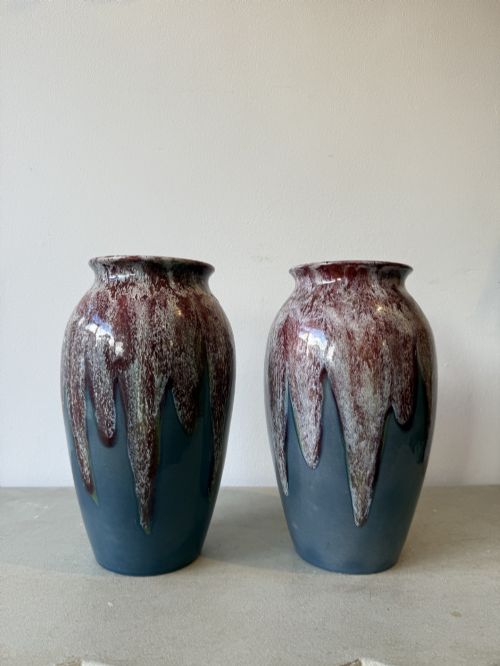
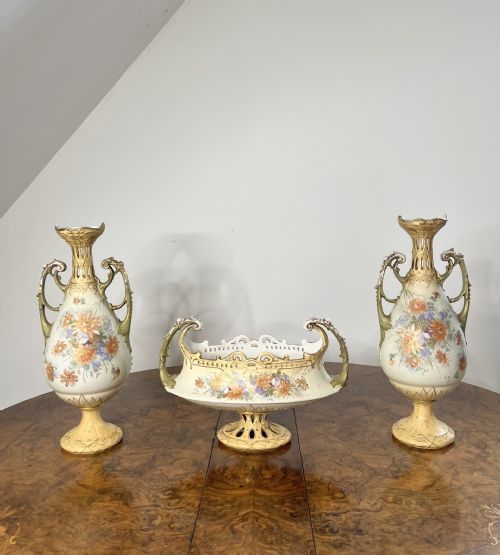
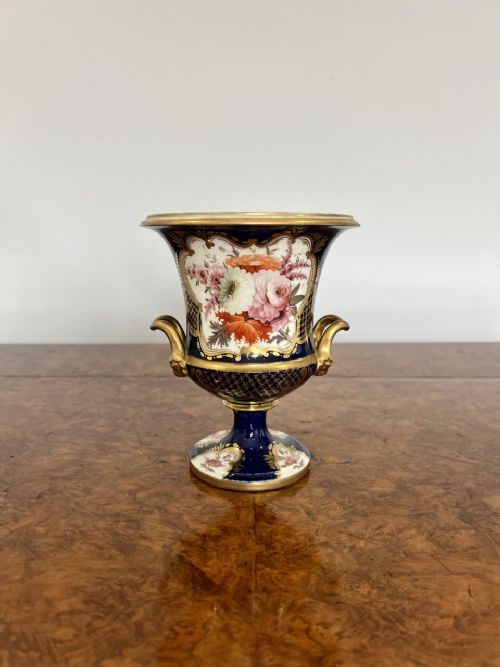
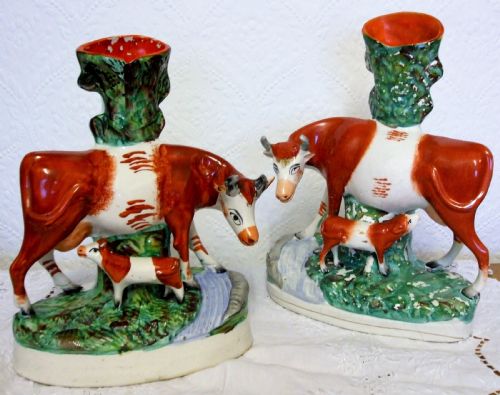
Antique mantle vases encompass ornamental vessels created to sit upon a fireplace mantelpiece, frequently appearing in matched pairs or larger garniture sets alongside clocks. The selection spans the nineteenth century, taking the form of porcelain urns, glass lustres fitted with hanging crystal prisms, earthenware spill vases and hand-painted continental porcelain.
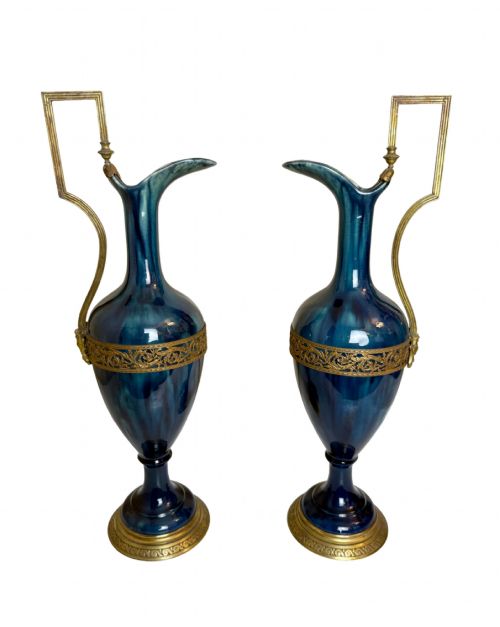
Buyers encounter distinct regional styles, from English Victorian ruby glass and Staffordshire pottery to French porcelain with ormolu trim and Japanese Imari wares. These pieces functioned primarily as decorative accents rather than flower holders, designed to balance the proportions of a formal hearth.
How they were made
Makers utilised porcelain, earthenware and glass as foundational bodies, shaping them through throwing, moulding or slip-casting before applying glazes and enamel pigments. Glass pieces frequently involved ruby or blue flash techniques, where a thin layer of coloured glass overlays a clear core before being cut back.
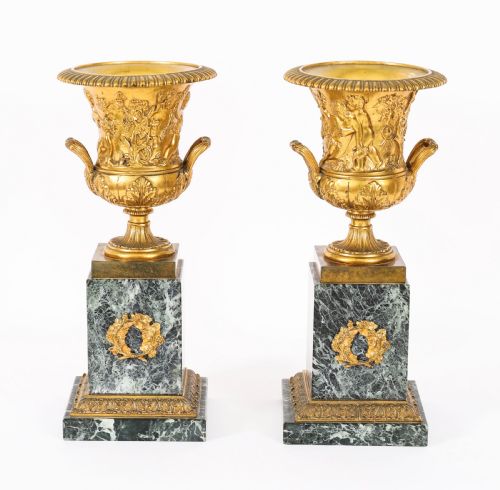
Metal mounts in gilt bronze, ormolu and gold leaf provided structural framing and decorative trim, secured to porcelain urns and glass bodies. Hand-painting often featured naturalistic motifs, floral sprays and gilding applied by brush and fired in kilns to achieve permanence.
What varies in quality
The refinement of the hand-painting and the crispness of the gilding separate standard production from exceptional pieces, particularly visible in the detail of botanical or figural subjects. Superior items display well-balanced proportions and securely fitted metal mounts that integrate harmoniously with the ceramic or glass body.
Completeness dictates standing, especially for glass lustres retaining their full complement of hanging crystal prisms and garniture sets surviving in their original matched groupings. The weight and stability of the material, alongside the precision of the firing, reflect the skill of the original workshop.
Royal Worcester·Royal Vienna·Spode·Doulton Lambeth·Royal Crown Derby·Vion et Baury
The Antique Mantle Vases Glossary
- Garniture
- A set of matching decorative vessels, usually numbering three, four or five pieces, designed to be displayed together on a mantelpiece. They often include a central clock flanked by matching vases or urns.
- Lustre
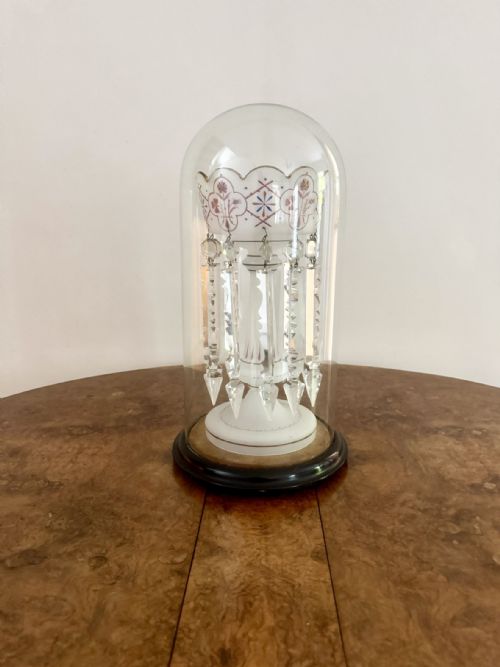
- A decorative glass or porcelain vase fitted with a ring of hanging crystal prisms that sparkle in candlelight. These pieces frequently appear in ruby or blue glass during the Victorian period.
- Ormolu
- Gilt bronze ornamentation applied to the mounts, handles and bases of ceramic and glass vases. The technique involves treating bronze with a finely ground gold-mercury amalgam.
- Spill vase
- A small upright container designed to hold tapered wooden spills used for lighting fires and candles. They are frequently modelled in earthenware and pottery.
- Imari
- A Japanese export porcelain style characterised by underglaze blue and iron red highlights with supplementary gold. The aesthetic proved highly influential on European ceramic workshops.
Antique Mantle Vases: Frequently Asked Questions
What are mantle lustres?
Mantle lustres are decorative glass or porcelain vases featuring a circle of hanging crystal prisms suspended from the rim. These prisms were designed to refract candlelight and gaslight in nineteenth-century drawing rooms.
They frequently appear as matched pairs and often incorporate ruby or blue glass bodies enhanced with gilt enamel details.
How do you style mantle vases?
Mantle vases work best arranged symmetrically on a fireplace mantelpiece, often flanking a central clock or mirror to create visual balance. Their height and colour provide a focal point against a chimney breast.
Pairs can also be displayed on side tables, cabinets or console tables where their decorative motifs and metallic trims can be appreciated up close.
What is a garniture set?
A garniture set is a coordinated grouping of three, four or five ornamental vases or urns designed to be displayed together as a unified arrangement. These sets often incorporate a central clock flanked by matching side pieces.
They became exceptionally popular during the nineteenth century across English, French and German porcelain manufactories.
Were these vases used for flowers?
Most antique mantle vases served as purely decorative ornaments rather than functional vessels for water and fresh flowers. Their primary purpose was to enhance the interior decor of formal reception rooms.
Some specific forms, such as spill vases, had practical uses like holding wooden fire-lighters, while urns and garnitures remained strictly ornamental.