


Green Marble Table Clock
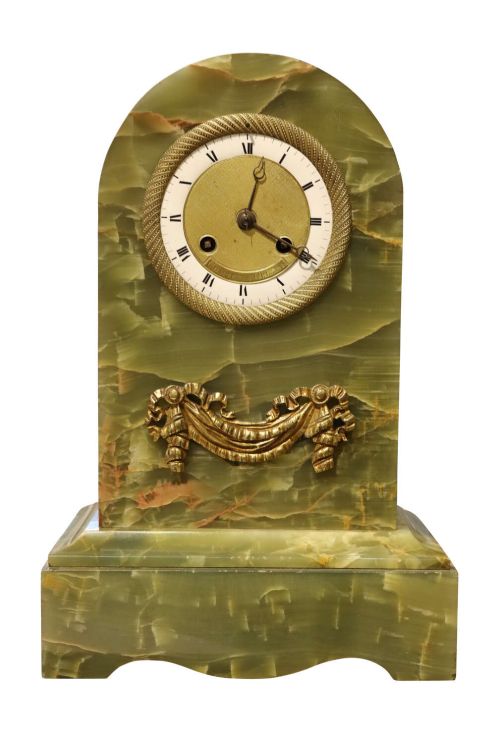
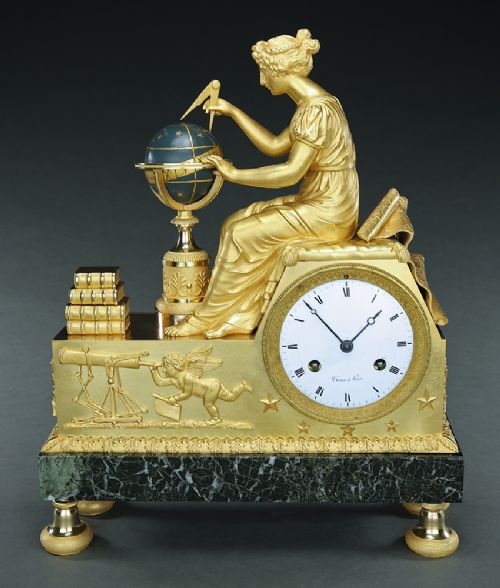
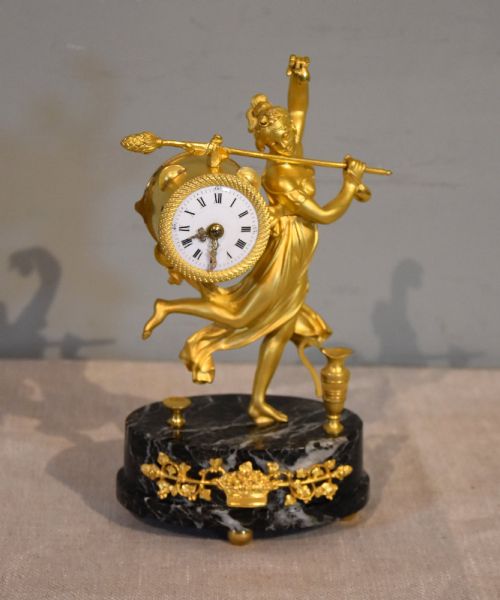
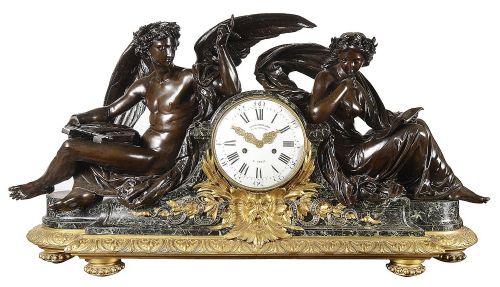
A green marble table clock sits with heavy presence on a mantel or desk, bringing polished stone and precision brasswork together in a functional piece of sculpture.

Green Marble Table Clock
A green marble table clock represents a tradition of heavy stone horology spanning the nineteenth and early twentieth centuries. When searching for a green marble table clock, collectors encounter diverse forms including architectural mantel pieces, garniture sets, and compact Art Deco designs.
The selection ranges from early nineteenth-century Regency and French Empire models to later Victorian and 1930s Art Deco pieces. Most examples function as mantel or desk clocks, frequently accompanied by matching side ornaments in matching stone or metal.
What varies in quality
Quality reveals itself in the depth of the stone's natural veining and the crispness of the bronze or brass cast mounts. Superior examples display seamless joins in the heavy marble blocks and finely detailed dial work signed by established makers.
The sophistication of the internal movement dictates much of the standing, with complex complications like calendar dials or silk suspension mechanisms marking out the more ambitious productions.
Green Marble Table Clock Retail Price Guide 2026
Typical asking prices for green marble table clock among the pieces listed under this phrase on Sellingantiques today, from the lower quarter to the upper quarter. They describe what is for sale here now, not the wider market.
Some nineteenth-century French models include a tiny moon dial that tracks the lunar phases right alongside the standard hours.
Charles à Orléans·Victor Paillard·Pinchon Fils Paris·Brocot·Charpentier Foundry·Ferdinand Priess·Garrards
The Green Marble Table Clock Glossary
- Garniture set
- A clock accompanied by a matching pair of side ornaments, such as urns or candelabra, designed to display together on a mantelpiece.
- Ormolu
- Gilt bronze mounts applied to the stone case, created by coating cast bronze in a gold amalgam and firing.
- Fusee
- A conical pulley inside the clock movement that ensures even tension on the mainspring as it winds down, improving timekeeping accuracy.
- Enamel dial
- A metal face coated with fused glass powder, fired to create a smooth, glossy white surface for painted numerals.
- Silk suspension
- An early method of hanging the pendulum from a fine thread of silk within the movement, typical of nineteenth-century French clocks.
Green Marble Table Clock: Frequently Asked Questions
How do I wind a marble mantel clock?
Most mechanical models require a key inserted into the dial holes to tension the springs every week or eight days. Care must be taken not to overwind the movement.
Moving the hands should be done slowly and strictly in a clockwise direction to protect the delicate internal escapement.
Where should I place a heavy marble clock?
These pieces require a sturdy surface such as a deep mantelpiece, a sideboard, or a heavy desk capable of supporting significant stone weight.
Placement should avoid direct sunlight and damp environments to protect the polished marble surface and the metal components inside.
How do I tell a Victorian clock from an Art Deco one?
Victorian models often feature classical architectural elements, heavy columns, and ornate gilt bronze mounts inspired by earlier French periods.
Art Deco clocks from the nineteen-thirties utilise clean geometric lines, streamlined onyx or marble blocks, and sometimes chrome or contrasting metals.
What is a clock garniture?
A garniture is a matched set consisting of a central clock flanked by two decorative side pieces, traditionally placed together on a fireplace mantel.
The side pieces often echo the materials of the clock, using the same green marble, onyx, and bronze mounts.