


French Restoration Clock
A french restoration clock brings together disciplined brass-work and figural bronze, anchoring a mantel with heavy classical form.
French Restoration Clock
When you search for a french restoration clock, you look at mantel timepieces from the early nineteenth century that reflect the stylistic shifts of the Bourbon Restoration and Charles X periods. The examples on this page span the nineteenth century alongside later twentieth-century iterations, taking the form of traditional mantel clocks and portico designs.
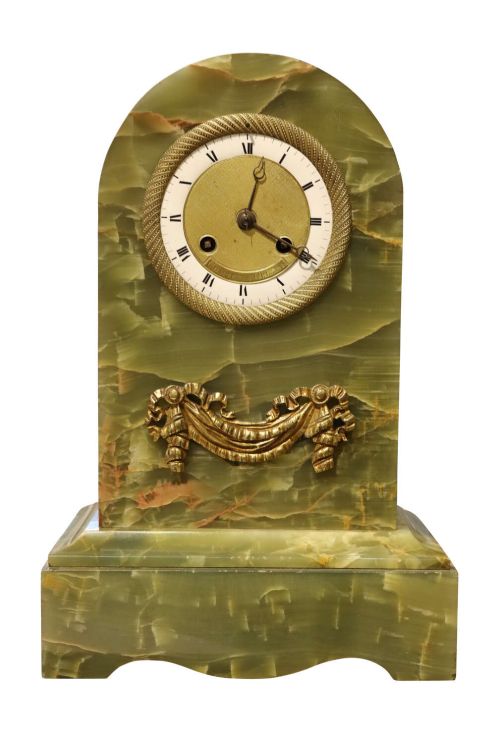
Most pieces meet you as structured wooden or marble chassis ornamented with cast metal mounts. You will find mahogany and rosewood portico structures, white marble and green onyx bodies, and architectural cases inlaid with contrasting woods.
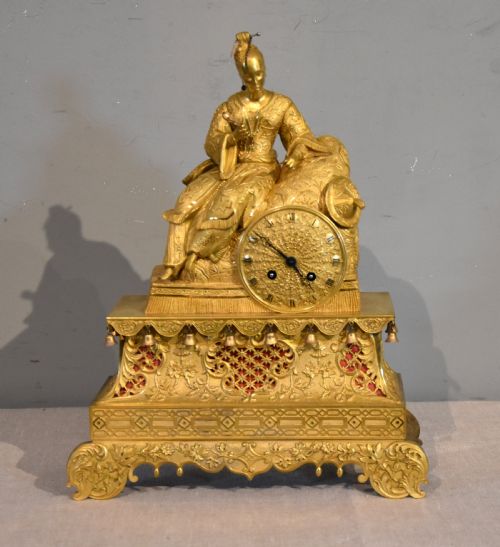
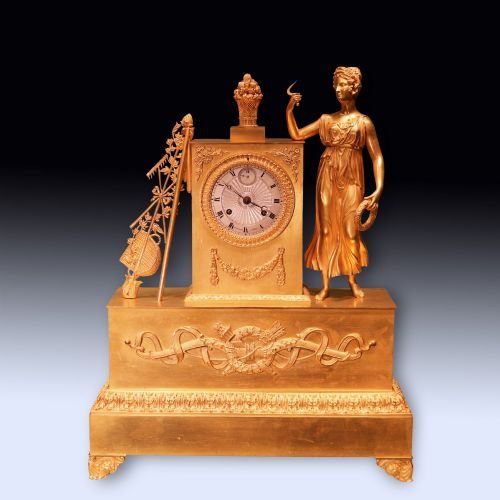
Makers and workshops of the era signed dials and movements, connecting these machines to Parisian horology of the eighteen-twenties and thirties. The predominant output relies on heavy gilt bronze and ormolu combined with patinated bronze figures.
What varies in quality
The crispness of the bronze chasing separates standard production from finer workshop output. Sharp undercuts in foliage and smooth transitions on figurative casts indicate superior skill in the foundry.
The choice of materials dictates the standing of the piece, with solid marbles and rich exotic wood veneers outperforming simple painted wood chassis. Dial execution and the integration of complications within the movement elevate individual examples.
French Restoration Clock Retail Price Guide 2026
Typical asking prices for french restoration clock among the pieces listed under this phrase on Sellingantiques today, from the lower quarter to the upper quarter. They describe what is for sale here now, not the wider market.
Charles à Orléans·Canaillor of Paris·Ravrio·Baltazart·Gillion
The French Restoration Clock Glossary
- Ormolu
- Gilt bronze produced by applying a mercury and gold amalgam to cast bronze and firing it. This technique yields a distinct yellow-gold finish characteristic of nineteenth-century decorative arts.
- Portico clock
- A mantel timepiece built with an architectural frame supported by four columns. This design gained popularity during the neoclassical revivals of the early nineteenth century.
- Patinated bronze
- Bronze treated with chemical solutions to create a dark brown or green surface layer. It provides contrast against bright gilt mounts on figural clock cases.
- Enamel
- A glassy substance fused to a copper or metal dial plate through firing. It creates a smooth, durable surface for painted numerals.
- Gilt bronze
- Metal cast in bronze and subsequently covered with a thin layer of gold leaf or gold paint. It shares visual traits with ormolu but utilises different application methods.
French Restoration Clock: Frequently Asked Questions
What is a french restoration clock?
A french restoration clock is a mantel timepiece dating from the early nineteenth century, typically housed in marble, wood, or gilt bronze.
These objects combine mechanical movements with decorative casting styles reflecting the taste of the Restoration period.
What materials are common in these clocks?
The listings show frequent use of ormolu, gilt bronze, white marble, green onyx, and mahogany.
Makers also incorporated cut crystal and enamel dials to complete the visual composition of the case.
How should I place a mantel clock?
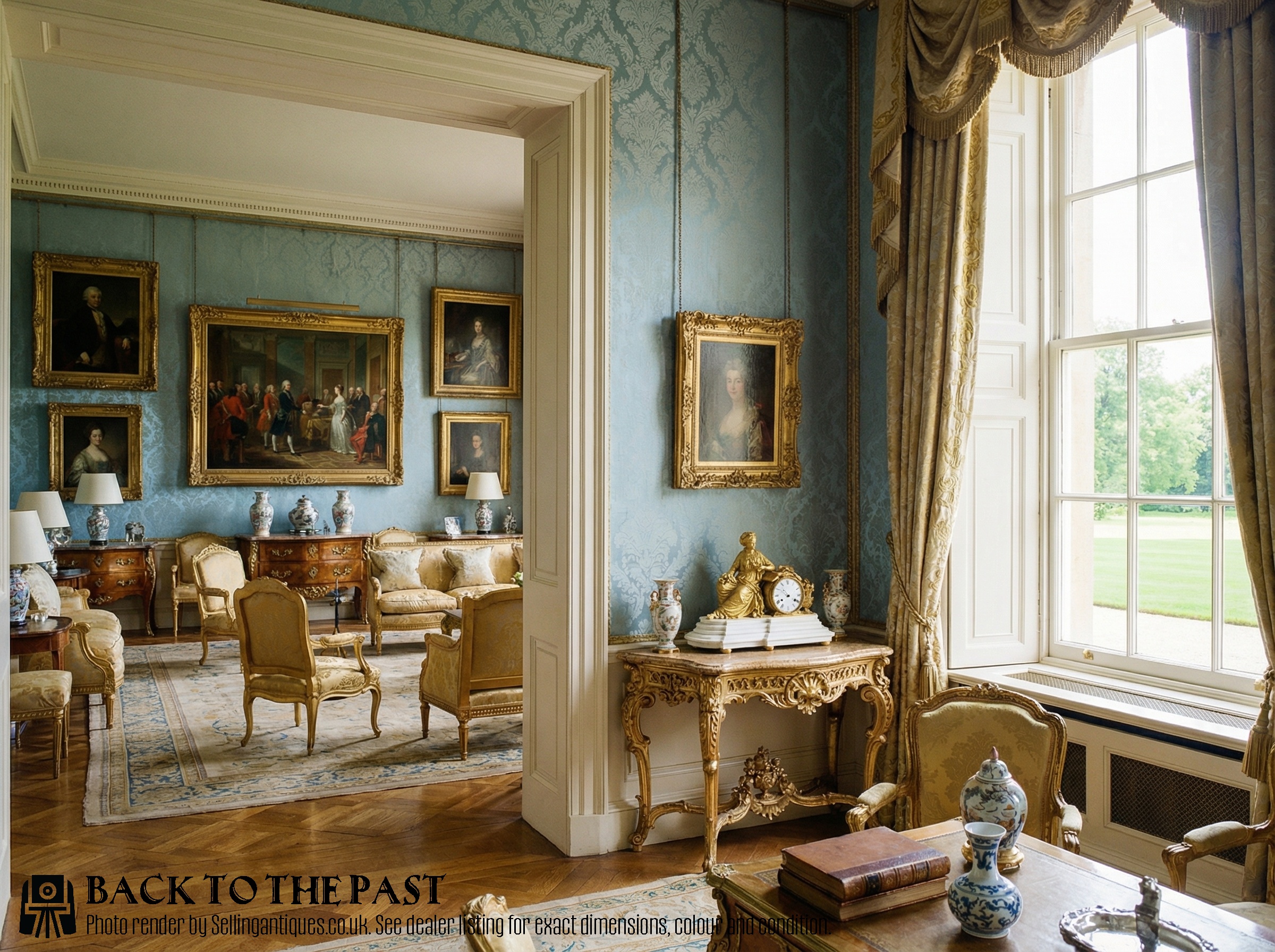
These clocks require a stable, level surface such as a fireplace mantel or a heavy sideboard to maintain accurate pendulum beat.
Keep them away from direct heat sources and damp walls to preserve the wood veneers and gilded metal surfaces.